Emotional Intelligence: Key to US Success by 2026

In an increasingly complex and rapidly evolving world, the traditional metrics of success are undergoing a significant transformation. While technical skills and cognitive intelligence (IQ) have long been considered paramount, a new, more nuanced understanding of what drives achievement is emerging. This understanding places a powerful emphasis on Emotional Intelligence (EQ), the ability to understand, use, and manage one’s own emotions in positive ways to relieve stress, communicate effectively, empathize with others, overcome challenges, and defuse conflict. As we look towards 2026, the data suggests that emotional intelligence will become an astounding 30% more crucial for success across various sectors in the United States.
This isn’t merely a trend; it’s a fundamental shift in the landscape of professional and personal efficacy. The heightened importance of emotional intelligence success stems from several converging factors: the acceleration of technological change, the imperative for diverse and inclusive workplaces, the increasing demand for adaptable leadership, and the growing recognition that human-centric skills are irreplaceable by artificial intelligence. This comprehensive article will delve into why emotional intelligence is poised to be the defining characteristic of high performers and successful organizations in the coming years, exploring its multifaceted impact and offering actionable insights for development.
The Shifting Sands of the Modern Workforce: Why Emotional Intelligence Matters More Than Ever
The dawn of the 21st century brought with it an unprecedented pace of technological advancement. Automation, artificial intelligence, and machine learning are redefining job roles, making many routine tasks obsolete. In this environment, what remains indispensable are uniquely human capabilities – creativity, critical thinking, complex problem-solving, and perhaps most importantly, emotional intelligence. Machines can process data, but they cannot truly understand human emotions, navigate intricate social dynamics, or inspire and motivate teams in the same way a human leader with high EQ can.
The COVID-19 pandemic further underscored the critical role of emotional intelligence. Leaders and employees alike were forced to navigate immense uncertainty, stress, and disruption. Those with higher emotional intelligence were better equipped to adapt, maintain resilience, foster connection in remote environments, and support their teams through unprecedented challenges. This experience has cemented the understanding that EQ is not a soft skill, but a core competency essential for navigating an unpredictable future.
The Economic Imperative: EQ and the Bottom Line
Beyond anecdotal evidence, a growing body of research highlights the tangible economic benefits of emotional intelligence. Companies with emotionally intelligent leaders often report higher employee morale, lower turnover rates, increased productivity, and enhanced customer satisfaction. A study by the Consortium for Research on Emotional Intelligence in Organizations found that 90% of top performers possess high emotional intelligence. Furthermore, research suggests that emotional intelligence accounts for nearly 60% of job performance in all types of jobs.
For the US economy, where innovation and service industries dominate, the ability to build strong relationships, resolve conflicts constructively, and lead with empathy directly translates into competitive advantage. In a market where products and services are increasingly commoditized, the human element – the quality of interactions, the strength of team collaboration, and the ability to understand and respond to customer needs – becomes a key differentiator. This is where emotional intelligence truly shines, driving both individual and organizational success.
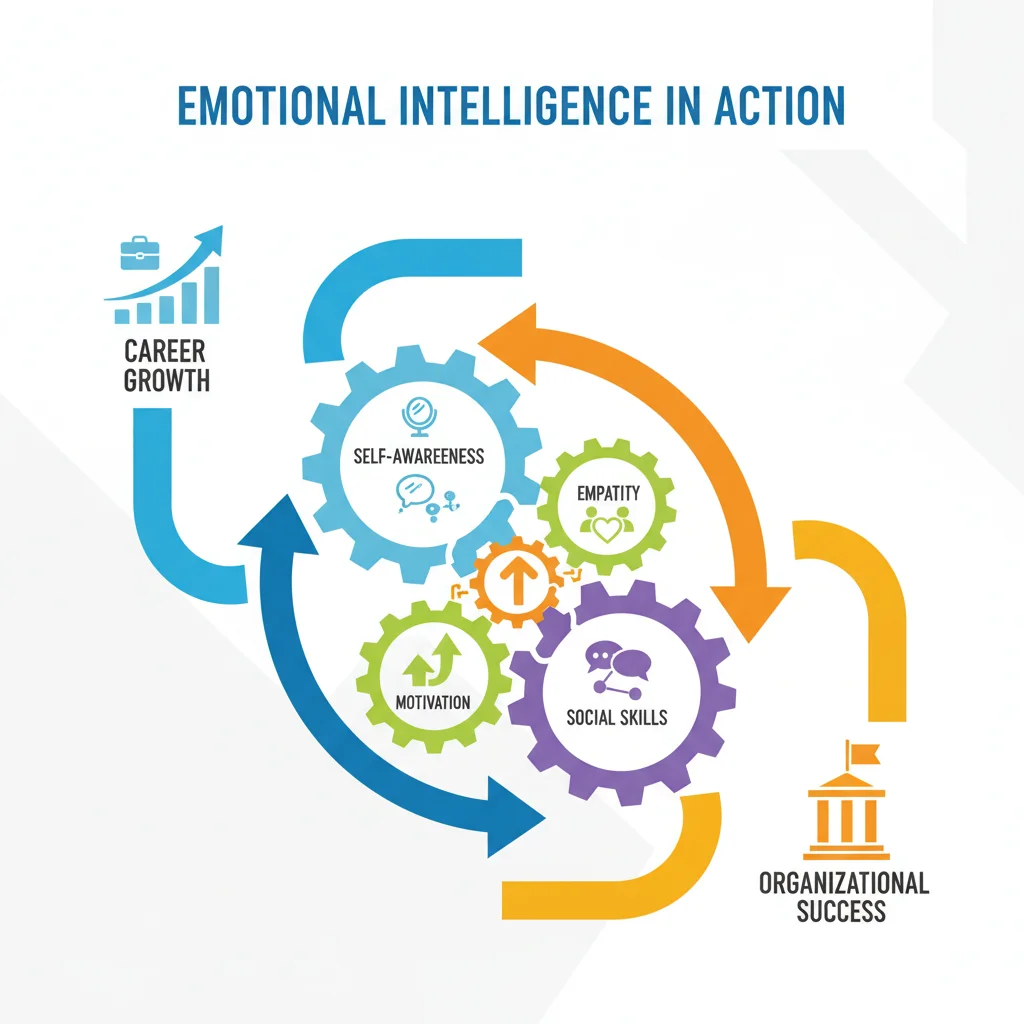
Defining Emotional Intelligence: Five Key Components
To truly appreciate the growing significance of emotional intelligence success, it’s essential to understand its core components, as outlined by psychologist Daniel Goleman, a pioneer in the field:
-
Self-Awareness
This is the cornerstone of emotional intelligence. Self-awareness involves understanding one’s own emotions, strengths, weaknesses, values, and goals, and recognizing their impact on others. It’s about being able to accurately assess your feelings and how they influence your thoughts and actions. Without self-awareness, it’s difficult to manage your emotions or understand others’. In a professional context, self-aware individuals are more likely to understand their triggers, recognize when they need to step back, and play to their strengths.
-
Self-Regulation
Building on self-awareness, self-regulation is the ability to manage and control one’s disruptive emotions and impulses. It involves thinking before acting, maintaining composure under pressure, and recovering quickly from emotional setbacks. This doesn’t mean suppressing emotions, but rather expressing them appropriately and constructively. Professionals with strong self-regulation are trustworthy, adaptable, and able to maintain integrity, even in challenging situations.
-
Motivation
This component refers to being driven by intrinsic factors beyond external rewards like money or status. It’s about having a passion for work, a drive to achieve, and a commitment to personal and organizational goals. Emotionally intelligent individuals are motivated by challenges, have a strong sense of purpose, and possess resilience in the face of failure. They are proactive, optimistic, and dedicated to continuous improvement, inspiring those around them.
-
Empathy
Empathy is the ability to understand and share the feelings of another. It’s about putting yourself in someone else’s shoes, recognizing their emotional states, and responding appropriately. In the workplace, empathy is crucial for effective communication, customer service, team collaboration, and leadership. Empathetic leaders can better understand the needs and concerns of their employees, leading to higher engagement and loyalty.
-
Social Skills
Social skills encompass a wide range of abilities related to managing relationships and building networks. This includes effective communication, conflict resolution, collaboration, influence, and the ability to inspire and lead. Individuals with strong social skills are adept at building rapport, negotiating successfully, and fostering positive group dynamics. They are often excellent team players and natural leaders, capable of navigating complex social landscapes.

The 30% Boost: Why 2026 is a Tipping Point for Emotional Intelligence Success
The projection that emotional intelligence will be 30% more crucial for US success by 2026 is not an arbitrary figure. It reflects a confluence of trends that are accelerating the demand for these human-centric skills:
1. The Rise of Hybrid and Remote Work
The pandemic normalized hybrid and remote work models, which, while offering flexibility, also present unique challenges for communication and team cohesion. In a distributed environment, the nuances of body language and informal interactions are often lost. This necessitates a heightened degree of emotional intelligence to ensure clear communication, maintain team morale, and prevent misunderstandings. Leaders need to be more empathetic, actively listen, and intentionally foster connection across geographical divides. Employees need stronger self-management skills to stay motivated and engaged without constant in-person oversight.
2. Increased Diversity, Equity, and Inclusion (DEI) Initiatives
Organizations are increasingly recognizing the moral and business imperative of DEI. A truly inclusive workplace requires more than just policies; it demands a culture built on empathy, respect, and understanding of diverse perspectives. Emotional intelligence is fundamental to navigating cultural differences, addressing unconscious biases, and fostering an environment where everyone feels valued and heard. Leaders with high EQ are better equipped to champion DEI, mediate conflicts arising from differing viewpoints, and create psychological safety for all employees.
3. The Imperative for Agile and Adaptive Leadership
The business world is characterized by constant change. Market shifts, technological disruptions, and global events demand leaders who are agile, resilient, and capable of guiding their teams through uncertainty. This requires a high degree of emotional intelligence – the ability to remain calm under pressure (self-regulation), understand the anxieties of their team (empathy), motivate them through difficult times (motivation), and communicate a clear vision (social skills). Leaders lacking EQ often struggle to inspire trust and lead effectively in dynamic environments, hindering organizational adaptation.
4. AI and Automation Augmenting, Not Replacing, Human Skills
While AI is transforming many aspects of work, it is simultaneously elevating the importance of uniquely human skills. Repetitive tasks are being automated, freeing up human workers to focus on more complex, creative, and interpersonal challenges. This shift means that jobs requiring high levels of emotional intelligence – roles in leadership, sales, customer service, human resources, and strategic planning – will become even more valuable. The ability to collaborate with AI, interpret its outputs, and apply human judgment and empathy to complex situations will be a critical skill set.
5. The Growing Focus on Employee Well-being and Mental Health
There’s a growing recognition that employee well-being and mental health are directly linked to productivity and retention. Emotionally intelligent leaders are more attuned to the signs of stress and burnout in their teams, better equipped to offer support, and capable of creating a work environment that prioritizes psychological safety. This focus on well-being is not just a perk; it’s becoming a strategic imperative for attracting and retaining top talent in a competitive market. Organizations that neglect the emotional health of their workforce will face significant challenges.
Emotional Intelligence in Action: Real-World Impact
The impact of emotional intelligence success is evident across various professional domains:
- Leadership: Emotionally intelligent leaders inspire trust, foster collaboration, and effectively navigate conflict. They are better at motivating their teams, leading to higher engagement and productivity. They understand the emotional pulse of their organization and can make decisions that resonate with people, not just spreadsheets.
- Teamwork: High-EQ team members communicate more effectively, resolve disagreements constructively, and support each other, creating a more cohesive and productive unit. They are better at understanding team dynamics and contributing positively to group efforts.
- Customer Service: Employees with strong emotional intelligence can better understand customer needs and frustrations, leading to improved service, higher customer satisfaction, and stronger brand loyalty. They can de-escalate tense situations and build lasting relationships.
- Sales and Negotiation: The ability to read non-verbal cues, understand a client’s underlying motivations, and build rapport is crucial for successful sales and negotiation. High-EQ professionals can tailor their approach, empathize with concerns, and close deals more effectively.
- Innovation: Creating an environment where people feel safe to share ideas, challenge assumptions, and take calculated risks requires emotionally intelligent leadership. Empathy and social skills foster psychological safety, which is essential for creative problem-solving and innovation.
- Career Advancement: Individuals with higher EQ are often perceived as more adaptable, resilient, and collaborative. These qualities make them more attractive for promotions and leadership roles, as they are seen as capable of handling complex interpersonal challenges that come with increased responsibility.
Developing Your Emotional Intelligence: A Lifelong Journey
The good news is that emotional intelligence is not a fixed trait; it can be developed and enhanced over time. Unlike IQ, which tends to stabilize early in life, EQ can grow with conscious effort and practice. Here are strategies for cultivating your emotional intelligence success:
1. Cultivate Self-Awareness
- Practice Mindfulness: Pay attention to your thoughts, feelings, and physical sensations without judgment. Daily meditation or deep breathing exercises can enhance this.
- Journaling: Regularly write down your feelings, reactions to events, and what triggered them. This helps identify patterns and understand your emotional landscape.
- Seek Feedback: Ask trusted colleagues, friends, or mentors for honest feedback on how you come across and how your emotions impact others. Be open to constructive criticism.
- Identify Your Values: Understand what truly matters to you. Aligning your actions with your values can bring greater emotional clarity and reduce internal conflict.
2. Enhance Self-Regulation
- Pause and Reflect: Before reacting impulsively, take a moment to pause, breathe, and consider the consequences of your words or actions.
- Reframe Negative Thoughts: Challenge pessimistic thinking. Instead of dwelling on problems, focus on solutions and learning opportunities.
- Stress Management Techniques: Incorporate practices like exercise, hobbies, or relaxation techniques into your routine to manage stress effectively.
- Learn to Say No: Protect your boundaries and avoid overcommitment, which can lead to stress and emotional exhaustion.
3. Boost Your Motivation
- Set Meaningful Goals: Connect your daily tasks to a larger purpose or vision. This intrinsic motivation is more powerful than external rewards.
- Celebrate Small Wins: Acknowledge your progress, no matter how minor. This builds momentum and reinforces positive habits.
- Embrace a Growth Mindset: View challenges as opportunities for learning and development, rather than insurmountable obstacles. Believe in your ability to improve.
- Find Your Passion: Engage in work or activities that genuinely excite you. When you are passionate, motivation comes more naturally.
4. Cultivate Empathy
- Practice Active Listening: Truly listen to understand, rather than just to respond. Pay attention to both verbal and non-verbal cues.
- Put Yourself in Their Shoes: Before judging or reacting, try to imagine what another person might be feeling or experiencing.
- Observe Body Language: Learn to read non-verbal signals, which often convey more than words. Pay attention to facial expressions, posture, and gestures.
- Read Fiction and Watch Documentaries: Engaging with diverse narratives can broaden your understanding of different human experiences and perspectives.
5. Refine Your Social Skills
- Improve Communication: Focus on clear, concise, and respectful communication. Practice assertive communication without being aggressive.
- Conflict Resolution: Learn strategies for mediating disagreements, finding common ground, and focusing on solutions rather than blame.
- Build Rapport: Find common interests, offer genuine compliments, and show appreciation for others’ contributions.
- Networking: Actively build and maintain relationships, both within and outside your professional circle. Offer help and support to others.
The Role of Organizations in Fostering Emotional Intelligence
While individual effort is crucial, organizations also play a vital role in cultivating emotional intelligence success. Companies that invest in EQ development for their employees and leaders will be better positioned for future success.
- Training Programs: Offer workshops and coaching specifically designed to enhance emotional intelligence skills.
- Leadership Development: Integrate EQ into leadership training, emphasizing empathetic leadership, conflict resolution, and motivational techniques.
- Performance Reviews: Include emotional intelligence competencies in performance evaluations, providing feedback and setting goals for improvement.
- Culture Building: Foster a workplace culture that values open communication, psychological safety, empathy, and constructive feedback. Encourage employees to express their feelings appropriately and seek support when needed.
- Mentorship and Coaching: Provide opportunities for employees to learn from and be guided by mentors who exhibit high emotional intelligence.
Conclusion: Navigating the Future with Emotional Intelligence
The prediction that emotional intelligence will be 30% more crucial for US success by 2026 is a powerful indicator of the direction our professional world is heading. As technology continues to advance, the demand for uniquely human skills – particularly those related to understanding and managing emotions – will only intensify. Emotional intelligence is not just a desirable trait; it is rapidly becoming a fundamental requirement for individual flourishing and organizational resilience.
For individuals, cultivating emotional intelligence is an investment in career longevity, personal well-being, and impactful leadership. For organizations, prioritizing EQ development is a strategic move that will lead to more engaged employees, stronger teams, better customer relationships, and sustained competitive advantage. The future belongs to those who can not only think critically but also feel deeply, connect authentically, and lead with empathy. Embracing emotional intelligence success today is the key to unlocking unparalleled potential tomorrow.