The 2026 Guide to Alternative Investments: Diversifying Your Portfolio Beyond Stocks and Bonds

In the ever-evolving landscape of global finance, traditional investment vehicles like stocks and bonds, while foundational, are increasingly being complemented—and sometimes even overshadowed—by a burgeoning class of assets known as **alternative investment strategies**. As we look towards 2026, the imperative for investors to explore these non-traditional avenues has never been stronger. Volatility in public markets, persistent inflation concerns, and the search for enhanced returns and true diversification are driving a significant shift in how sophisticated investors construct their portfolios. This comprehensive guide will delve deep into the world of alternative investments, offering a roadmap for understanding, evaluating, and integrating these powerful tools into your financial strategy.
For decades, the conventional wisdom dictated a portfolio heavily weighted towards publicly traded equities and fixed-income securities. However, the financial crises of the past, coupled with periods of low interest rates and stagnant market growth, have highlighted the limitations of such a narrow focus. Alternative investments, by their very nature, tend to have a low correlation with traditional assets, meaning they often perform differently during various market cycles. This characteristic is precisely what makes them invaluable for true portfolio diversification and risk mitigation. In 2026, understanding and strategically deploying these **alternative investment strategies** will be paramount for achieving long-term financial goals.
The Shifting Paradigm: Why Alternative Investment Strategies are Crucial in 2026
The global economic outlook for 2026 suggests continued complexity. Geopolitical tensions, technological disruptions, and evolving regulatory frameworks are all contributing to an environment where agility and foresight are key. Traditional 60/40 portfolios (60% stocks, 40% bonds) have faced headwinds, prompting a reevaluation of their efficacy. This is where **alternative investment strategies** step in, offering pathways to potentially higher returns, reduced volatility, and access to unique market opportunities that are otherwise unavailable through conventional means.
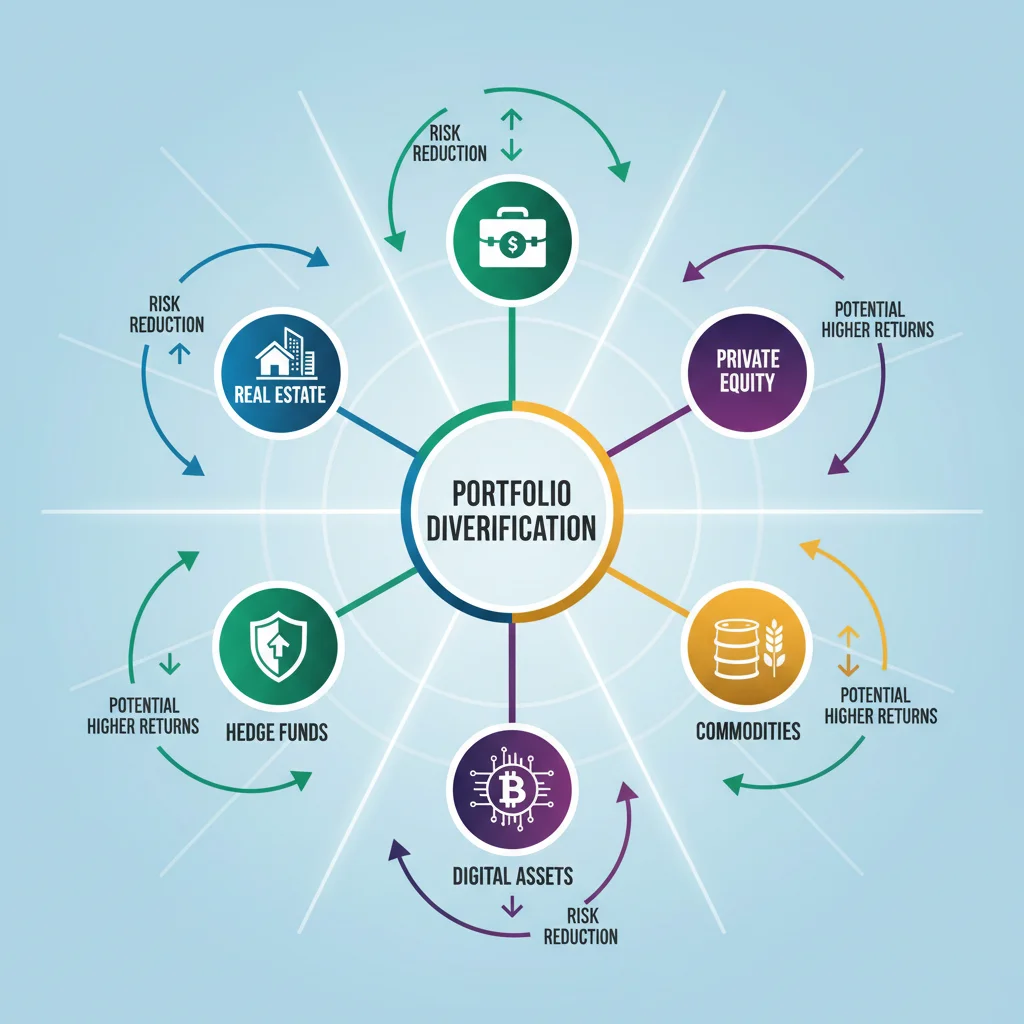
One of the primary drivers behind the growing popularity of alternative investments is their potential to generate alpha – returns in excess of what would be expected from market movements alone. This often comes from their unique structures, illiquidity premiums, and the specialized expertise required to manage them. For investors aiming to not just preserve but significantly grow their wealth in the coming years, ignoring the potential of these strategies would be a missed opportunity. The landscape of alternative investments is vast, encompassing everything from real estate and private equity to hedge funds, commodities, and even digital assets like cryptocurrencies. Each offers a distinct risk-reward profile and requires careful consideration.
Understanding the Core Categories of Alternative Investment Strategies
To effectively integrate alternative investments into your portfolio, it’s essential to understand the main categories. While the lines can sometimes blur, these broad classifications provide a useful framework for exploration.
1. Real Estate: More Than Just Bricks and Mortar
Real estate has long been a foundational alternative asset. In 2026, its appeal remains strong due to its tangible nature, potential for income generation (rent), and appreciation. Beyond direct property ownership, **alternative investment strategies** in real estate include:
- Real Estate Investment Trusts (REITs): Publicly traded companies that own, operate, or finance income-generating real estate. While publicly traded, they offer exposure to real estate without direct ownership.
- Private Real Estate Funds: Investments in commercial, residential, or industrial properties through pooled funds. These typically offer higher potential returns but come with increased illiquidity.
- Real Estate Crowdfunding: Allows individual investors to participate in real estate projects with smaller capital commitments, often through online platforms.
- Specialized Real Estate Assets: Data centers, logistics warehouses, medical office buildings, and senior living facilities are becoming increasingly attractive due to demographic shifts and technological advancements.
The real estate market in 2026 will be influenced by interest rates, urbanization trends, and the continued demand for specific property types. Strategic investment in this sector can provide both capital growth and a steady income stream, making it a cornerstone of many successful **alternative investment strategies**.
2. Private Equity: Unlocking Untapped Value
Private equity involves investing in companies that are not publicly traded on a stock exchange. This can range from early-stage venture capital to leveraged buyouts of mature companies. These **alternative investment strategies** are typically characterized by longer holding periods, higher risk, and the potential for substantial returns.
- Venture Capital (VC): Focuses on funding nascent companies with high growth potential. Think tech startups, biotech firms, and disruptive innovators. VC investments are high-risk, high-reward, requiring significant due diligence.
- Growth Equity: Targets more established companies seeking capital for expansion, market penetration, or strategic acquisitions. These companies typically have proven business models but need a boost to scale.
- Leveraged Buyouts (LBOs): Involves acquiring a company, often using a significant amount of borrowed money, with the aim of improving its operations and eventually selling it for a profit. This is a complex area requiring deep operational expertise.
Private equity offers direct access to innovation and growth stories that public markets often don’t capture until much later. The ability to actively influence management and implement strategic changes is a key differentiator, providing a unique avenue for value creation within **alternative investment strategies**.
3. Hedge Funds: Sophisticated Strategies for All Market Conditions
Hedge funds are professionally managed investment funds that use a variety of sophisticated strategies to generate returns, often employing leverage and derivatives. Unlike traditional mutual funds, hedge funds have greater flexibility in their investment mandates, allowing them to go long or short, invest in a wide range of assets, and use complex trading techniques. This flexibility is what makes them a powerful, albeit often complex, component of **alternative investment strategies**.
- Equity Long/Short: Simultaneously buying stocks expected to rise and selling stocks expected to fall.
- Event-Driven: Investing based on specific corporate events such as mergers, acquisitions, or bankruptcies.
- Global Macro: Making bets on broad economic trends and geopolitical events, often using futures, options, and currency trades.
- Relative Value: Exploiting price discrepancies between related securities.
Hedge funds aim to deliver absolute returns, regardless of market direction, making them attractive for uncorrelated returns. However, they come with higher fees, often including a performance fee, and are typically accessible only to accredited investors due to their complex nature and regulatory requirements. Evaluating a hedge fund requires understanding its specific strategy, risk management, and historical performance across different market cycles.
4. Private Credit: Lending Beyond Traditional Banks
Private credit, also known as direct lending, involves providing financing to companies outside of traditional bank loans or public bond markets. This has seen significant growth as banks have pulled back from certain lending activities due to stricter regulations. For investors, private credit offers attractive yields and a floating rate component, which can be beneficial in rising interest rate environments.
- Direct Lending: Loans provided directly to companies, often small to medium-sized businesses, that may not have access to public debt markets.
- Distressed Debt: Investing in the debt of companies facing financial difficulties, with the aim of profiting from their restructuring or recovery.
- Mezzanine Debt: A hybrid of debt and equity financing, typically unsecured and junior to senior debt, offering higher yields in exchange for higher risk.
Private credit is an increasingly important part of **alternative investment strategies**, offering diversification away from public debt markets and potentially higher income streams, albeit with illiquidity and credit risk considerations.
5. Infrastructure: Essential Services for Long-Term Stability
Infrastructure investments involve funding projects related to essential public services, such as roads, bridges, airports, utilities, and communication networks. These assets typically generate stable, long-term cash flows, often inflation-indexed, and have high barriers to entry.
- Public-Private Partnerships (PPPs): Collaborations between government agencies and private companies for the financing, building, and operation of infrastructure projects.
- Infrastructure Funds: Pooled vehicles that invest in a diversified portfolio of infrastructure assets.
Infrastructure offers defensive characteristics and a natural hedge against inflation, making it an attractive component of **alternative investment strategies** for institutional investors and, increasingly, for individual investors through specialized funds.
6. Commodities: Tangible Assets and Inflation Hedges
Commodities are raw materials or primary agricultural products that can be bought and sold. This category includes precious metals (gold, silver), energy (oil, natural gas), industrial metals (copper, aluminum), and agricultural products (corn, wheat). Investing in commodities can serve as a hedge against inflation and currency devaluation.
- Direct Commodity Futures: Trading contracts for future delivery of commodities.
- Commodity ETFs/ETNs: Exchange-traded funds or notes that track commodity prices or indices.
- Physical Commodities: Direct ownership of assets like gold bullion.
While volatile, a carefully considered allocation to commodities can enhance the diversification of **alternative investment strategies**, especially during periods of economic uncertainty or rising inflation.
7. Digital Assets and Cryptocurrencies: The New Frontier
The emergence of digital assets, primarily cryptocurrencies like Bitcoin and Ethereum, and the broader blockchain ecosystem, represents a revolutionary new class of **alternative investment strategies**. While highly volatile and speculative, their potential for disruptive innovation and uncorrelated returns cannot be ignored.
- Direct Cryptocurrency Holdings: Purchasing and holding digital currencies.
- Crypto Funds/ETFs: Pooled investment vehicles offering exposure to cryptocurrencies without direct ownership.
- NFTs (Non-Fungible Tokens): Unique digital assets representing ownership of digital art, collectibles, or other items.
- Blockchain-related Equities: Investing in companies that are developing or leveraging blockchain technology.
The regulatory landscape for digital assets is still evolving, and risks are significant. However, for investors with a high-risk tolerance and a long-term view, a small allocation to this sector could provide exposure to potentially transformative growth.
Benefits of Incorporating Alternative Investment Strategies
The allure of alternative investments stems from several key advantages they offer over traditional assets:
1. Enhanced Diversification
This is perhaps the most compelling reason to consider **alternative investment strategies**. Because these assets often have a low correlation with stocks and bonds, they can help smooth out portfolio returns during market downturns. When one asset class underperforms, another may perform well, reducing overall portfolio volatility.
2. Potential for Higher Returns
Many alternative investments, particularly private equity and venture capital, offer the potential for significantly higher returns than public markets. This often comes as a premium for their illiquidity and the specialized expertise required to manage them. Investors are compensated for taking on these unique risks.
3. Inflation Hedge
Certain alternative assets, such as real estate, commodities, and infrastructure, can act as effective hedges against inflation. Their values and income streams often rise with the cost of living, preserving purchasing power during inflationary periods.
4. Access to Unique Opportunities
Alternative investments provide access to opportunities not available in public markets. This could be a cutting-edge startup, a specialized real estate development, or a unique private credit deal. These opportunities can offer growth potential and income streams that are distinct from publicly traded securities.
5. Reduced Volatility
While some alternative assets like cryptocurrencies are highly volatile, many others, such as private real estate or infrastructure, tend to exhibit lower short-term price fluctuations compared to public equities. Their illiquid nature means they are not subject to the daily whims of market sentiment, leading to more stable valuations over time.

Risks and Considerations for Alternative Investment Strategies
While the benefits are substantial, it’s crucial to approach **alternative investment strategies** with a clear understanding of their inherent risks and complexities.
1. Illiquidity
Many alternative investments are illiquid, meaning they cannot be easily bought or sold on short notice without significant price impact. This is a fundamental characteristic of assets like private equity funds, direct real estate, and private credit. Investors must be prepared to commit capital for extended periods, often 5-10 years or more.
2. Higher Fees
Alternative investments, particularly hedge funds and private equity funds, typically come with higher management fees and performance fees (e.g., “2 and 20” – 2% management fee and 20% of profits). These fees can significantly impact net returns, making careful due diligence on fee structures essential.
3. Complexity and Lack of Transparency
The underlying structures and strategies of many alternative investments can be complex and less transparent than traditional investments. This requires a higher level of financial sophistication to understand and evaluate. Detailed reporting can also be less frequent or standardized.
4. Valuation Challenges
Unlike publicly traded stocks with daily market prices, alternative assets often lack readily observable market values. Valuations are typically performed periodically by third-party appraisers, which can introduce subjectivity and lag behind real-time market conditions.
5. Regulatory Scrutiny and Access
Many alternative investments are only available to accredited investors, who meet specific income or net worth thresholds, due to regulatory requirements designed to protect less experienced investors from complex and risky products. This limits access for a significant portion of the investing public.
6. Specific Sector Risks
Each type of alternative investment carries its own set of specific risks. Real estate is subject to market cycles and interest rate changes; private equity involves business execution risk; commodities are prone to supply/demand shocks; and cryptocurrencies face regulatory uncertainty and extreme price volatility.
Building a Portfolio with Alternative Investment Strategies in 2026
Integrating alternative investments effectively requires a thoughtful and strategic approach. Here are key steps for investors looking to enhance their portfolios with **alternative investment strategies** in 2026:
1. Define Your Investment Goals and Risk Tolerance
Before diving into any alternative asset, clearly define what you aim to achieve. Are you seeking income, capital appreciation, inflation protection, or simply diversification? What is your capacity and willingness to take on risk, especially illiquidity risk? Your answers will guide your selection of appropriate **alternative investment strategies**.
2. Assess Your Current Portfolio
Understand your existing asset allocation, concentration risks, and correlation with traditional markets. Identify areas where alternative investments can truly add value by reducing risk or enhancing returns, rather than simply adding more of the same.
3. Start Small and Diversify Within Alternatives
Don’t put all your eggs in one alternative basket. Begin with a modest allocation (e.g., 5-15% of your total portfolio) and diversify across different types of **alternative investment strategies**. For instance, a mix of private real estate, a private credit fund, and a small allocation to a well-vetted hedge fund could be a sensible starting point.
4. Conduct Thorough Due Diligence
This cannot be overstated. Research fund managers, understand their track records, investment philosophy, fee structures, and risk management processes. For direct investments, scrutinize the underlying assets, market conditions, and potential exit strategies. Seek independent advice from financial professionals specializing in alternative assets.
5. Understand the Liquidity Profile
Be acutely aware of the lock-up periods and redemption terms for any alternative investment. Ensure your overall financial plan can accommodate the illiquid nature of these assets without forcing premature sales.
6. Monitor and Rebalance Periodically
Even though alternative investments are often long-term holdings, it’s essential to monitor their performance and your overall portfolio allocation. Periodically rebalance to maintain your desired risk profile and ensure your **alternative investment strategies** continue to align with your financial objectives.
7. Consider Fund of Funds or Multi-Asset Solutions
For investors who lack the expertise or capital to access individual alternative funds, a fund of funds (FoF) or a multi-asset solution that includes alternatives can be a viable option. These vehicles provide diversified exposure to multiple alternative managers or asset classes, often with lower minimums, but they come with an additional layer of fees.
The Future of Alternative Investment Strategies in 2026 and Beyond
Looking ahead, the role of alternative investments is only set to expand. Technological advancements, particularly in data analytics and artificial intelligence, are making it easier to identify and evaluate opportunities within these complex markets. The democratization of access, through platforms offering fractional ownership or lower minimums, is also bringing alternative investments to a broader range of investors.
Sustainable and impact investing, often found within private markets, is another growing trend. Investors are increasingly looking to align their capital with their values, supporting companies and projects that address environmental, social, and governance (ESG) challenges. This focus on impact, combined with financial returns, makes ESG-integrated **alternative investment strategies** particularly attractive for the long term.
The regulatory environment will continue to evolve, seeking to balance investor protection with market innovation. As more capital flows into alternatives, we can expect increased scrutiny and potentially new frameworks that will shape how these assets are offered and managed.
Conclusion: Embracing Alternative Investment Strategies for a Resilient Portfolio
In conclusion, the 2026 financial landscape demands a more sophisticated approach to portfolio construction. Relying solely on traditional stocks and bonds may no longer suffice for achieving optimal risk-adjusted returns or adequate diversification. By thoughtfully incorporating **alternative investment strategies** such as real estate, private equity, hedge funds, private credit, infrastructure, commodities, and even digital assets, investors can build more resilient, diversified, and potentially higher-performing portfolios.
While the complexities and risks associated with these investments are undeniable, the benefits of enhanced diversification, potential for higher returns, and inflation hedging are compelling. Success in navigating the world of alternatives in 2026 will hinge on thorough due diligence, a clear understanding of your financial goals and risk tolerance, and a commitment to long-term strategic planning. As the financial world continues its rapid evolution, embracing **alternative investment strategies** will be a defining characteristic of successful investing in the years to come.