Estate Planning 2026: Navigating the $14.6 Million Federal Gift Tax Exemption

Estate Planning in 2026: Understanding the Latest Federal Gift Tax Exemption of $14.6 Million (Recent Updates, Financial Impact)
The world of wealth transfer and estate planning is constantly evolving, driven by legislative changes and economic shifts. As we approach 2026, a pivotal year for tax policy, high-net-worth individuals and their advisors are scrutinizing the projected federal gift tax exemption. The anticipated figure of $14.6 million per individual presents both significant opportunities and complex challenges for strategic wealth transfer. This comprehensive guide will delve into the intricacies of this exemption, its historical context, the potential financial impact, and the crucial steps you should consider for effective Estate Planning 2026.
Understanding the nuances of the federal gift tax exemption is paramount for anyone looking to preserve wealth across generations. The current elevated exemption levels, largely a result of the Tax Cuts and Jobs Act (TCJA) of 2017, are set to sunset at the end of 2025. This means that without new legislative action, the exemption amount will revert to pre-TCJA levels, adjusted for inflation, in 2026. The projected $14.6 million figure for 2026 reflects this inflation adjustment before the anticipated reduction. This article aims to demystify these changes, offering actionable insights for proactive planning.
The Tax Cuts and Jobs Act (TCJA) and Its Sunset Provision
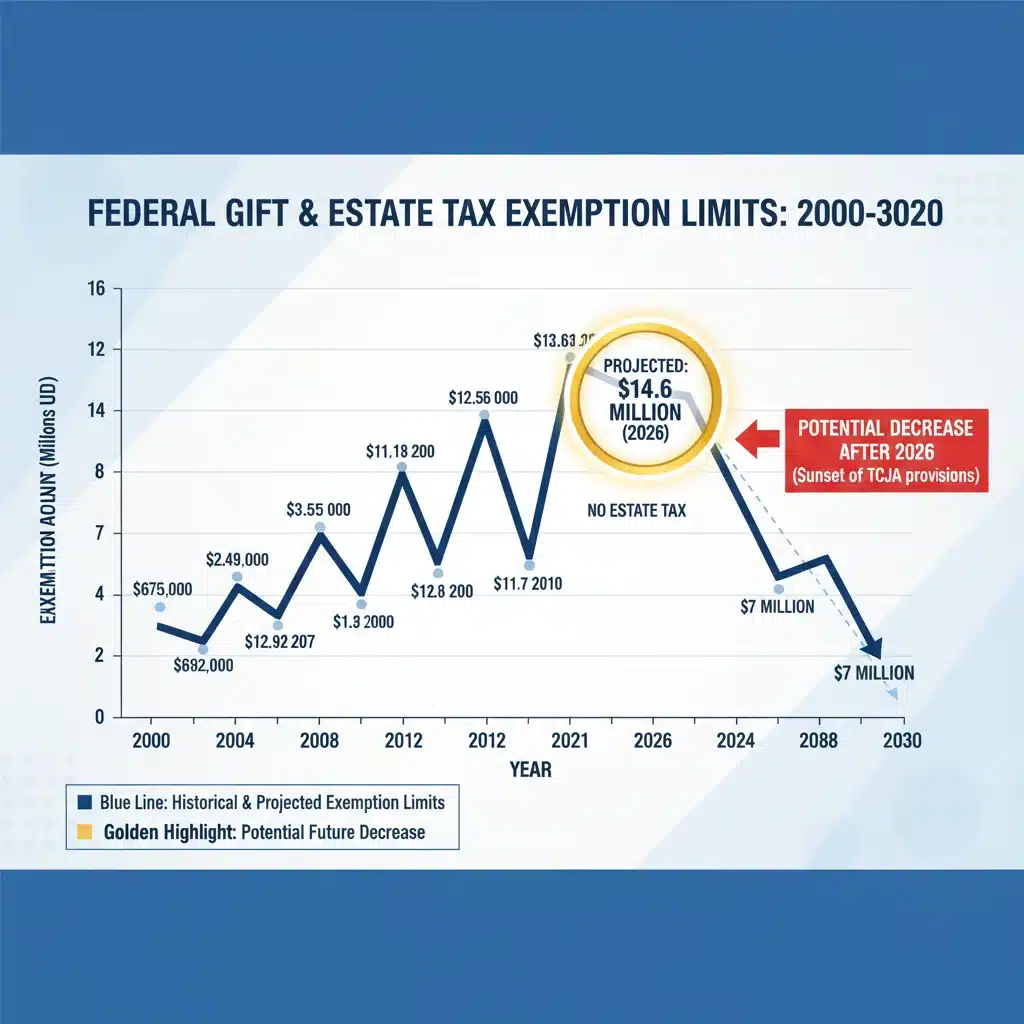
To fully grasp the significance of the Estate Planning 2026 landscape, it’s essential to look back at the TCJA of 2017. This landmark legislation dramatically increased the federal estate and gift tax exemption amounts. Prior to TCJA, the exemption was $5.49 million per individual in 2017. The TCJA effectively doubled this amount, indexing it for inflation. For 2024, the exemption stands at $13.61 million per individual, and for 2025, it is projected to reach approximately $14.1 million. The $14.6 million figure for 2026 is the inflation-adjusted amount before the sunset provision takes effect at the end of 2025.
The TCJA included a critical sunset provision, stipulating that many of its individual tax provisions, including the increased estate and gift tax exemption, would expire on December 31, 2025. Unless Congress acts to extend or modify these provisions, the exemption amount will revert to its pre-TCJA level, adjusted for inflation, on January 1, 2026. This means the exemption could drop to roughly $7 million per individual in 2026, a substantial decrease from the projected $14.6 million.
This impending change creates a unique window of opportunity for individuals with significant wealth. The period leading up to the end of 2025 is often referred to as a "use it or lose it" window. High-net-worth individuals have the chance to utilize the higher exemption amounts to transfer wealth to heirs free of federal estate and gift taxes. Failure to act within this timeframe could result in a much smaller exemption, potentially subjecting more of their estate to taxation.
Understanding the Federal Gift Tax Exemption: What It Means for You
The federal gift tax exemption is the total amount of wealth an individual can give away during their lifetime or at death without incurring federal gift or estate taxes. This exemption is "unified," meaning it applies to both lifetime gifts and transfers at death. Each dollar of lifetime gifts that utilizes the exemption reduces the amount available for estate tax purposes at death.
For Estate Planning 2026, the projected $14.6 million exemption represents the highest point before the anticipated reduction. This means that an individual could potentially gift up to $14.6 million (or $29.2 million for a married couple utilizing portability) to beneficiaries without incurring federal gift tax, provided these gifts are made by December 31, 2025. After this date, the exemption is expected to be nearly halved.
Key Concepts of the Gift Tax Exemption:
- Lifetime Exemption: This is the total amount an individual can give away during their lifetime without paying gift tax.
- Annual Exclusion: Separate from the lifetime exemption, the annual exclusion allows you to give a certain amount to as many individuals as you wish each year without using up any of your lifetime exemption. For 2024, this is $18,000 per donee. For 2025 and 2026, it is expected to be slightly higher due to inflation.
- Portability: This allows a surviving spouse to use any unused portion of their deceased spouse’s federal estate and gift tax exemption. This is a critical provision for married couples, effectively doubling their combined exemption amount.
- Generation-Skipping Transfer (GST) Tax Exemption: This exemption applies to transfers made to beneficiaries who are two or more generations younger than the donor (e.g., grandchildren). The GST exemption typically mirrors the federal estate and gift tax exemption.
Navigating these various exemptions and their interactions is a complex task that requires careful consideration and professional guidance. The impending changes make this even more critical for effective Estate Planning 2026.
The Financial Impact of the $14.6 Million Exemption and Its Potential Reduction
The financial implications of the current high exemption and its potential reduction are profound, particularly for high-net-worth families. For those with estates exceeding the expected post-2025 exemption amount, proactive planning is essential to mitigate future estate tax liabilities.
Opportunities Before the Sunset:
- Large Lifetime Gifting: Individuals can make substantial gifts to beneficiaries, such as children or grandchildren, utilizing the current high exemption. This removes appreciation from the donor’s estate, potentially saving significant estate taxes in the future.
- Funding Irrevocable Trusts: High exemption amounts facilitate the funding of various irrevocable trusts, such as Spousal Lifetime Access Trusts (SLATs), Grantor Retained Annuity Trusts (GRATs), or Irrevocable Life Insurance Trusts (ILITs). These trusts can remove assets from the grantor’s estate while providing benefits to beneficiaries.
- Leveraged Gifting Strategies: With the high exemption, strategies like gifting appreciating assets or using valuation discounts for interests in family-owned businesses become even more powerful. The goal is to transfer as much value as possible now, locking in the exemption before it potentially decreases.
Challenges After the Sunset:
- Increased Estate Tax Exposure: If the exemption reverts to approximately $7 million, estates exceeding this amount will face a federal estate tax rate of 40% on the excess. This could significantly erode inherited wealth.
- Reduced Gifting Capacity: The ability to make large tax-free lifetime gifts will be severely curtailed, limiting options for early wealth transfer and potentially forcing families to pay gift tax on transfers that would have been exempt under current rules.
- Complexity of Planning: The reduced exemption will necessitate more complex and sophisticated planning strategies to minimize estate tax liabilities, potentially involving more advanced trust structures or charitable giving.
The key takeaway for Estate Planning 2026 is the urgency of action. Waiting until 2026 to address these changes could mean missing out on significant tax-saving opportunities.
Strategic Planning for High-Net-Worth Individuals in 2025 and Beyond
Given the impending changes, high-net-worth individuals should engage in proactive and strategic estate planning. The goal is to maximize the use of the current high exemption while preparing for the post-2025 environment. Here are several strategies to consider:
1. Review and Update Your Existing Estate Plan
This is the foundational step. Your current estate plan might have been designed under different tax laws. It’s crucial to review wills, trusts, and beneficiary designations with your estate planning attorney. Ensure your documents align with your current wishes and are flexible enough to adapt to future tax law changes. This review should specifically assess how your plan utilizes the current high gift and estate tax exemption.
2. Maximize Lifetime Gifting Before 2026
Consider making substantial gifts to beneficiaries before the end of 2025. These gifts can be outright or in trust. The IRS has provided guidance (known as the "anti-clawback" regulations) confirming that gifts made under the higher exemption amounts will not be clawed back into your estate if the exemption decreases in the future. This provides a significant incentive to utilize the current exemption.
Types of Gifts to Consider:
- Outright Gifts: Direct transfers of cash or assets to individuals.
- Gifts to Irrevocable Trusts: These can include:
- Spousal Lifetime Access Trusts (SLATs): Allows one spouse to make gifts into a trust for the benefit of the other spouse, while removing assets from the grantor’s taxable estate.
- Grantor Retained Annuity Trusts (GRATs): Allows the grantor to transfer appreciating assets to beneficiaries with minimal gift tax, while retaining an annuity payment for a term of years.
- Irrevocable Life Insurance Trusts (ILITs): Used to hold life insurance policies outside of the taxable estate, providing liquidity for estate taxes or for beneficiaries.
- Dynasty Trusts: Long-term trusts designed to hold assets for multiple generations, potentially avoiding estate taxes for many years.
3. Utilize Portability for Married Couples
Married couples should ensure they understand and utilize the portability election. If one spouse passes away, the surviving spouse can elect to use the deceased spouse’s unused exemption amount. This election must be made on a timely filed estate tax return (Form 706). This is particularly important with the potential reduction in 2026, as it effectively allows couples to double their combined exemption, even if one spouse passed away when the exemption was higher.
4. Consider Generation-Skipping Transfer (GST) Tax Planning
If you plan to transfer wealth to grandchildren or more remote descendants, consider using your GST tax exemption before it potentially decreases. Transfers that skip a generation are subject to a separate GST tax, in addition to gift or estate tax. Utilizing the current high GST exemption can protect these transfers from future taxation.
5. Explore Charitable Giving Strategies
Charitable giving can be an effective way to reduce the size of your taxable estate while supporting causes you care about. Strategies like Charitable Remainder Trusts (CRTs) or Charitable Lead Trusts (CLTs) can provide income streams and significant tax deductions, both during your lifetime and for your estate. These strategies can become even more attractive if the estate tax exemption is significantly reduced.
6. Business Succession Planning
For business owners, Estate Planning 2026 must also incorporate robust business succession strategies. Transferring business interests can be complex, involving valuation issues and ensuring the continuity of the business. Utilizing the higher exemption now to transfer ownership interests to future generations can be highly advantageous, particularly if the business is expected to appreciate significantly.

The "Clawback" Rule and Its Implications
A significant concern for many individuals considering making large gifts before the exemption reduction is the "clawback" rule. In simple terms, this refers to the possibility that if you make a large gift using a high exemption, and then the exemption decreases before your death, the IRS might "claw back" the difference, subjecting it to estate tax. However, the Treasury Department and IRS issued final regulations in 2019 confirming that gifts made during the higher exemption period will NOT be subject to clawback if the exemption amount is lower at the time of the donor’s death.
This ruling provides a critical level of certainty for individuals planning to utilize the current high exemption. It means that you can confidently make gifts up to the current exemption amount (e.g., $14.6 million in 2026 before the sunset, or the 2025 amount) without fear that those gifts will later be taxed if the exemption drops. This strengthens the argument for maximizing gifts before the end of 2025.
The Role of Professional Advice in Estate Planning 2026
Navigating the complexities of the federal estate and gift tax laws, especially with impending changes, requires the expertise of qualified professionals. An integrated team of advisors, including an estate planning attorney, financial advisor, and tax accountant, is crucial for developing a comprehensive and effective strategy for Estate Planning 2026.
How Professionals Can Help:
- Estate Planning Attorney: Will draft and review your legal documents, including wills, trusts, and powers of attorney. They will ensure your plan complies with all federal and state laws and effectively achieves your wealth transfer goals.
- Financial Advisor: Will help you assess your current financial situation, project future growth, and determine the optimal assets for gifting. They can also help integrate your estate plan with your overall financial strategy, including retirement planning and investment management.
- Tax Accountant: Will provide crucial insights into the tax implications of various gifting strategies, help with valuation issues, and ensure all necessary tax filings are completed accurately and on time.
These professionals can work collaboratively to analyze your unique circumstances, identify potential tax liabilities, and recommend strategies that align with your financial goals and family values. They can also keep you informed about any new legislative developments that might impact your planning.
Potential Future Legislative Changes
While the current expectation is for the TCJA provisions to sunset, it’s important to acknowledge that Congress could intervene with new legislation. The political landscape is dynamic, and future tax policy could be influenced by elections and evolving economic conditions. For example, some proposals have called for further reductions in the estate tax exemption, while others advocate for its repeal or extension of the current higher limits.
This uncertainty underscores the importance of flexible estate planning. Your plan should be adaptable to potential future changes, and your advisors should keep you updated on any legislative developments that could impact your wealth transfer strategies. However, given the current "use it or lose it" window, acting on the known sunset provision is generally considered a prudent course of action for those who can afford to make significant gifts.
Conclusion: A Call to Action for Estate Planning 2026
The projected federal gift tax exemption of $14.6 million for 2026, followed by an anticipated significant reduction, creates a critical juncture for Estate Planning 2026. High-net-worth individuals have a limited window of opportunity to utilize the current historically high exemption amounts to transfer substantial wealth free of federal estate and gift taxes. Procrastination could lead to missed opportunities and increased tax burdens for future generations.
Reviewing your estate plan, considering significant lifetime gifts, leveraging trusts, and coordinating with a team of expert advisors are all essential steps in preparing for these changes. The time to act is now. By understanding the intricacies of the TCJA sunset and proactively engaging in strategic planning, you can effectively preserve your legacy and ensure your wealth is transferred according to your wishes, minimizing the impact of future estate taxes.
Don’t let the complexities of tax law deter you from securing your family’s financial future. Engage with experienced professionals today to navigate the opportunities and challenges presented by the evolving landscape of Estate Planning 2026.