
Smart Tax Planning for 2026: 7 Deductions US Small Business Owners Often Miss (INSIDER KNOWLEDGE, FINANCIAL IMPACT)
As a US small business owner, navigating the complex world of taxes can feel like a daunting task. Every year brings new challenges, opportunities, and often, overlooked avenues for savings. For 2026, proactive smart tax planning is not just a recommendation; it’s a necessity for optimizing your financial health and ensuring sustainable growth. While many entrepreneurs are familiar with common write-offs, there are several significant small business deductions that often fly under the radar, costing businesses thousands of dollars annually. This comprehensive guide aims to shed light on these hidden gems, providing you with insider knowledge to minimize your tax liability and maximize your profits.
Understanding and strategically utilizing every available deduction can dramatically impact your bottom line. It’s not about avoiding taxes, but about paying only what you legally owe and reinvesting the savings back into your business. We’ll delve into seven specific deductions that US small business owners frequently miss, offering detailed explanations and actionable advice to help you claim them effectively. Prepare to transform your approach to tax season and empower your business for a more prosperous future.
The Critical Role of Proactive Tax Planning for Small Businesses
Before we dive into the specific deductions, let’s emphasize why proactive tax planning is paramount for small businesses. Many entrepreneurs view tax season as a reactive event, scrambling to gather receipts and fill out forms at the last minute. This approach, however, often leads to missed opportunities and unnecessary tax burdens. Proactive planning, on the other hand, allows you to make informed decisions throughout the year, strategically structuring your operations and expenses to take full advantage of the tax code.
For 2026, staying ahead means understanding potential changes in tax legislation, anticipating your business’s financial trajectory, and meticulously documenting every eligible expense. This foresight not only reduces stress but also provides a clear roadmap for financial stability and growth. By identifying and implementing these often-missed small business deductions, you’re not just saving money; you’re investing in your business’s future.
Deduction 1: The Home Office Deduction – Beyond the Basics
The home office deduction is one of the most frequently misunderstood and underutilized tax breaks for small business owners. Many shy away from it due to perceived complexity or fear of an audit. However, if you meet the IRS criteria, this deduction can provide substantial savings. The key is to understand the two main requirements: regular and exclusive use, and it must be your principal place of business.
Regular and Exclusive Use
This means you must use a specific area of your home solely for business on a regular basis. A corner of your living room that doubles as a guest bedroom won’t qualify. It must be a dedicated space, whether it’s a spare room, a converted garage, or a specific section of a larger room, used exclusively for your trade or business.
Principal Place of Business
Even if you conduct business outside your home, your home office can still qualify if it’s the principal place where you conduct administrative or management activities of your business, and you have no other fixed location where you conduct substantial administrative or management activities. This is crucial for many service-based businesses or consultants who might meet clients elsewhere but manage their operations from home.
Calculating the Deduction: Simplified vs. Actual Expenses
The IRS offers two methods for calculating the home office deduction:
- Simplified Method: This allows you to deduct $5 per square foot of your home used for business, up to a maximum of 300 square feet (a maximum deduction of $1,500). It’s straightforward and requires less record-keeping.
- Actual Expense Method: This method allows you to deduct a percentage of your actual home expenses, including mortgage interest, rent, utilities, home insurance, repairs, and depreciation. This can result in a much larger deduction, but it requires meticulous record-keeping of all home-related expenses and calculations based on the percentage of your home used for business.
Many small business owners opt for the simplified method without realizing the potential for greater savings through the actual expense method. It’s worth doing the math to see which approach yields the most significant tax benefits for your specific situation. This is a prime example of a small business deduction that can be significantly amplified with proper planning.
Deduction 2: Business Use of Your Personal Vehicle
Another area ripe for missed deductions is the business use of your personal vehicle. Whether you’re driving to client meetings, picking up supplies, or traveling between job sites, these miles can add up to a substantial deduction. The IRS allows you to deduct the costs associated with using your car for business purposes, but accurate record-keeping is essential.
Standard Mileage Rate vs. Actual Expenses
Similar to the home office deduction, you have two options:
- Standard Mileage Rate: This is the simplest method. For 2026 (assuming rates similar to previous years), the IRS sets a standard rate per mile driven for business. You multiply your total business miles by this rate to get your deduction. This rate usually covers gas, oil, maintenance, repairs, and depreciation.
- Actual Expenses: This method allows you to deduct the actual costs of operating your vehicle for business. This includes gas, oil, repairs, tires, insurance, registration fees, lease payments, and depreciation. You’ll need to track all these expenses and then determine the percentage of your vehicle’s use that was for business.
Many small businesses automatically use the standard mileage rate without considering if the actual expense method would be more beneficial. If you have a costly vehicle, significant repairs, or high insurance premiums, the actual expense method could lead to a much larger deduction. The key is a detailed mileage log. Without it, you risk losing this valuable small business deduction.
Deduction 3: Startup Costs and Organizational Expenses
Launching a small business involves numerous initial expenses, and many new entrepreneurs are unaware that a significant portion of these can be deducted. The IRS distinguishes between startup costs and organizational costs, and both have specific rules for deduction.
Startup Costs
These are expenses incurred before your business officially begins operations. Examples include market research, advertising to open a new business, travel to secure potential customers or suppliers, and training expenses for employees. The IRS allows you to deduct up to $5,000 in business startup costs and $5,000 in organizational costs in the year your business begins. If your total startup or organizational costs exceed $50,000, the deductible amount is reduced dollar for dollar by the amount over $50,000. Any remaining costs must be amortized over 180 months (15 years).
Organizational Costs
These are expenses related to forming your business entity, such as legal fees for drafting partnership agreements, corporate charters, or LLC operating agreements, and state incorporation fees. Like startup costs, you can deduct up to $5,000 in the year your business begins, with any excess amortized over 180 months.
The crucial part here is to track these expenses from day one, even before your business officially opens its doors. Many new businesses miss out on these initial deductions because they don’t realize these pre-operational expenses are eligible. This is a foundational small business deduction that can provide immediate tax relief in your crucial first year.

Deduction 4: Professional Development and Education Expenses
In today’s rapidly evolving business landscape, continuous learning and professional development are vital for small business owners. The good news is that many of these expenses are tax-deductible. This includes costs for courses, seminars, workshops, conferences, and even certain industry publications, as long as they maintain or improve skills needed in your current business.
What Qualifies?
The key is that the education must be directly related to your existing business or trade. For example, if you run a digital marketing agency, a course on advanced SEO techniques would be deductible. If you’re a freelance graphic designer, attending a workshop on the latest design software would also qualify. However, education that qualifies you for a new trade or business, or that is required to meet the minimum educational requirements of your current business, is generally not deductible.
Record-Keeping is Key
Keep meticulous records of tuition fees, registration costs, travel expenses (if attending an out-of-town conference), and materials. These deductions not only foster personal and professional growth but also offer a tangible tax benefit. Don’t let your investment in yourself go unrecognized by the IRS. This is a progressive small business deduction that supports ongoing learning.
Deduction 5: Business Insurance Premiums
Most small business owners understand the necessity of insurance to protect against various risks. What many don’t realize is that nearly all business-related insurance premiums are tax-deductible. This includes a wide range of policies that protect your assets, employees, and operations.
Types of Deductible Business Insurance
- General Liability Insurance: Protects against claims of bodily injury or property damage.
- Professional Liability (E&O) Insurance: Essential for service-based businesses, covering errors and omissions.
- Property Insurance: Covers your business property, equipment, and inventory.
- Business Interruption Insurance: Replaces lost income if your business is forced to close due to a covered event.
- Workers’ Compensation Insurance: Required in most states if you have employees.
- Health Insurance Premiums (Self-Employed): If you are self-employed and not eligible to participate in an employer-sponsored health plan, you can typically deduct 100% of your health insurance premiums. This is a significant benefit often overlooked by sole proprietors and partners.
- Cyber Liability Insurance: Increasingly important for businesses handling sensitive data.
These premiums represent a significant operational cost, and deducting them can lead to substantial savings. Review all your insurance policies to ensure you’re claiming every eligible premium. It’s a fundamental small business deduction for risk management.
Deduction 6: Bad Debts from Sales or Services
In the world of small business, sometimes customers don’t pay. These unpaid invoices, or ‘bad debts,’ can be a painful reality, but the good news is that you might be able to deduct them. This deduction applies to debts from sales or services that you’ve already reported as income but are now deemed uncollectible.
When is a Debt ‘Bad’?
For a debt to be deductible, it must be truly worthless. This means you’ve taken reasonable steps to collect it, and there’s no reasonable expectation of recovery. You can’t just decide a debt is bad; you need documentation of your collection efforts, such as invoices, collection letters, or legal correspondence.
Cash vs. Accrual Accounting
This deduction primarily benefits businesses using the accrual method of accounting. Under the accrual method, you report income when it’s earned, even if you haven’t received payment yet. If that payment never comes, you can deduct it as a bad debt. Businesses using the cash method of accounting generally cannot deduct bad debts from sales or services because they don’t report income until it’s actually received, so the unpaid amount was never included in their taxable income.
Understanding your accounting method is crucial for claiming this deduction. If you’re on an accrual basis and have uncollectible invoices, this can be a valuable, albeit unfortunate, small business deduction.
Deduction 7: Retirement Plan Contributions for Yourself and Employees
Many small business owners focus on immediate operational costs and often overlook the significant tax advantages of contributing to retirement plans, both for themselves and their employees. Offering retirement benefits is not only a powerful tool for attracting and retaining talent but also provides substantial tax deductions.
Types of Plans and Deductions
- SEP IRA (Simplified Employee Pension): Easy to set up and administer, allowing employers to contribute a percentage of an employee’s salary (including the owner’s) up to certain limits. Contributions are 100% deductible for the business.
- SIMPLE IRA (Savings Incentive Match Plan for Employees): Another straightforward option for small businesses (generally with 100 or fewer employees). Employers typically make matching or non-elective contributions, which are deductible.
- Solo 401(k): Ideal for self-employed individuals with no employees (or only a spouse). It allows for both employee (as the business owner) and employer contributions, leading to very high contribution limits and significant deductions.
- Traditional 401(k) / Profit-Sharing Plans: More complex but offer higher contribution limits and flexibility, especially for businesses with multiple employees. Employer contributions are tax-deductible.
Tax Credits for Setting Up a Plan
Beyond the deduction for contributions, small businesses may also be eligible for tax credits related to setting up a new retirement plan. The Retirement Plan Startup Costs Tax Credit (Form 8881) can offset up to 50% of the costs of setting up and administering a new plan, up to a maximum of $5,000 per year for three years. This makes offering a retirement plan even more attractive.
Investing in your future and your employees’ futures through retirement plans is a win-win: it boosts morale and retention, and it provides significant small business deductions that can reduce your taxable income. Don’t leave this powerful financial tool on the table.
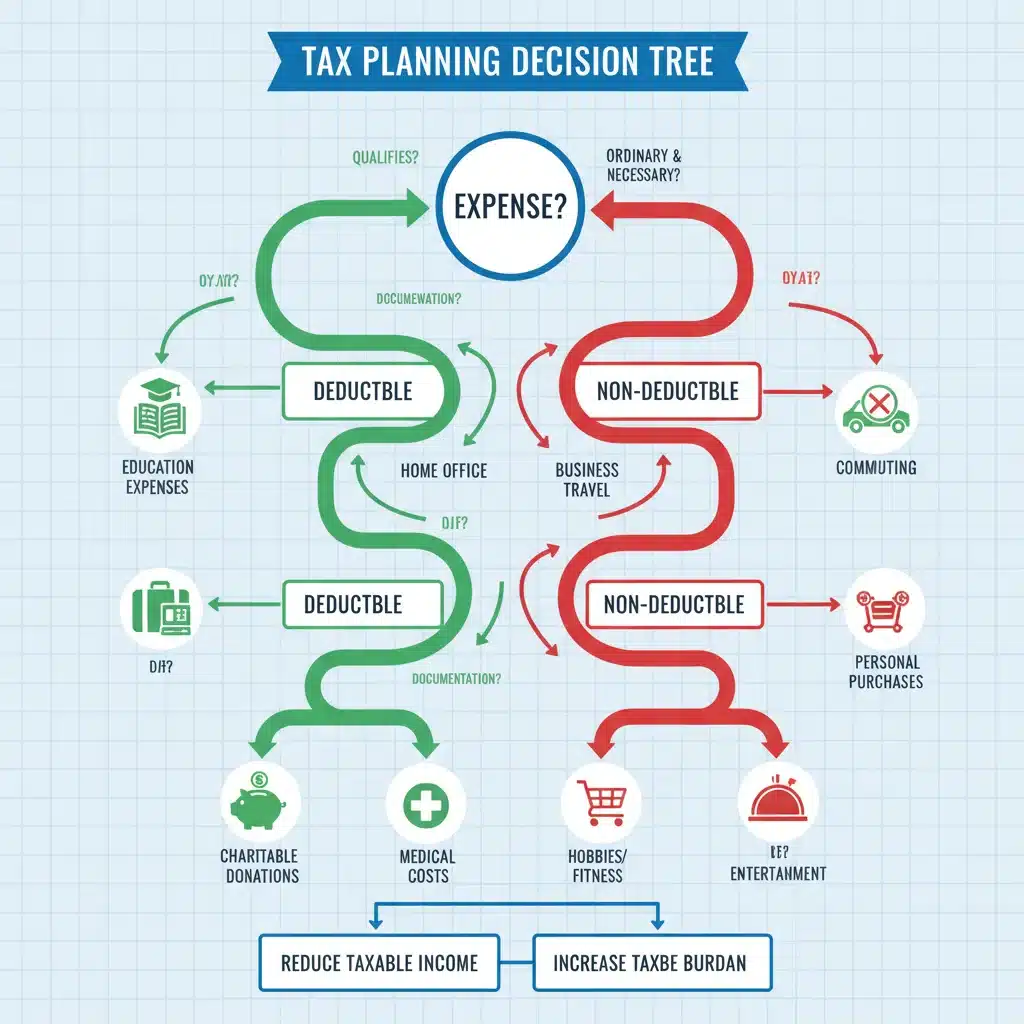
Maximizing Your Deductions: Insider Knowledge and Best Practices for 2026
Identifying these seven often-missed small business deductions is the first step; effectively claiming them is the next. Here’s some insider knowledge and best practices to ensure you maximize your tax savings for 2026:
1. Meticulous Record-Keeping: Your Best Defense
This cannot be stressed enough. For every deduction, the IRS requires proof. This means keeping detailed records of all income and expenses. Utilize accounting software (like QuickBooks, Xero, or Wave), keep digital copies of receipts, maintain mileage logs, and organize all financial documents. Good record-keeping not only supports your deductions but also simplifies financial management throughout the year.
2. Understand Your Business Structure
The type of business entity you operate (sole proprietorship, partnership, LLC, S-Corp, C-Corp) significantly impacts which deductions you can claim and how you claim them. For instance, an S-Corp owner might receive distributions that are not subject to self-employment taxes, while a sole proprietor pays self-employment tax on all net earnings. Consult with a tax professional to ensure your structure is optimized for tax efficiency.
3. Don’t Fear the Audit, but Be Prepared
Many small business owners avoid certain deductions, like the home office, out of fear of an audit. While audits are a possibility, they are rare, and having impeccable records is your best defense. If you have legitimate expenses and can back them up with documentation, you have nothing to fear. Don’t let unfounded fear prevent you from claiming rightful deductions.
4. Leverage Technology for Expense Tracking
Beyond general accounting software, consider apps specifically designed for expense tracking (e.g., Expensify, MileIQ for mileage). These tools can automate much of the record-keeping process, ensuring you don’t miss a single deductible expense. The easier it is to track, the more likely you are to capture every eligible deduction.
5. Regular Review of Financials
Don’t wait until tax season to review your financials. Conduct quarterly or even monthly reviews. This allows you to identify potential deductions early, make necessary adjustments to your spending, and ensure your records are up-to-date. Regular reviews facilitate proactive tax planning and prevent last-minute surprises.
6. Seek Professional Tax Advice
While this guide provides valuable insights, it’s not a substitute for professional tax advice. A qualified CPA or tax advisor specializing in small businesses can offer personalized guidance, help you navigate complex tax laws, and ensure you’re taking advantage of every available deduction. They can also help you anticipate changes in tax legislation for 2026 and beyond, providing strategic insights that can save you significant money.
7. Plan for Estimated Taxes
If you anticipate owing more than $1,000 in taxes, you’ll likely need to pay estimated taxes throughout the year. Failing to do so can result in penalties. Your tax professional can help you calculate your estimated tax liability and set up a payment schedule, integrating this into your overall financial strategy. This is a crucial component of effective small business deductions management.
8. Understand Depreciation and Amortization
Many capital expenses (assets with a useful life of more than one year) cannot be fully deducted in the year they are purchased. Instead, their cost is recovered over time through depreciation (for tangible assets like equipment) or amortization (for intangible assets like startup costs or patents). Understanding these concepts and properly applying them can lead to significant annual deductions, spreading the tax benefit over several years.
9. Section 179 and Bonus Depreciation
For qualifying business equipment and software, Section 179 of the IRS tax code allows businesses to deduct the full purchase price of eligible property placed into service during the tax year, rather than depreciating it over several years. Additionally, bonus depreciation allows businesses to deduct a large percentage (often 100% in recent years, though this is phasing out) of the cost of eligible property in the year it’s placed in service. For 2026, it’s crucial to stay updated on the current bonus depreciation rates and Section 179 limits, as these can provide massive immediate deductions for business investments.
The Financial Impact of Diligent Tax Planning
The cumulative effect of diligently claiming these small business deductions can be transformative. Imagine saving thousands of dollars each year that can be reinvested into marketing, new equipment, employee bonuses, or expanding your operations. This isn’t just about reducing your tax bill; it’s about freeing up capital to fuel your business’s growth and stability.
By adopting a proactive and informed approach to tax planning for 2026, you empower your business to thrive. It moves tax season from a period of anxiety to an opportunity for strategic financial optimization. The insider knowledge shared here is designed to give you an edge, ensuring you’re not leaving money on the table that rightfully belongs to your business.
Conclusion: Your Path to Smarter Small Business Taxes in 2026
For US small business owners, the tax landscape of 2026 presents both challenges and unparalleled opportunities for financial optimization. By focusing on smart tax planning and understanding the nuances of the tax code, you can unlock significant savings that directly contribute to your business’s success and longevity.
The seven often-missed small business deductions discussed – from the strategic use of the home office and vehicle deductions to leveraging startup costs, professional development, insurance premiums, bad debts, and retirement contributions – represent just a fraction of the potential savings available. The key to unlocking these benefits lies in meticulous record-keeping, a clear understanding of your business’s financial structure, and a proactive approach to tax management.
Don’t let fear or a lack of knowledge prevent you from claiming what’s rightfully yours. Embrace the role of a financially savvy entrepreneur. Work closely with a trusted tax professional, implement robust tracking systems, and regularly review your financial health. By doing so, you’ll not only navigate the complexities of tax season with confidence but also position your small business for unprecedented growth and financial stability in 2026 and beyond. Start planning today, and turn these insider insights into tangible financial impact for your business.