
Unlock Your Potential: How US Adults Can Acquire 2 New Skills by Mid-2026
In today’s rapidly evolving world, the concept of lifelong learning is no longer just a buzzword; it’s a fundamental necessity for personal growth and professional success. For US adults looking to stay competitive, adapt to new technologies, or simply enrich their lives, the goal to acquire new skills is paramount. This comprehensive guide will walk you through a strategic roadmap designed to help you successfully acquire at least two new, valuable skills by mid-2026. We’ll delve into identifying relevant skills, effective learning methodologies, overcoming common challenges, and leveraging available resources.
The landscape of work and life is constantly shifting. Automation, artificial intelligence, and global connectivity are reshaping industries and demanding new competencies. The skills that were relevant a decade ago might be obsolete tomorrow, while emerging fields create unprecedented opportunities. This dynamic environment means that continuous learning isn’t just an advantage; it’s a survival strategy. By committing to acquire new skills, you’re not just enhancing your resume; you’re future-proofing your career, expanding your intellectual horizons, and boosting your overall well-being. Imagine the confidence of knowing you can adapt, innovate, and contribute meaningfully in any context.
Many adults feel overwhelmed by the prospect of learning something new, especially when balancing work, family, and other commitments. The good news is that acquiring new skills doesn’t have to mean returning to a traditional classroom for years. Modern learning avenues offer flexibility, accessibility, and efficiency that cater to busy schedules and diverse learning styles. From online courses and certifications to apprenticeships and self-directed study, there’s a path for everyone. The key is to approach skill acquisition with a structured plan and a growth mindset.
Our goal for you is ambitious yet entirely achievable: to successfully acquire new skills, specifically two, by mid-2026. This timeframe provides ample opportunity for deep learning and practical application. Whether you’re aiming to master a new programming language, become proficient in digital marketing, develop advanced leadership capabilities, or even pick up a musical instrument, the principles outlined here will guide your journey. Let’s embark on this transformative learning adventure together.
Defining Your Learning Objectives: What Skills to Acquire?
The first crucial step in your journey to acquire new skills is to clearly define what those skills will be. This isn’t a decision to be taken lightly, as your choices will significantly impact your motivation and the value you derive from your learning efforts. Consider both your personal aspirations and professional demands. What areas genuinely excite you? What skills are in high demand in your current or desired industry? What gaps do you see in your current capabilities that, if filled, could unlock new opportunities?
Self-Assessment and Passion Discovery
Start with introspection. What are your natural aptitudes? What activities do you find engaging and fulfilling? Sometimes, the best skills to acquire are those that align with an existing passion or curiosity. For example, if you love solving puzzles, perhaps data analytics or cybersecurity would be a natural fit. If you enjoy creating things, graphic design, web development, or even a craft like woodworking could be excellent choices. Don’t underestimate the power of intrinsic motivation; learning something you genuinely enjoy makes the process far more sustainable and rewarding.
Market Research and Future-Proofing
Beyond personal interest, it’s vital to consider the job market and future trends. Research industries that are growing rapidly. Look at job postings for roles that interest you – what skills are consistently listed as requirements? Websites like LinkedIn, Indeed, and industry-specific forums can provide valuable insights. Reports from organizations like the World Economic Forum often highlight emerging skills and those experiencing declining demand. Key areas currently experiencing high demand include:
- Digital Skills: Data analysis, artificial intelligence/machine learning, cloud computing, cybersecurity, digital marketing, web development, UI/UX design.
- Soft Skills: Critical thinking, problem-solving, creativity, emotional intelligence, leadership, communication, collaboration, adaptability.
- Green Skills: Renewable energy technologies, sustainable practices, environmental management.
- Healthcare and Wellness: Telehealth, specialized medical technologies, mental health support.
Aim to pick at least one skill that enhances your current professional trajectory or opens doors to a new career path, and another that might be more for personal enrichment or a long-term passion project. This balance can keep your learning journey engaging and impactful.
Setting SMART Goals for Skill Acquisition
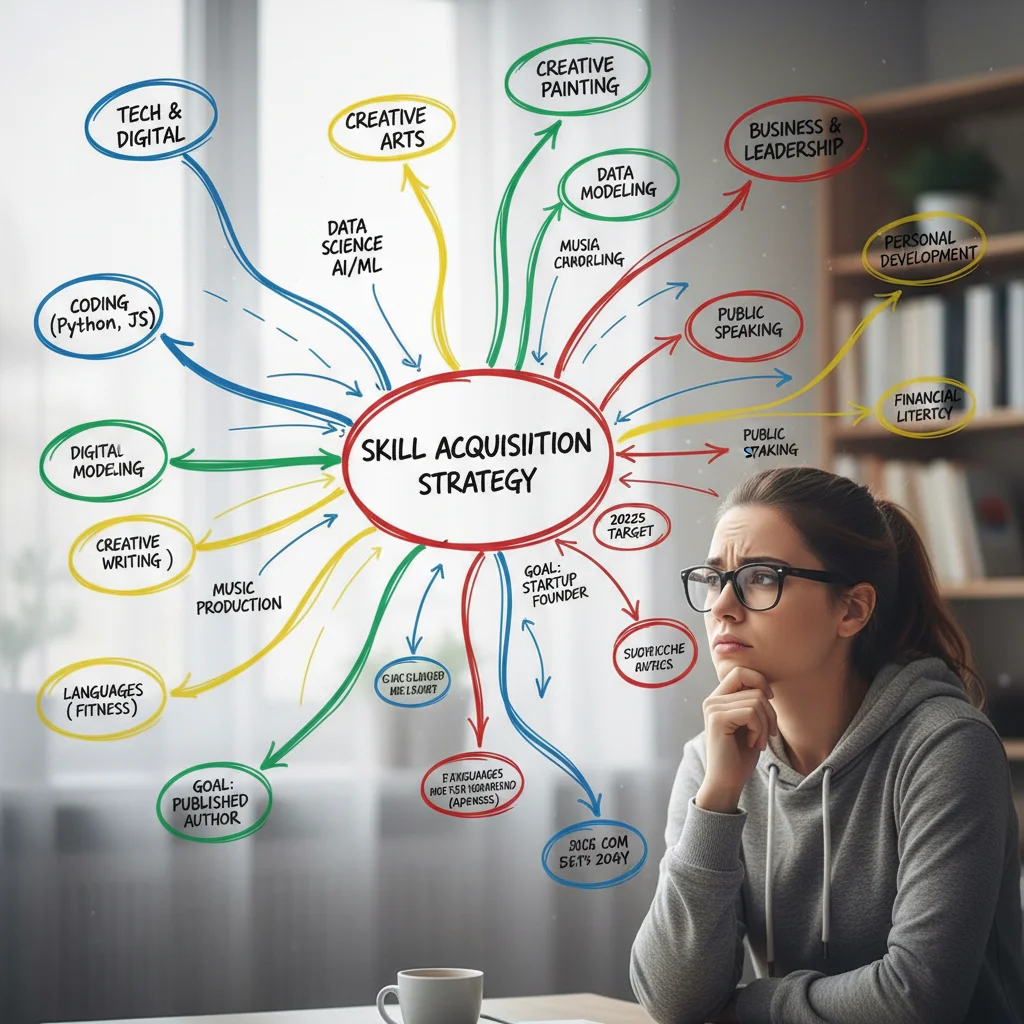
Once you have a few potential skills in mind, refine your choices and set SMART (Specific, Measurable, Achievable, Relevant, Time-bound) goals. Instead of saying, “I want to learn to code,” define it as: “I will acquire new skills in Python programming by completing a beginner-to-intermediate course on Coursera and building three small portfolio projects by December 2024.” This level of specificity makes your goal trackable and provides a clear target.
Crafting Your Learning Plan: Strategies to Acquire New Skills
With your target skills identified, the next step is to develop a robust learning plan. This plan should detail the resources you’ll use, the time you’ll dedicate, and how you’ll measure your progress. A well-structured plan is your blueprint for success in your mission to acquire new skills.
Choosing the Right Learning Resources and Platforms
The abundance of learning resources available today is both a blessing and a challenge. Here are some of the most effective avenues for US adults to acquire new skills:
- Online Courses and MOOCs (Massive Open Online Courses): Platforms like Coursera, edX, Udacity, and Khan Academy offer structured courses from top universities and industry experts. Many offer certifications that can be added to your professional profile.
- Bootcamps: For intensive, career-focused skill acquisition (especially in tech), bootcamps provide immersive training over several weeks or months. They often come with job placement assistance.
- Professional Certifications: Industry-recognized certifications (e.g., PMP for project management, AWS certifications for cloud computing, Google Analytics certification for digital marketing) validate your expertise and are highly valued by employers.
- Workshops and Webinars: Shorter, focused learning experiences that can introduce you to a new topic or deepen your understanding of a specific aspect of a skill.
- Books and E-books: Traditional learning resources remain incredibly powerful for building foundational knowledge and detailed understanding.
- Tutorials and Documentation: For technical skills, official documentation, blogs, and YouTube tutorials are invaluable for hands-on learning and troubleshooting.
- Mentorship and Networking: Learning from experienced professionals can accelerate your growth. Seek out mentors or join professional communities related to your target skills.
- Community Colleges and Adult Education Programs: Don’t overlook local options. Many community colleges offer affordable courses and vocational training programs tailored to adult learners.
When selecting resources, consider your learning style, budget, and the level of structure you require. A blended approach, combining different types of resources, often yields the best results.
Time Management and Consistency
Consistency is more important than intensity when you aim to acquire new skills. It’s better to dedicate 30 minutes daily than to cram for 5 hours once a week. Schedule specific learning blocks in your calendar and treat them as non-negotiable appointments. Identify your peak learning times – are you a morning person or a night owl? Leverage these periods for your most challenging learning tasks.
Break down your learning goals into smaller, manageable chunks. Instead of trying to learn an entire programming language at once, focus on mastering one concept or building one small project each week. This approach prevents burnout and provides a sense of accomplishment, keeping you motivated.
Active Learning and Practice
Passive consumption of information (watching videos, reading) is not enough to truly acquire new skills. You must actively engage with the material. This means:
- Applying what you learn: Practice exercises, coding challenges, design projects, writing assignments.
- Teaching others: Explaining a concept to someone else solidifies your understanding.
- Building projects: The most effective way to demonstrate proficiency is by creating something tangible. This also builds a portfolio.
- Seeking feedback: Share your work with peers or mentors and be open to constructive criticism.
- Spaced Repetition: Regularly revisit previously learned material to reinforce memory and understanding.
Overcoming Challenges and Staying Motivated
The journey to acquire new skills is rarely linear. You’ll encounter obstacles, moments of frustration, and perhaps even self-doubt. Developing strategies to overcome these challenges is crucial for long-term success.
Battling Procrastination and Lack of Time
These are two of the most common hurdles for adult learners. To combat them:
- The 5-Minute Rule: If you’re struggling to start, commit to just 5 minutes of learning. Often, once you begin, you’ll find yourself continuing for much longer.
- Eliminate distractions: Turn off notifications, close unnecessary tabs, and find a quiet learning environment.
- Prioritize: Recognize that learning is an investment in your future. If it’s truly important, you’ll make time for it.
- Batch similar tasks: Group related learning activities to maximize efficiency.
Dealing with Frustration and Plateauing
Learning new things inevitably involves periods where progress feels slow or even stagnant. This is normal. When you feel frustrated:
- Take a break: Step away from the material. A fresh perspective can often help you see solutions.
- Revisit fundamentals: Sometimes, difficulty arises from a weak understanding of basic concepts.
- Seek help: Don’t be afraid to ask questions in forums, to mentors, or to peers.
- Celebrate small wins: Acknowledge every small step forward to maintain momentum.
Maintaining Motivation and Accountability
Long-term goals require sustained motivation. To keep your drive alive:
- Track your progress: Seeing how far you’ve come is a powerful motivator. Use apps, journals, or simple checklists.
- Find a learning buddy or community: Learning with others provides support, accountability, and new perspectives.
- Reward yourself: Set up small, non-food rewards for reaching milestones.
- Remind yourself of your ‘why’: Reconnect with your initial reasons for wanting to acquire new skills. What opportunities will this unlock? How will it improve your life?

Leveraging Technology for Skill Acquisition
In the quest to acquire new skills, technology is your greatest ally. The digital age has democratized education, making high-quality learning resources more accessible than ever before. Understanding how to effectively leverage these tools can significantly enhance your learning journey.
Online Learning Platforms and Their Ecosystems
As mentioned earlier, platforms like Coursera, edX, Udacity, and LinkedIn Learning offer structured courses, often with assignments, quizzes, and peer-graded projects. Many provide pathways to professional certifications or even university degrees. Beyond these, specialized platforms cater to specific skill sets:
- Programming: Codecademy, freeCodeCamp, LeetCode, HackerRank.
- Design: Adobe Creative Cloud tutorials, Skillshare, Domestika.
- Languages: Duolingo, Babbel, Memrise, iTalki.
- Business & Marketing: HubSpot Academy, Google Skillshop.
These platforms often integrate interactive elements, community forums, and progress tracking, making the learning experience engaging and efficient.
Productivity Tools and Apps
To manage your learning process effectively, consider using productivity tools:
- Note-taking apps: Evernote, Notion, OneNote for organizing your thoughts and consolidating information.
- Flashcard apps: Anki, Quizlet for memorization and spaced repetition.
- Project management tools: Trello, Asana for breaking down large learning projects into manageable tasks.
- Focus apps: Forest, Freedom for minimizing distractions during study sessions.
AI-Powered Learning Aids
Artificial intelligence is increasingly being integrated into learning. AI tools can:
- Personalize learning paths: Adapt content and pace to your individual needs.
- Provide instant feedback: On coding assignments, writing, or even language pronunciation.
- Generate explanations: For complex topics, AI can break down concepts into simpler terms.
- Create practice problems: Tailored to your current skill level.
Experiment with these tools to see how they can complement your traditional learning methods and help you acquire new skills more effectively.
Measuring Progress and Demonstrating Proficiency
How will you know you’ve truly managed to acquire new skills? And how will you convince others, especially potential employers, of your newfound abilities? Measuring progress and demonstrating proficiency are vital parts of the learning journey.
Tracking Your Learning Journey
Keep a log of your learning activities. This could be a simple spreadsheet, a dedicated journal, or a digital tool. Document:
- Hours spent learning each week.
- Topics covered and concepts mastered.
- Projects completed, no matter how small.
- Challenges faced and solutions found.
- Reflections on your learning process.
This not only helps maintain motivation by showing your progress but also serves as a valuable resource when you need to recall information or articulate your learning experience.
Building a Portfolio
For many skills, particularly in creative and technical fields, a portfolio is the most powerful way to demonstrate proficiency. This isn’t just a list of courses; it’s a collection of your actual work. If you’re learning:
- Programming: Create small applications, contribute to open-source projects, or solve coding challenges on platforms like GitHub.
- Design: Develop mockups, create branding elements, or design websites/apps.
- Writing: Maintain a blog, write articles, or create content samples.
- Data Analysis: Analyze public datasets, create visualizations, and present your findings.
Your portfolio should showcase your best work and highlight the specific skills you’ve acquired. Each project should ideally include a brief description of the problem you solved, the tools and techniques you used, and the outcome.
Certifications and Badges
While practical application is key, certifications and digital badges from reputable institutions and platforms can provide formal validation of your skills. These can be added to your LinkedIn profile and resume, signaling to employers that you have a verified level of competence in a particular area. When choosing certifications, prioritize those that are widely recognized and valued within your target industry.
The Long-Term Benefits of Continuous Learning
Successfully planning to and executing your goal to acquire new skills by mid-2026 will yield a multitude of benefits that extend far beyond simply having new items on your resume. Continuous learning is an investment in yourself that pays dividends for a lifetime.
Career Advancement and New Opportunities
The most immediate and tangible benefit is often career-related. New skills can lead to:
- Promotions: Demonstrating initiative and expanded capabilities can make you a strong candidate for advancement within your current role or company.
- Career Transitions: If you’re looking to switch industries or roles, acquiring relevant skills is often the most direct path.
- Increased Earning Potential: Skills in high demand command higher salaries.
- Entrepreneurship: New skills can empower you to start your own business or freelance, offering greater autonomy and flexibility.
- Job Security: In a volatile job market, adaptable individuals with diverse skill sets are more resilient to economic shifts.
Enhanced Problem-Solving and Adaptability
The process of learning itself strengthens your cognitive abilities. You become better at critical thinking, problem-solving, and creative ideation. Each new skill you acquire new skills trains your brain to approach challenges from different angles, making you a more versatile and effective individual in all areas of life.
Personal Growth and Well-being
Beyond professional advantages, continuous learning significantly contributes to personal growth. It can:
- Boost confidence: Mastering a new skill provides a profound sense of accomplishment.
- Improve mental agility: Keeping your brain active can help maintain cognitive function as you age.
- Reduce stress: Engaging in stimulating learning activities can be a powerful antidote to daily stressors.
- Expand your worldview: Learning often exposes you to new ideas, cultures, and perspectives.
- Increase fulfillment: The pursuit of knowledge and mastery is inherently rewarding, leading to a richer, more purposeful life.
Conclusion: Your Journey to Acquire New Skills by Mid-2026
The journey to acquire new skills by mid-2026 is an exciting and empowering one. It requires intentional planning, consistent effort, and a resilient mindset, but the rewards are immeasurable. By following the steps outlined in this guide – from identifying relevant skills and crafting a solid learning plan to leveraging technology and staying motivated – you are well on your way to transforming your capabilities and opening up a world of new possibilities.
Remember, this isn’t just about ticking boxes; it’s about investing in your future self. It’s about embracing the spirit of continuous learning, recognizing that growth is a lifelong endeavor. So, take that first step today. Choose your skills, dedicate your time, and watch as you evolve into a more skilled, adaptable, and confident individual ready to thrive in any future. Mid-2026 is not just a deadline; it’s a milestone on your path to lifelong learning and success.