Achieve Personal Goals by 2026: A 6-Step Goal-Setting Guide

Beyond Resolutions: A 6-Step Guide to Achieving Your Personal Goals by December 2026
The dawn of a new year often brings with it a flurry of resolutions, aspirations, and grand plans. Yet, for many, these ambitious declarations fade into distant memories long before the year is out. What if, instead of fleeting resolutions, you embarked on a structured journey designed to help you achieve personal goals by a specific, meaningful deadline – say, December 2026? This isn’t about wishful thinking; it’s about employing advanced goal-setting methodologies to transform your deepest desires into tangible realities.
In this comprehensive guide, we’ll unveil a robust 6-step framework meticulously crafted to empower you to not just set, but genuinely achieve personal goals that truly matter. We’ll delve into strategies that move beyond conventional wisdom, focusing on clarity, strategic planning, consistent action, and resilient adaptation. Whether your aspirations involve career advancement, personal growth, financial independence, or mastering a new skill, this methodology provides the roadmap you need to navigate the complexities of long-term achievement.
Forget the cycle of setting and forgetting. It’s time to embrace a proactive, systematic approach that builds momentum, fosters accountability, and celebrates progress. By December 2026, imagine looking back at a landscape of accomplishments, knowing that each step was intentional, each challenge overcome, and each goal meticulously pursued. Let’s embark on this transformative journey together, equipping you with the tools to effectively achieve personal goals and sculpt the future you envision.
Step 1: Clarify Your Vision and Define SMART+ Goals
The foundation of achieving any significant goal lies in its clarity. Before you can even begin to achieve personal goals, you must first precisely define what those goals are. This step goes beyond vague statements like "I want to be happier" or "I want to be successful." Instead, we employ the widely recognized SMART framework, but with a crucial addition, making it SMART+.
Specific: What Exactly Do You Want to Achieve?
Your goal should be unambiguous. Instead of "I want to get fit," consider "I want to run a half-marathon in under 2 hours and 15 minutes." The more detail, the better. Answer the five ‘W’ questions: Who is involved? What do I want to accomplish? Where will this happen? When do I want to achieve this? Why is this goal important?
Measurable: How Will You Track Your Progress?
If you can’t measure it, you can’t manage it. Establish concrete criteria for measuring your progress and determining when the goal has been met. For the half-marathon example, the measurement is clear: finishing in under 2 hours and 15 minutes. For a financial goal, it might be "save $10,000." This measurability is vital to help you stay on track and motivate you as you see progress towards your desire to achieve personal goals.
Achievable: Is Your Goal Realistic and Attainable?
While ambition is commendable, setting unrealistic goals can lead to frustration and burnout. An achievable goal stretches your abilities without being impossible. Assess your resources, skills, and constraints. Can this goal realistically be achieved within the given timeframe? This doesn’t mean shying away from big dreams, but rather breaking them down into manageable, achievable steps. It’s about finding the sweet spot between challenge and possibility.
Relevant: Does This Goal Align with Your Values?
A relevant goal is one that truly matters to you and aligns with your broader life purpose and values. If a goal isn’t personally significant, your motivation will wane. Ask yourself: Is this the right time for this goal? Is it aligned with my other objectives? Does it make sense in the context of my life? Ensuring relevance provides the intrinsic drive needed to persist when trying to achieve personal goals.
Time-bound: When Will You Achieve This Goal?
Every goal needs a deadline. Our overarching deadline is December 2026, but each sub-goal and action step should also have its own timeframe. "I want to save money" is vague; "I will save $500 per month starting January 2024 to reach $10,000 by December 2025" is time-bound. Deadlines create a sense of urgency and prevent procrastination, pushing you to actively achieve personal goals.
+ (Positive and Purpose-Driven): What’s Your ‘Why’?
This is where we go beyond the traditional SMART framework. Your goal should be framed positively (e.g., "I will successfully complete…" rather than "I won’t fail at…"). More importantly, it needs a strong ‘why.’ What is the deeper purpose behind this goal? How will achieving it impact your life and the lives of others? Understanding your purpose fuels your resilience and provides a powerful source of motivation when the path to achieve personal goals becomes challenging.
Actionable Tip: Spend dedicated time journaling or using a mind map to flesh out each aspect of your SMART+ goals. Don’t rush this stage; it’s the blueprint for your success.
Step 2: Strategic Planning and Breaking Down Big Goals
Once your SMART+ goals are crystal clear, the next critical step to achieve personal goals is to develop a strategic plan. A grand vision without a detailed plan is merely a dream. This involves dissecting your large, overarching goal into smaller, manageable milestones and then outlining the specific actions required to reach each milestone.
Reverse Engineering Your Goal
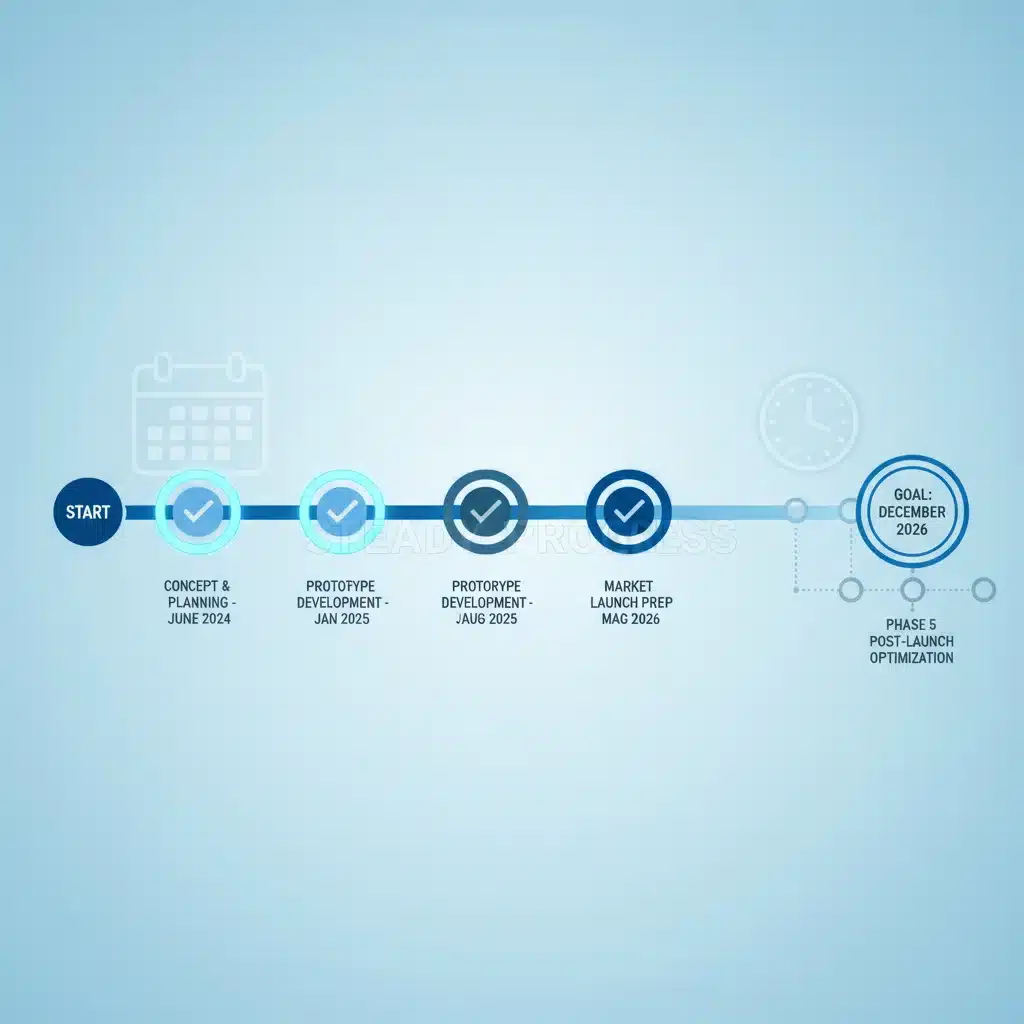
Start with your end date (December 2026) and work backward. What needs to be accomplished in 2026, 2025, and then 2024 to stay on track? Break down your main goal into annual goals, then quarterly goals, monthly goals, and finally, weekly and daily tasks. This approach makes the daunting task of achieving a long-term objective seem far more attainable.
For example, if your goal is to write a 60,000-word novel by December 2026:
- By Dec 2026: Publish a 60,000-word novel.
- By Dec 2025: Complete first draft (50,000 words), revise, and submit to beta readers.
- By Dec 2024: Outline the novel, write 25,000 words of the first draft.
- Quarterly: Set word count targets (e.g., 6,250 words per quarter in 2024).
- Monthly: Set chapter or scene completion targets.
- Weekly/Daily: Dedicate specific writing blocks (e.g., 500 words per day, 5 days a week).
Identify Key Milestones
Milestones are significant markers of progress along your journey. They provide opportunities to celebrate achievements, re-evaluate, and maintain motivation. For instance, in our novel example, completing the outline, finishing the first draft, or receiving feedback from beta readers would be key milestones. These act as mini-finish lines on your path to achieve personal goals.
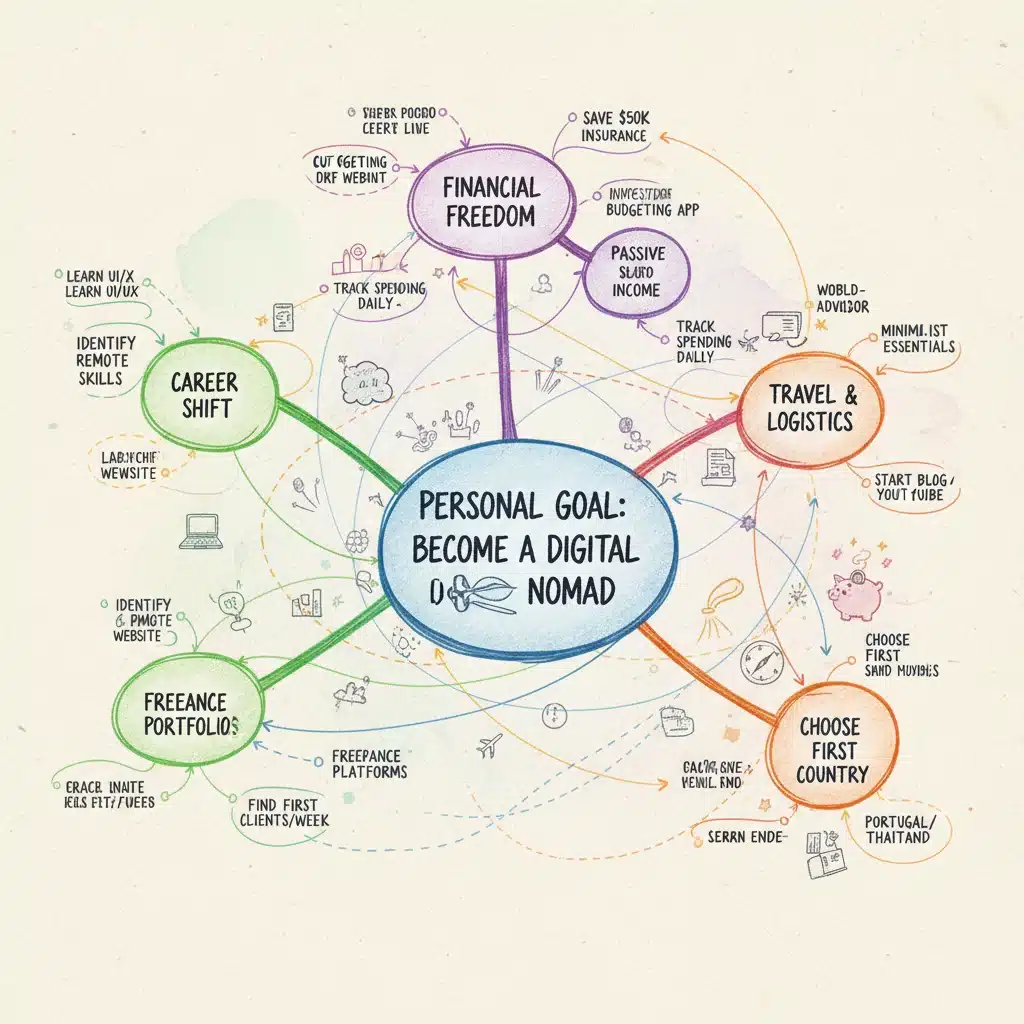
Outline Action Steps and Resources
For each milestone, list the specific, actionable steps required to reach it. Be as detailed as possible. What resources will you need (time, money, skills, support)? Are there any skills you need to acquire? Who can help you? Creating this detailed list turns abstract goals into concrete tasks, making it much clearer how you will achieve personal goals.
Anticipate Obstacles and Develop Contingency Plans
No journey is without its bumps. Proactively identify potential obstacles that could derail your progress. These could be lack of time, financial constraints, self-doubt, or external factors. Once identified, brainstorm solutions or contingency plans. If your primary plan fails, what’s Plan B? This foresight builds resilience and prepares you for inevitable challenges, ensuring you can continue to achieve personal goals even when faced with adversity.
Actionable Tip: Use a project management tool (digital or physical) to map out your goals, milestones, and action steps. Tools like Trello, Asana, or even a simple spreadsheet can be incredibly effective for visualizing your plan.
Step 3: Implement and Take Consistent Action
Planning is crucial, but it’s only half the battle. The real progress towards helping you achieve personal goals comes from consistent, disciplined action. This step focuses on turning your meticulously crafted plan into daily habits and sustained effort.
Build Habits, Not Just Tasks
To achieve personal goals over a long period, you need to integrate goal-oriented actions into your daily routine. Think about habit stacking – linking a new habit to an existing one. For example, if you want to exercise more, you might decide to do 15 minutes of yoga immediately after your morning coffee. Consistency, even in small actions, accumulates into significant progress over time.
Prioritize and Focus
With a multi-year goal, it’s easy to feel overwhelmed by the sheer volume of tasks. Learn to prioritize. Use methods like the Eisenhower Matrix (Urgent/Important) or the Ivy Lee Method (list 6 most important tasks for tomorrow, complete them in order) to focus your energy on what truly moves the needle. Eliminate distractions and dedicate focused blocks of time to your most critical tasks.
Embrace the "Kaizen" Philosophy
Kaizen, a Japanese philosophy, emphasizes continuous improvement through small, incremental changes. Don’t wait for perfection to start. Take imperfect action. Focus on making small improvements daily rather than striving for monumental leaps. These consistent, minor adjustments will compound, leading to significant progress as you strive to achieve personal goals.
Manage Your Energy, Not Just Your Time
Time management is important, but energy management is often overlooked. Recognize when you are most productive and schedule your most demanding tasks during those peak energy periods. Ensure you’re getting adequate rest, nutrition, and exercise to sustain your energy levels throughout your journey to achieve personal goals.
Actionable Tip: Start small. Commit to 15-30 minutes of focused work on your goal every single day for a week. Once that becomes a habit, gradually increase the duration or intensity. Track your habits using an app or a simple habit tracker to visualize your consistency.
Step 4: Monitor Progress and Adapt Your Strategy
The path to achieve personal goals is rarely a straight line. Regular monitoring and a willingness to adapt are crucial for navigating unforeseen challenges and optimizing your approach. This step involves regularly reviewing your progress and making necessary adjustments.
Scheduled Reviews
Establish a regular review schedule: weekly, monthly, and quarterly. During these reviews, ask yourself:
- Am I on track to meet my milestones?
- What’s working well? What isn’t?
- Am I encountering unexpected obstacles?
- Do I need to adjust my actions, timeline, or even the goal itself (if circumstances have significantly changed)?
These reviews are not about judgment but about learning and calibration. They provide an opportunity to celebrate small victories and identify areas for improvement, helping you to continuously achieve personal goals.
Feedback Loops
Seek feedback from trusted mentors, peers, or accountability partners. An outside perspective can offer valuable insights and help you identify blind spots. If your goal involves learning a new skill, actively seek constructive criticism to refine your technique and accelerate your learning curve.
Be Flexible and Agile
Life happens. Unforeseen events, new opportunities, or shifts in your priorities may require you to pivot. Don’t be rigidly tied to your initial plan if it no longer serves your best interests. The ability to adapt your strategy while keeping your ultimate vision in mind is a hallmark of successful goal achievers. Sometimes, to truly achieve personal goals, you need to be willing to change how you get there.
Document Your Journey
Keep a journal or a log of your progress, challenges, and insights. This documentation serves multiple purposes: it reinforces your commitment, provides a record of your journey, and allows you to look back and see how far you’ve come. Reflecting on past successes and overcome obstacles can be a powerful motivator when facing new difficulties.
Actionable Tip: Dedicate 30 minutes each Sunday evening for a "weekly review." Look at what you accomplished, what you learned, and what your top priorities are for the upcoming week. Schedule quarterly "deep dive" reviews to assess your longer-term progress and make significant strategic adjustments.
Step 5: Cultivate Resilience and Maintain Motivation
The journey to achieve personal goals is a marathon, not a sprint. There will be moments of doubt, setbacks, and waning motivation. Cultivating resilience and strategies to maintain your drive are essential for long-term success.
Embrace the Growth Mindset
Adopt a growth mindset, believing that your abilities and intelligence can be developed through dedication and hard work. View challenges not as insurmountable barriers but as opportunities for learning and growth. A setback isn’t a failure; it’s feedback. This perspective empowers you to bounce back stronger and continue striving to achieve personal goals.
Celebrate Small Wins
Don’t wait until December 2026 to celebrate. Acknowledge and celebrate every milestone, every small win, every piece of progress. These mini-celebrations provide dopamine boosts, reinforce positive behaviors, and keep your motivation high. They remind you that your efforts are yielding results and that you are indeed moving closer to your desire to achieve personal goals.
Build a Support System
Surround yourself with people who believe in you, challenge you constructively, and hold you accountable. This could be a mentor, a coach, a mastermind group, or even just a supportive friend or family member. Sharing your goals and progress with others can provide encouragement and a sense of shared purpose, which is invaluable when trying to achieve personal goals.
Practice Self-Compassion
Be kind to yourself. There will be days when you fall short, when motivation is low, or when you feel overwhelmed. Instead of self-criticism, practice self-compassion. Understand that imperfections are part of the human experience. Pick yourself up, learn from the experience, and recommit to your goals. This self-care is vital for sustained effort.
Revisit Your ‘Why’
When motivation wanes, go back to your ‘why’ – the positive, purpose-driven reason behind your goal. Reconnect with the vision of what achieving this goal will mean for your life. Visualize the feeling of accomplishment and the positive impact. This powerful reminder can reignite your passion and push you forward to achieve personal goals.
Actionable Tip: Create a "Motivation Board" or a digital folder filled with images, quotes, and reminders of your ‘why’ and your desired future state. Look at it daily to keep your purpose top of mind.
Step 6: Integrate and Sustain Success Beyond 2026
Achieving your personal goals by December 2026 is a monumental accomplishment. However, true success lies not just in reaching a destination, but in integrating the lessons learned and sustaining the positive changes you’ve made. This final step is about ensuring your achievements become a lasting part of your life.
Reflect and Learn
Once you’ve reached your goals, take significant time to reflect on the entire journey. What were the biggest challenges? What strategies proved most effective? What did you learn about yourself? Document these insights. This reflection solidifies your learning and prepares you for future goal-setting endeavors, making it easier to achieve personal goals repeatedly.
Maintain New Habits
Many goals involve building new habits. Don’t abandon them once the goal is achieved. If you successfully ran a half-marathon, continue to incorporate regular exercise into your routine. If you achieved a financial saving goal, maintain smart financial habits. Sustaining these positive behaviors ensures that your achievement isn’t a one-off event but a catalyst for ongoing growth and success.
Set New Horizons
The human spirit thrives on challenge and growth. Once you’ve successfully managed to achieve personal goals, it’s natural to look for new horizons. Use the momentum and confidence gained from your success to set new, even more ambitious goals. The process you’ve mastered can be reapplied to continue your journey of personal development.
Share Your Journey and Inspire Others
Consider sharing your story and the lessons you’ve learned. Your journey can inspire others who are grappling with their own aspirations. This act of sharing not only reinforces your own accomplishments but also contributes to a positive cycle of motivation and achievement within your community.
Live Your Accomplishments
Finally, truly live and enjoy the fruits of your labor. If your goal was to learn a new language, use it. If it was to travel, embark on that adventure. If it was to build a business, nurture and grow it. The ultimate reward of setting and achieving personal goals is the enhanced quality of life and the person you become in the process. This is the true essence of what it means to achieve personal goals.
Actionable Tip: Schedule a "post-goal review" session for January 2027. Treat it as a celebration and a strategic planning session for your next set of aspirations, applying all the powerful lessons learned from your journey to achieve personal goals by December 2026.
Conclusion: Your Path to Lasting Achievement
Achieving significant personal goals by a specific deadline like December 2026 requires more than just willpower; it demands a structured, adaptable, and resilient approach. By following this 6-step methodology – from clarifying your SMART+ vision to strategically planning, taking consistent action, monitoring progress, cultivating resilience, and finally, integrating your success – you equip yourself with a powerful framework for transforming aspirations into realities.
Remember, the journey to achieve personal goals is a deeply personal one, filled with unique challenges and triumphs. Embrace the process, learn from every step, and celebrate every victory, no matter how small. By committing to this advanced goal-setting methodology, you are not just setting goals; you are actively designing your future, building a life rich with purpose, accomplishment, and continuous growth. Start today, and by December 2026, you will look back with immense pride at the incredible journey you undertook and the remarkable personal goals you achieved.