2026 Stock Market Outlook: Identifying Undervalued Sectors for Growth

The financial landscape is a perpetually evolving entity, a complex tapestry woven with threads of innovation, economic shifts, geopolitical events, and human sentiment. As we cast our gaze towards 2026, investors are keenly seeking to understand where the most promising opportunities lie. The overarching goal remains consistent: to identify undervalued stock sectors that possess the inherent potential for substantial growth in the coming years. This comprehensive guide aims to dissect the current market dynamics, project future trends, and pinpoint the specific areas where savvy investors might find their next significant gains. Understanding the 2026 stock market outlook requires a multi-faceted approach, considering everything from technological advancements to demographic shifts and global economic policies.
The year 2026 is not just another calendar year; it represents a crucial juncture in global economic development. We are witnessing an acceleration of digital transformation, a heightened focus on sustainability, and significant demographic changes that will reshape consumer behavior and industrial demand. These macro trends inevitably ripple through financial markets, creating both challenges and unparalleled opportunities. For those willing to conduct thorough research and exercise patience, the reward could be significant. Our focus here is on identifying these undervalued stock sectors, understanding why they are currently overlooked, and projecting their trajectory towards future appreciation.
Understanding the Current Economic Climate and its Impact on Undervalued Stock Sectors 2026
Before delving into specific sectors, it’s imperative to establish a foundational understanding of the prevailing economic climate. Inflation, interest rates, global supply chain resilience, and geopolitical stability are all critical factors that dictate market sentiment and sector performance. As we approach 2026, central banks globally are navigating a delicate balance between controlling inflation and fostering economic growth. This environment often leads to market volatility, which, while daunting for some, presents excellent entry points for investors seeking undervalued stock sectors. A strong dollar, for instance, can impact multinational corporations, while fluctuating commodity prices can affect industrial and energy sectors.
Moreover, the post-pandemic recovery has been uneven across different regions and industries. Some sectors have surged, driven by immediate demand or speculative interest, while others have lagged, often due to persistent supply chain issues, labor shortages, or a slower return to normalcy for their specific customer base. These lagging sectors are precisely where we might uncover the next wave of undervalued stock sectors. A thorough analysis involves distinguishing between genuinely struggling businesses and those temporarily suppressed but possessing strong fundamentals and long-term growth catalysts. Economic indicators such as GDP growth, unemployment rates, and consumer spending patterns will be crucial in painting a complete picture.
Technological disruption also plays an increasingly significant role. Industries that fail to adapt to new technologies or embrace digital transformation risk obsolescence. Conversely, sectors that are at the forefront of innovation often command higher valuations. However, even within innovation-driven sectors, certain segments might be overlooked or mispriced by the broader market, making them prime candidates for being undervalued stock sectors. The challenge for investors is to identify these hidden gems before the wider market recognizes their true potential. The interplay of these economic forces creates a dynamic environment where opportunities are constantly shifting.
The Technology Sector: A Reassessment for Undervalued Stock Sectors 2026
The technology sector has been a juggernaut for decades, consistently delivering impressive returns. However, the narrative around tech often focuses on the mega-cap growth stocks, potentially overshadowing smaller, innovative companies or sub-sectors that are currently undervalued stock sectors. As we look towards 2026, the tech landscape will continue to evolve, driven by advancements in artificial intelligence (AI), machine learning (ML), quantum computing, cybersecurity, and the metaverse. While many big tech names may appear fully valued, deeper dives reveal pockets of opportunity.
Artificial Intelligence and Machine Learning Infrastructure
The widespread adoption of AI and ML is still in its nascent stages, yet its transformative power is undeniable. While the focus often falls on AI applications, the foundational infrastructure supporting these technologies – specialized semiconductors, cloud computing services, data storage, and AI-driven cybersecurity solutions – could represent undervalued stock sectors. Companies providing the picks and shovels for the AI gold rush, rather than just the gold itself, might offer more stable and significant long-term growth. The demand for robust, scalable, and secure AI infrastructure is only set to increase exponentially.
Cybersecurity: Beyond the Headlines
With increasing digitalization comes an escalating threat landscape. Cybersecurity is no longer a niche concern but a fundamental requirement for businesses and governments alike. While some cybersecurity firms are highly valued, the sector is vast and constantly innovating. Companies specializing in niche areas like zero-trust architecture, advanced threat detection, industrial control system (ICS) security, or privacy-enhancing technologies might be among the undervalued stock sectors. The market may not yet fully appreciate the long-term, non-discretionary demand for these specialized services and products.
The Metaverse and Web3 Infrastructure
While the metaverse is still largely conceptual, the underlying technologies that will power it – decentralized networks, blockchain, advanced graphics processing, and virtual/augmented reality (VR/AR) hardware – are rapidly developing. Some companies building this foundational infrastructure, rather than just the consumer-facing applications, could be considered undervalued stock sectors. The market is often quick to price in the hype but slower to recognize the long-term value of the foundational components. Patience and a long-term view will be key here.
Renewable Energy and Clean Technology: The Green Revolution’s Undervalued Stock Sectors 2026
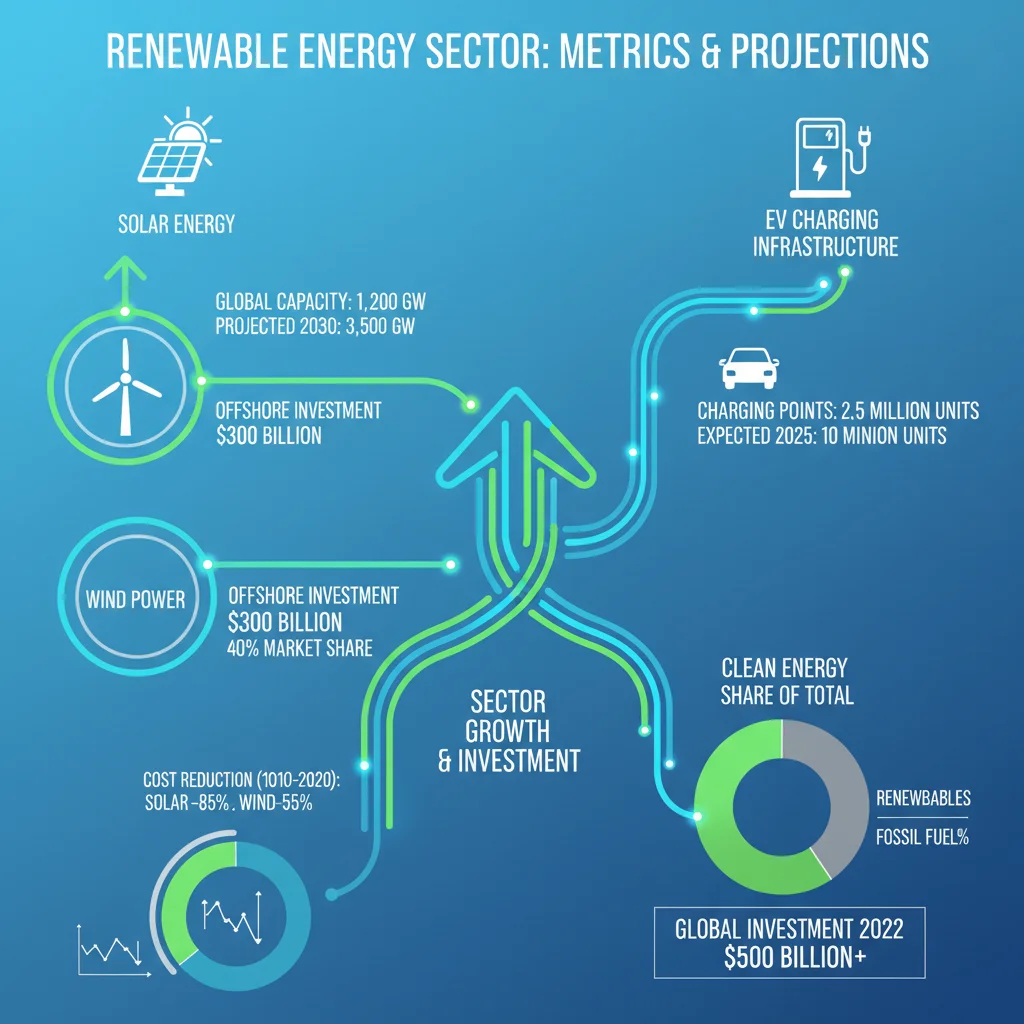
The global push towards decarbonization and sustainable practices is not a fleeting trend but a fundamental shift in economic policy and consumer preference. Governments worldwide are investing heavily in renewable energy, and corporations are setting ambitious net-zero targets. This creates an enormous growth runway for the renewable energy and clean technology sectors, some segments of which may still be undervalued stock sectors.
Energy Storage Solutions
The intermittency of renewable sources like solar and wind necessitates advanced energy storage solutions. Batteries, hydrogen fuel cells, and other innovative storage technologies are critical enablers of a fully renewable grid. Companies developing and deploying these solutions, especially those with scalable and cost-effective technologies, could be significantly undervalued stock sectors. The market might not yet fully grasp the scale of investment required in this area to meet global energy transition goals.
Sustainable Agriculture and Food Tech
Feeding a growing global population sustainably is one of the 21st century’s greatest challenges. This has led to a boom in sustainable agriculture and food technology. Areas like vertical farming, precision agriculture (using AI and IoT), alternative proteins, and waste reduction technologies are ripe for innovation and investment. Many companies in these sub-sectors are relatively young and might not have captured widespread market attention, making them potential undervalued stock sectors with immense long-term potential as global food systems evolve.
Water Management and Purification
Access to clean water is a fundamental human right and an increasingly scarce resource. Companies involved in water treatment, desalination, smart water grids, and wastewater management are addressing a critical global need. As climate change exacerbates water scarcity, the demand for these technologies and services will only grow. While not always considered a ‘glamorous’ sector, its essential nature and long-term demand drivers suggest that certain companies within water management could be undervalued stock sectors.
Healthcare and Biotechnology: Innovation for a Healthier Future and Undervalued Stock Sectors 2026
The healthcare sector is perennially robust, driven by an aging global population, advancements in medical science, and increasing healthcare expenditure. While large pharmaceutical companies and established medical device manufacturers are often well-covered, there are specific sub-sectors within healthcare and biotechnology that could be undervalued stock sectors with significant growth prospects by 2026.
Personalized Medicine and Genomics
The ability to tailor medical treatment to an individual’s genetic makeup is revolutionizing healthcare. Companies involved in genetic sequencing, gene editing (CRISPR technology), targeted therapies, and companion diagnostics are at the forefront of this revolution. While some firms have seen significant run-ups, the full potential of personalized medicine is still far from realized. Smaller, innovative players in this space, particularly those developing platform technologies or novel therapeutic approaches, might be among the undervalued stock sectors.
Telehealth and Digital Health Solutions
The pandemic accelerated the adoption of telehealth and digital health solutions, proving their efficacy and convenience. However, the market might have overcorrected or overlooked the long-term implications for certain segments. Companies offering integrated digital health platforms, remote patient monitoring devices, AI-powered diagnostics, and mental health tech could still represent undervalued stock sectors. The focus is shifting from emergency remote care to seamless, preventative, and chronic disease management through digital means.
Aging-in-Place Technologies
As the global population ages, there’s a growing demand for solutions that allow seniors to live independently and safely in their homes for longer. This includes smart home devices for health monitoring, fall detection systems, medication management tools, and assistive robotics. This often-overlooked segment caters to a massive and growing demographic, making companies innovating in this space potential undervalued stock sectors.
Financial Services and Fintech: Disruption and Opportunity for Undervalued Stock Sectors 2026
The financial services industry is undergoing a profound transformation driven by technology. Fintech, or financial technology, has disrupted traditional banking, payments, and investment services. While some fintech companies have achieved stratospheric valuations, other segments, particularly those focusing on infrastructure or underserved markets, could be among the undervalued stock sectors.
Blockchain and Decentralized Finance (DeFi) Infrastructure
Beyond the speculative nature of cryptocurrencies, the underlying blockchain technology and the principles of decentralized finance (DeFi) offer immense potential to revolutionize financial systems. Companies building the infrastructure for secure, scalable, and interoperable blockchain networks, or developing compliance and security solutions for the DeFi space, might be undervalued stock sectors. As regulatory clarity emerges, the institutional adoption of these technologies could accelerate, unlocking significant value.
Embedded Finance
Embedded finance refers to the integration of financial services directly into non-financial platforms and applications. Think of ‘buy now, pay later’ options at checkout, or insurance offered directly within a travel booking site. Companies providing the technological backbone for these seamless financial integrations are enabling a massive shift in how consumers access financial products. This often-behind-the-scenes work means these providers could be undervalued stock sectors, yet their impact on commerce is substantial.
RegTech and Compliance Solutions
Financial regulations are complex and constantly evolving. RegTech (Regulatory Technology) companies develop solutions that help financial institutions comply with these regulations more efficiently and effectively, using AI, machine learning, and automation. As the regulatory burden increases globally, the demand for sophisticated RegTech solutions will grow. These are often B2B companies that fly under the radar of retail investors but offer compelling value as undervalued stock sectors.
Emerging Markets and Frontier Economies: Growth Beyond the Developed World for Undervalued Stock Sectors 2026
While often associated with higher risk, emerging markets and frontier economies offer some of the most compelling long-term growth stories. Demographic dividends, rising middle classes, and rapid urbanization are powerful catalysts. Within these markets, certain sectors are likely to be undervalued stock sectors, offering significant upside for patient investors.
Consumer Discretionary in Growing Economies
As income levels rise in emerging markets, so does discretionary spending. Sectors like e-commerce, entertainment, travel, and consumer brands are poised for significant growth. Local companies that understand the unique cultural nuances and preferences of these markets often have a competitive edge. The sheer scale of the population combined with increasing purchasing power makes these undervalued stock sectors particularly attractive.

Infrastructure Development
Many emerging and frontier economies still require substantial investment in infrastructure – roads, railways, ports, utilities, and digital networks. Companies involved in engineering, construction, and the provision of materials for these projects benefit from long-term government spending and economic development plans. While often cyclical, the structural growth story in these regions means some infrastructure-related businesses could be undervalued stock sectors.
Domestic Financial Services
As economies mature, demand for sophisticated financial services grows. Local banks, insurance companies, and asset management firms in emerging markets often have significant room for expansion as more of the population gains access to formal financial systems. These institutions are often deeply integrated into the local economy and can provide exposure to the broader economic growth of the region, potentially acting as undervalued stock sectors.
Real Estate and Infrastructure: Reimagined for Undervalued Stock Sectors 2026
The real estate and infrastructure sectors, while traditionally considered mature, are undergoing significant transformations. Demographic shifts, remote work trends, and the need for sustainable urbanization are creating new opportunities, leading to certain segments becoming undervalued stock sectors.
Data Centers and Digital Infrastructure
The explosion of cloud computing, AI, and the metaverse demands ever-increasing digital infrastructure. Data centers, fiber optic networks, and cell towers are the backbone of the digital economy. Companies owning or managing these assets benefit from predictable, long-term demand. While some are well-known, specialized providers or those in emerging geographies might be among the undervalued stock sectors as the digital transformation continues globally.
Logistics and Warehousing
The e-commerce boom has fundamentally reshaped supply chains, creating immense demand for modern logistics facilities, fulfillment centers, and last-mile delivery infrastructure. Companies that own, develop, or manage these properties, particularly those incorporating automation and sustainable practices, are addressing a structural shift in retail. Despite recent growth, certain niches within this sector could still be considered undervalued stock sectors, especially those adapting to new urban logistics models.
Affordable Housing Solutions
Globally, there’s a significant shortage of affordable housing. Companies innovating in construction techniques (e.g., modular construction), financing models, or urban planning to address this challenge are tapping into a massive, socially critical market. While often government-supported, private companies with scalable solutions could see substantial growth, making them potential undervalued stock sectors.
Materials and Mining: The Foundational Elements for Undervalued Stock Sectors 2026
The materials and mining sectors are often cyclical, but the global energy transition and technological advancements are creating structural demand for specific raw materials. This makes certain segments within these sectors compelling candidates for undervalued stock sectors.
Critical Minerals for the Energy Transition
The shift to electric vehicles and renewable energy systems requires vast quantities of critical minerals like lithium, cobalt, nickel, rare earth elements, and copper. Companies involved in the ethical and sustainable extraction, processing, and recycling of these minerals are strategically positioned for long-term growth. Geopolitical considerations and supply chain security are also elevating the importance of these resources, potentially making these undervalued stock sectors.
Advanced Materials and Composites
Innovation in materials science is crucial for many cutting-edge industries, from aerospace and automotive to healthcare and electronics. Companies developing advanced ceramics, high-performance polymers, carbon fiber composites, and other specialized materials offer enabling technologies for numerous sectors. These often-specialized businesses might be undervalued stock sectors, as their impact is felt across multiple industries rather than being confined to one.
Consumer Staples and Discretionary: Evolving Habits and Undervalued Stock Sectors 2026
While consumer staples are generally considered defensive, and discretionary cyclical, evolving consumer habits and technological integration are creating new opportunities and potential undervalued stock sectors within both.
Sustainable and Ethical Consumer Brands
A growing segment of consumers is actively seeking out products and brands that are sustainable, ethically produced, and transparent. Companies that authentically embody these values, from food and beverages to personal care and apparel, are building strong brand loyalty and market share. Smaller, agile brands that are successfully capturing this trend might be undervalued stock sectors compared to their larger, slower-to-adapt counterparts.
Experience Economy Providers
Post-pandemic, there’s a renewed emphasis on experiences over material possessions. Companies offering unique travel experiences, immersive entertainment, personalized learning, or health and wellness retreats cater to this shift. While some segments are recovering, others might still be undervalued stock sectors, especially those leveraging technology to enhance or personalize these experiences.
Investment Strategy for Undervalued Stock Sectors 2026
Identifying undervalued stock sectors is only the first step. A robust investment strategy is crucial for capitalizing on these opportunities. Here are key considerations:
- Long-Term Horizon: Undervalued assets often require patience. Their value may not be immediately recognized by the market, necessitating a long-term investment horizon (3-5+ years) to allow their intrinsic value to materialize.
- Thorough Due Diligence: Conduct in-depth research into specific companies within these sectors. Look at financial health, competitive advantages, management quality, and growth catalysts. Don’t just invest in a sector; invest in strong companies within it.
- Diversification: Even within undervalued stock sectors, diversification is key. Spread your investments across several companies and potentially different sub-sectors to mitigate risk.
- Risk Assessment: Understand the specific risks associated with each sector and company. Emerging technologies, regulatory changes, and geopolitical events can all impact performance.
- Stay Informed: The economic and technological landscape is constantly changing. Continuously monitor market trends, company news, and macroeconomic indicators to adjust your strategy as needed.
- Valuation Metrics: Don’t just look for ‘cheap’ stocks. Focus on companies with strong fundamentals trading below their intrinsic value. Consider metrics like Price-to-Earnings (P/E), Price-to-Sales (P/S), Enterprise Value to EBITDA (EV/EBITDA), and discounted cash flow (DCF) analysis.
The 2026 stock market outlook is shaped by powerful secular trends: technological advancement, sustainability imperatives, demographic shifts, and evolving global economic structures. While market volatility and uncertainty are inevitable, they also pave the way for discerning investors to identify and capitalize on undervalued stock sectors.
From the foundational infrastructure of AI and Web3 to the critical minerals powering the green revolution, and from personalized healthcare to the evolving consumer habits in emerging markets, opportunities abound. The key lies in moving beyond the obvious, conducting diligent research, and adopting a long-term perspective. By focusing on industries that are addressing fundamental global needs, undergoing significant innovation, or benefiting from structural economic shifts, investors can position themselves for substantial returns in the years leading up to and beyond 2026. The journey to uncover these gems requires patience, conviction, and a continuous learning mindset. Embrace the future, understand the underlying currents, and you will be well-equipped to navigate the exciting landscape of the 2026 stock market.