
As we approach the second quarter of 2026, investors are keenly evaluating the economic landscape for opportunities that promise substantial returns. The United States market, ever dynamic and resilient, continues to present a myriad of possibilities, especially within sectors that might currently be undervalued but possess robust growth potential. Identifying these hidden gems requires a meticulous analysis of economic indicators, technological advancements, regulatory shifts, and consumer behavior. This comprehensive investment outlook for Q2 2026 aims to pinpoint four such US Growth Sectors, providing a detailed rationale for their inclusion and offering insights into how they can be strategically integrated into a diversified growth portfolio.
The global economic climate in 2026 is characterized by continued technological disruption, evolving geopolitical dynamics, and a renewed focus on sustainability. These macro trends inevitably shape market sentiment and sector performance. While some sectors may appear overvalued due to recent speculative bubbles, others, despite strong fundamentals and compelling growth narratives, remain overlooked. Our objective is to shine a light on these undervalued areas, offering a forward-looking perspective that goes beyond conventional wisdom.
This article will delve into the specific drivers behind the projected growth of each sector, analyze recent updates and comparative performance, and discuss potential risks and mitigation strategies. Our focus is on providing actionable intelligence for investors seeking to optimize their portfolios for long-term capital appreciation by investing in US Growth Sectors.
Understanding the Macroeconomic Context for Q2 2026
Before diving into specific sectors, it’s crucial to understand the broader macroeconomic environment expected in Q2 2026. Inflationary pressures, while easing, might still be a concern, influencing central bank policies. Interest rates, having normalized, will play a significant role in dictating capital flows and corporate borrowing costs. Geopolitical stability, or lack thereof, will continue to impact supply chains and commodity prices. Furthermore, the ongoing digital transformation across industries and increasing consumer demand for personalized and sustainable products and services are powerful underlying currents.
Technological innovation remains a paramount driver of economic growth. Breakthroughs in artificial intelligence, biotechnology, advanced materials, and renewable energy are not just incremental improvements but foundational shifts that create entirely new markets and redefine existing ones. Companies at the forefront of these innovations, particularly those with strong intellectual property and scalable business models, are poised for significant expansion. Moreover, government initiatives and infrastructure spending, particularly in the US, are expected to provide tailwinds for specific industries, creating a fertile ground for certain US Growth Sectors to thrive.
We are also observing a shift in investor sentiment, moving from purely speculative plays to a more value-oriented approach within growth investing. This means that companies with sustainable competitive advantages, clear pathways to profitability, and strong balance sheets are likely to attract more capital, even if their current valuations don’t reflect their full potential. This nuanced market environment sets the stage for identifying truly undervalued opportunities.
Sector 1: Advanced Materials and Sustainable Technologies
The first undervalued sector we highlight for Q2 2026 is Advanced Materials and Sustainable Technologies. This sector encompasses companies involved in the research, development, and production of novel materials that offer superior performance characteristics, as well as technologies that promote environmental sustainability. The driving forces behind this sector’s growth are multifaceted: increasing regulatory pressures for environmental compliance, rising consumer demand for eco-friendly products, and the critical need for efficiency and performance across various industries, from aerospace to automotive and construction.
Recent Updates and Growth Drivers
- Battery Technology: Significant advancements in solid-state batteries, lithium-sulfur, and other next-generation battery chemistries are revolutionizing energy storage, crucial for electric vehicles (EVs), grid storage, and portable electronics. Companies innovating in this space are set for exponential growth.
- Recycling and Circular Economy: New technologies for advanced recycling of plastics, metals, and electronics are gaining traction, driven by both environmental mandates and the economic incentive to recover valuable resources. This segment is moving beyond niche applications to become a mainstream industrial activity.
- Lightweight Composites: The demand for lightweight, high-strength materials continues to surge in aerospace, automotive, and wind energy sectors, aiming to improve fuel efficiency and structural integrity. Innovations in carbon fiber, graphene, and bio-composites are particularly noteworthy.
- Sustainable Building Materials: Growing emphasis on green building practices is fueling demand for low-carbon concrete, sustainable insulation, and advanced glazing technologies that reduce energy consumption.
Comparative Analysis
Compared to traditional manufacturing or even some pure-play renewable energy companies, firms in advanced materials often have higher barriers to entry due to significant R&D investment and specialized expertise. This creates a competitive moat. Their growth is often tied to the success of multiple downstream industries, diversifying their revenue streams. While some segments of clean energy have seen significant capital inflows, the underlying materials and enabling technologies are often overlooked, presenting an undervaluation opportunity. The market has yet to fully price in the long-term impact of these foundational innovations.
Risks and Mitigation
Risks include high upfront R&D costs, regulatory uncertainties, and potential for technological obsolescence. Investors should focus on companies with diversified product portfolios, strong patent protection, and established partnerships with major industrial players to mitigate these risks. Government incentives for green technologies also provide a layer of support.
Sector 2: Precision Agriculture and Food Technology
The second undervalued sector for Q2 2026 is Precision Agriculture and Food Technology. With a rapidly growing global population, increasing concerns about food security, and the imperative for sustainable farming practices, this sector is poised for transformative growth. Precision agriculture leverages technology to optimize farming inputs, maximize yields, and minimize environmental impact. Food technology, on the other hand, focuses on innovative food production, processing, and distribution methods, including alternative proteins and personalized nutrition.

Recent Updates and Growth Drivers
- AI and IoT in Farming: The integration of artificial intelligence, machine learning, and the Internet of Things (IoT) in agriculture is enabling precise monitoring of crop health, soil conditions, and livestock. This leads to optimized irrigation, targeted fertilization, and early disease detection, significantly boosting efficiency and reducing waste.
- Vertical Farming and Controlled Environment Agriculture (CEA): As urban populations grow, vertical farms and CEA facilities offer solutions for local, sustainable food production, independent of traditional land constraints and weather patterns. Advances in LED lighting, hydroponics, and aeroponics are making these systems increasingly viable.
- Alternative Proteins: The demand for plant-based meats, cultivated meats, and insect-based proteins is soaring due to environmental concerns, ethical considerations, and health benefits. Companies at the forefront of taste, texture, and scalability in this area are experiencing rapid expansion.
- Supply Chain Optimization: Technologies improving traceability, reducing spoilage, and enhancing logistics within the food supply chain are critical for efficiency and safety. Blockchain and advanced analytics are playing key roles.
Comparative Analysis
While some aspects of agribusiness are mature, the precision agriculture and food tech segments are relatively nascent but accelerating. Traditional agricultural companies often operate on thin margins, but technology-driven firms in this space command higher valuations due to their intellectual property and disruptive potential. The market is beginning to recognize the necessity of these innovations for global food security, yet many companies remain undervalued compared to their long-term growth prospects. This makes them attractive US Growth Sectors.
Risks and Mitigation
Risks include high capital expenditure for new technologies, regulatory hurdles for novel food products, and consumer acceptance. Investors should look for companies with proven technologies, strong partnerships with existing agricultural players, and diversified product offerings to mitigate these risks. Government support for sustainable agriculture also provides a favorable operating environment.
Sector 3: Digital Health and Personalized Medicine
Digital Health and Personalized Medicine represent the third undervalued sector for Q2 2026. The healthcare industry is undergoing a profound transformation, driven by technological innovation, an aging global population, and a shift towards preventative and personalized care. This sector encompasses everything from telemedicine and remote patient monitoring to advanced diagnostics, genomics, and targeted therapies.
Recent Updates and Growth Drivers
- Telemedicine and Remote Monitoring: The pandemic significantly accelerated the adoption of telemedicine, and its benefits in terms of accessibility and cost-effectiveness ensure its continued growth. Remote patient monitoring devices and platforms are becoming increasingly sophisticated, allowing for proactive health management.
- Genomics and Precision Oncology: Advances in gene sequencing and editing technologies are leading to highly personalized treatments for various diseases, particularly cancer. Companies developing diagnostic tools and therapies based on individual genetic profiles are at the cutting edge.
- AI in Drug Discovery and Development: Artificial intelligence is dramatically speeding up the drug discovery process, identifying potential drug candidates, and optimizing clinical trials, leading to more efficient and cost-effective development of new medicines.
- Digital Therapeutics: Software-based interventions that deliver evidence-based therapeutic care are gaining recognition as a new category of medicine, addressing conditions from mental health disorders to chronic diseases.
Comparative Analysis
While the broader healthcare sector is often seen as defensive, the digital health and personalized medicine segments offer aggressive growth opportunities. Many established pharmaceutical companies are slow to adapt to these technological shifts, leaving a vacuum for innovative startups and mid-cap companies. The market has often struggled to accurately value the long-term impact of these disruptive technologies, leading to undervaluation. As regulatory frameworks catch up and adoption rates increase, these companies are poised for re-rating, making them crucial US Growth Sectors.
Risks and Mitigation
Key risks include stringent regulatory approvals, data privacy concerns, and competition from large pharmaceutical and tech companies. Investors should target companies with robust intellectual property, clear regulatory pathways, strong clinical data, and strategic partnerships with healthcare providers and insurers. Adherence to data security standards is also paramount.
Sector 4: Advanced Manufacturing and Robotics
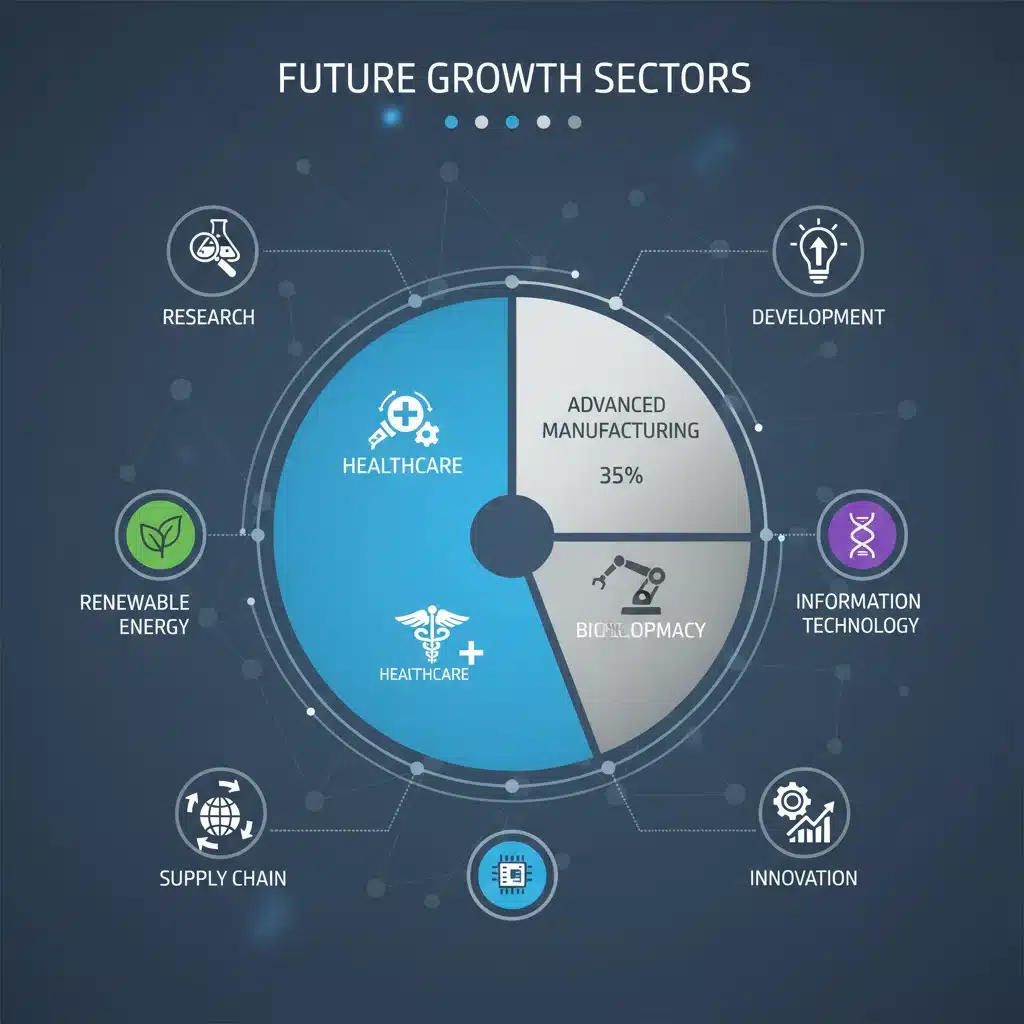
The final undervalued sector for Q2 2026 is Advanced Manufacturing and Robotics. The global push for reshoring manufacturing, coupled with the need for increased efficiency, automation, and customization, is fueling a renaissance in this sector. Advanced manufacturing integrates cutting-edge technologies like AI, IoT, additive manufacturing (3D printing), and advanced robotics to create smarter, more agile, and resilient production processes.
Recent Updates and Growth Drivers
- Robotics and Automation: Beyond traditional industrial robots, collaborative robots (cobots), autonomous mobile robots (AMRs), and AI-powered automation solutions are transforming factories, warehouses, and logistics, addressing labor shortages and improving productivity.
- Additive Manufacturing (3D Printing): Significant advancements in materials and printing techniques are expanding 3D printing beyond prototyping to mass customization and production of complex parts in industries like aerospace, medical devices, and automotive.
- Industrial IoT and Digital Twins: The integration of sensors, data analytics, and digital twins allows for real-time monitoring, predictive maintenance, and optimization of entire manufacturing processes, leading to substantial cost savings and efficiency gains.
- Supply Chain Resilience: The lessons from recent global disruptions are driving investment in localized, automated, and resilient manufacturing capabilities, reducing reliance on distant and fragile supply chains.
Comparative Analysis
While traditional manufacturing can be cyclical and capital-intensive, advanced manufacturing and robotics companies offer higher growth profiles due to their technological leverage. Many investors still view manufacturing through an outdated lens, failing to recognize the transformative impact of automation and digitalization. This often leads to an undervaluation of companies that are leading this industrial revolution. As the demand for on-shoring and near-shoring production increases, these companies are becoming indispensable, positioning them as key US Growth Sectors.
Risks and Mitigation
Risks include high initial investment costs for automation, cybersecurity threats to interconnected systems, and the need for a skilled workforce to operate and maintain these advanced technologies. Investors should seek companies with strong recurring revenue streams from software and services, diversified customer bases across industries, and a focus on modular, scalable solutions. Partnerships with educational institutions to develop talent pipelines can also be a positive indicator.
Integrating These Undervalued US Growth Sectors into Your Portfolio
Successfully incorporating these four undervalued US Growth Sectors into your investment portfolio requires a thoughtful strategy. Diversification is key. Instead of concentrating heavily on a single company, consider investing in a basket of companies within each sector, or through exchange-traded funds (ETFs) that specialize in these areas, if available and appropriate for your risk tolerance.
Strategic Allocation Considerations
- Long-Term Horizon: These are growth sectors, meaning their full potential may not be realized in the short term. A long-term investment horizon (3-5+ years) is generally advisable to allow these trends to mature and for companies to execute their growth strategies.
- Risk Management: While undervalued, growth sectors inherently carry higher risk than mature, dividend-paying companies. Balance your portfolio with a mix of growth, value, and defensive assets appropriate for your individual risk profile.
- Due Diligence: Conduct thorough due diligence on individual companies. Look for strong management teams, clear competitive advantages, healthy balance sheets, and a proven track record of innovation and execution.
- Stay Informed: The technological and economic landscapes are constantly evolving. Regularly review your investments and stay updated on sector-specific news, regulatory changes, and competitive developments.
The Q2 2026 investment outlook for the US market suggests a compelling opportunity in these four undervalued sectors: Advanced Materials and Sustainable Technologies, Precision Agriculture and Food Technology, Digital Health and Personalized Medicine, and Advanced Manufacturing and Robotics. Each sector is underpinned by powerful secular trends, technological innovation, and a growing demand for their products and services.
By understanding the unique drivers, comparative advantages, and potential risks associated with each of these US Growth Sectors, investors can make informed decisions to position their portfolios for significant capital appreciation in the coming years. The key is to look beyond the obvious, identify the foundational shifts occurring in the economy, and invest in the companies that are building the future, often before the broader market fully recognizes their true value.
Investing in these areas is not just about financial returns; it’s also about participating in the advancement of critical technologies that address global challenges, from climate change and food security to healthcare access and industrial efficiency. As we move further into 2026, these undervalued growth sectors are poised to deliver substantial value for discerning investors.