Inflation’s Grip: Crafting Your 2026 Budget Amidst Recent Economic Shifts

The economic landscape is a constantly shifting terrain, and understanding its movements is paramount for sound financial planning. As we inch closer to 2026, the recent inflation data from the past three months has emerged as a critical factor influencing how individuals, families, and businesses should approach their budgeting strategies. The persistent upward pressure on prices, while sometimes fluctuating, demands a proactive and informed response. This comprehensive guide will delve into the nuances of recent inflation trends, analyze their potential ripple effects on various sectors, and, most importantly, equip you with actionable strategies to fortify your inflation 2026 budgeting plan.
Understanding the Recent Inflationary Environment
Before we can effectively strategize for 2026, it’s crucial to grasp the current inflationary climate. The past three months have presented a mixed bag of economic signals, with some sectors experiencing cooling while others continue to grapple with elevated prices. What are the key indicators telling us? Are we seeing a sustained trend or merely temporary fluctuations?
Key Inflation Metrics and Their Recent Performance
Inflation is typically measured through various indices, with the Consumer Price Index (CPI) being one of the most widely cited. The CPI tracks the average change over time in the prices paid by urban consumers for a market basket of consumer goods and services. Recent CPI reports have shown – and continue to show – that while the overall rate of inflation might be moderating from its peak, it remains stubbornly above the long-term targets set by central banks. This ‘stickiness’ in inflation is a significant concern, as it suggests that price increases are becoming embedded in the economy rather than being transient.
Another important metric is the Producer Price Index (PPI), which measures the average change over time in the selling prices received by domestic producers for their output. A rising PPI often acts as a leading indicator for future consumer price increases, as businesses pass on higher input costs to consumers. Recent PPI data has also indicated continued pressure, highlighting that the cost of producing goods and services remains elevated, which will inevitably translate into higher prices for consumers down the line.
Factors Driving Recent Inflationary Pressures
The causes of the recent inflationary burst are multifaceted and complex. Supply chain disruptions, remnants of the global pandemic, continue to play a role, particularly in bottlenecks affecting manufacturing and shipping. Geopolitical events have also contributed significantly, impacting energy prices and the cost of essential commodities. Furthermore, robust consumer demand, fueled by accumulated savings and a strong labor market, has allowed businesses to raise prices without a significant drop in sales. Wage growth, while beneficial for workers, can also contribute to inflationary spirals if not matched by productivity gains.
The interplay of these factors creates a challenging environment for both consumers and policymakers. For individuals planning their inflation 2026 budgeting, understanding these underlying drivers is the first step towards building resilience.
The Direct Impact of Inflation on Your Finances
Inflation isn’t just an abstract economic concept; it has tangible, everyday consequences for your wallet. The erosion of purchasing power is its most immediate effect. What could you buy for a dollar last year, versus what it buys you today? This difference is the cost of inflation.
Erosion of Purchasing Power: What It Means for You
Simply put, inflation means your money buys less. If your income doesn’t keep pace with the rate of inflation, your real income – your actual buying power – decreases. This impacts everything from groceries and gas to housing and healthcare. For instance, if inflation is running at 5% annually, and your salary only increases by 3%, you are effectively 2% poorer in real terms. This persistent erosion can significantly derail long-term financial goals if not accounted for in your inflation 2026 budgeting.
Impact on Everyday Expenses: Food, Fuel, and Housing
The most visible effects of inflation are often seen in essential categories. Food prices have been a major concern, with staples like bread, milk, and meat seeing significant increases. Fuel costs, highly susceptible to global events, have also fluctuated wildly, directly impacting transportation budgets for commuters and businesses alike. Housing costs, including rent and mortgage payments, have also been on an upward trajectory in many regions, adding considerable strain to household budgets. These are not discretionary expenses; they are fundamental to daily living, making them critical components to address in your inflation 2026 budgeting.
Savings and Investments: The Silent Threat
Inflation is particularly insidious for savings. Money held in low-interest savings accounts or fixed-income investments can rapidly lose its value in real terms. If your savings account yields 1% interest, but inflation is 5%, you’re losing 4% of your purchasing power each year. This “inflation tax” can severely undermine your ability to meet future financial obligations, such as retirement or a down payment on a house. Understanding this dynamic is crucial for adjusting your investment strategies and protecting your capital against the ravages of inflation, a key consideration for inflation 2026 budgeting.
Forecasting for 2026: What the Data Suggests
While no one has a crystal ball, economic forecasting relies on analyzing current trends and historical data to project future scenarios. What do the recent inflation figures imply for 2026?
Expert Predictions and Economic Models
Economists and financial institutions utilize sophisticated models to predict future inflation rates. While there’s a range of predictions, a common theme emerging is that inflation is unlikely to return to pre-pandemic levels in the very near future. Many experts anticipate a “higher for longer” scenario, where inflation remains elevated compared to historical averages, even if it gradually declines from its peaks. Central banks are likely to continue their efforts to tame inflation, which could involve further interest rate hikes, impacting borrowing costs and economic growth. These predictions are vital inputs for your inflation 2026 budgeting.
Potential Scenarios: Persistent Inflation vs. Disinflation
Two primary scenarios are often discussed: persistent inflation and disinflation. Persistent inflation would mean that prices continue to rise at a significant pace, perhaps fueled by ongoing supply chain issues, strong demand, or wage-price spirals. Disinflation, on the other hand, implies a slowing down of the rate of inflation, where prices are still increasing, but at a decreasing pace. A more optimistic scenario might even involve deflation, where prices actually fall, though this is generally considered less likely and can also have negative economic consequences. Your inflation 2026 budgeting should ideally be flexible enough to adapt to either scenario, leaning towards resilience in the face of continued inflationary pressures.
How Global Events Could Further Influence Prices
The global economy is interconnected, and events far beyond our borders can significantly influence domestic inflation. Geopolitical tensions, trade disputes, natural disasters, and pandemics can all disrupt supply chains, impact commodity prices, and affect consumer confidence. These “black swan” events are difficult to predict but underscore the need for a robust and adaptable inflation 2026 budgeting strategy that incorporates contingency planning.
Crafting Your Resilient 2026 Budgeting Strategy
Given the current economic outlook, a “business as usual” approach to budgeting is no longer sufficient. Your inflation 2026 budgeting strategy needs to be proactive, adaptive, and focused on building financial resilience.
Step 1: Re-evaluate Your Current Spending Habits
The first step in effective budgeting, especially in an inflationary environment, is a thorough review of your current spending. Track every dollar for at least a month to identify where your money is truly going. Categorize your expenses into “needs” and “wants.” Be ruthless in identifying areas where you can cut back or optimize. Are there subscriptions you no longer use? Can you reduce dining out frequency? Even small adjustments can add up significantly over time, freeing up funds to combat rising costs elsewhere. This foundational step is critical for a successful inflation 2026 budgeting plan.
Step 2: Adjust for Expected Price Increases
Don’t assume prices will remain static. Based on recent inflation data and expert forecasts, factor in expected price increases for essential categories. For example, if food prices have risen by 8% over the past year, it’s prudent to budget for a similar increase in the coming year. Do the same for transportation, housing (if you’re renting or have an adjustable-rate mortgage), and utilities. Overestimating slightly is better than underestimating and finding yourself short. This forward-looking adjustment is a cornerstone of smart 2026 budgeting.
Step 3: Prioritize Debt Reduction, Especially High-Interest Debt
In an environment of rising interest rates – a common tool used by central banks to combat inflation – high-interest debt becomes even more burdensome. Credit card debt, personal loans, and other variable-rate loans will likely become more expensive. Prioritize paying down these debts aggressively. The money saved on interest payments can be redirected to other areas of your budget or into savings, strengthening your inflation 2026 budgeting position.
Step 4: Optimize Your Savings and Investments for Inflation
As discussed, inflation erodes the value of static savings. It’s time to make your money work harder. Consider exploring investments that historically perform well during inflationary periods, such as Treasury Inflation-Protected Securities (TIPS), real estate, commodities, or dividend-paying stocks. Consult with a financial advisor to tailor an investment strategy that aligns with your risk tolerance and financial goals, ensuring your investment strategies includes strategies to protect and grow your wealth.
Step 5: Explore Additional Income Streams
If your current income isn’t keeping pace with inflation, exploring additional income streams can be a powerful strategy. This could involve freelancing, a part-time job, selling goods online, or monetizing a hobby. Even a few hundred extra dollars a month can make a significant difference in cushioning the blow of rising costs and bolstering your inflation 2026 budgeting.
Step 6: Build and Maintain an Emergency Fund
An emergency fund is always important, but it becomes even more critical during economic uncertainty. Aim for at least three to six months’ worth of essential living expenses. This fund provides a safety net against unexpected job loss, medical emergencies, or unforeseen expenses that could be exacerbated by inflation, preventing you from derailing your carefully constructed inflation 2026 budgeting.
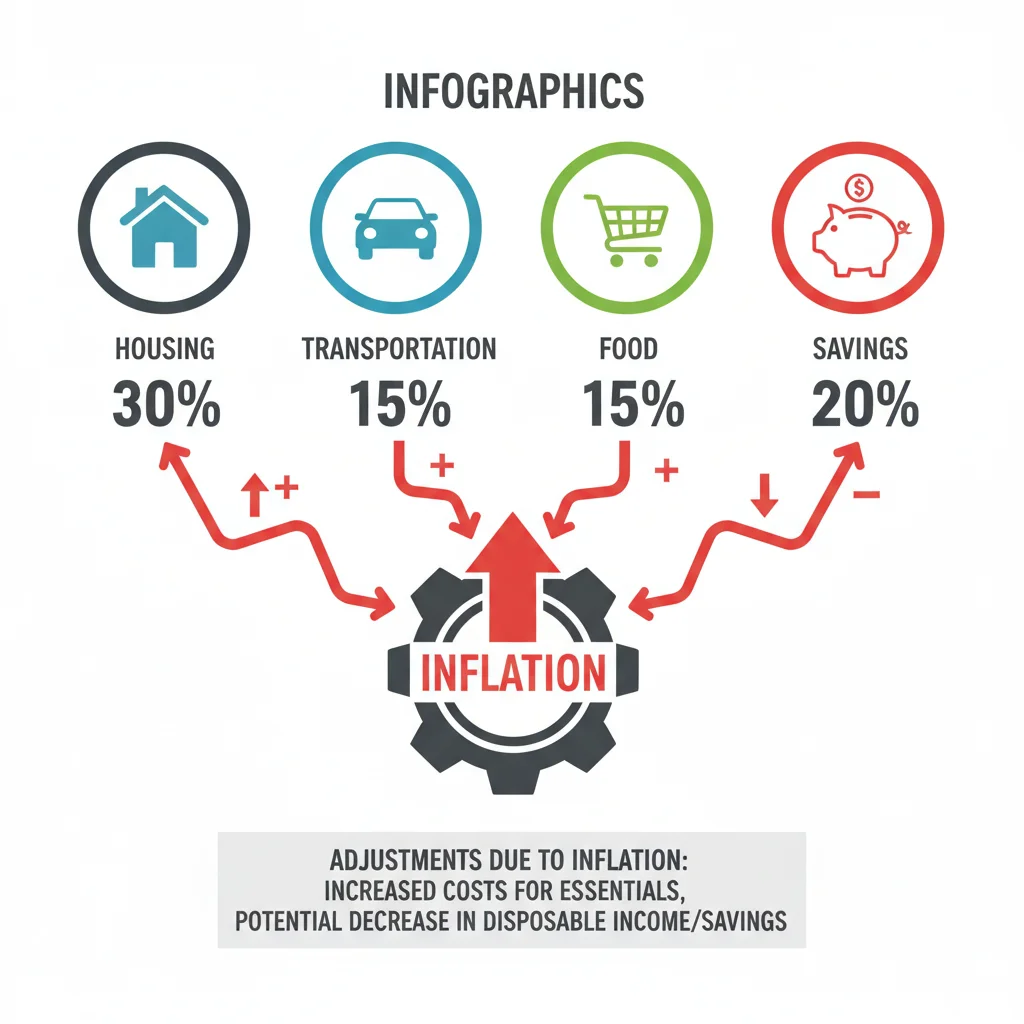
Specific Budgeting Adjustments for Key Categories
Let’s break down how you might need to adjust your inflation 2026 budgeting for specific expense categories.
Housing Costs: Rent, Mortgage, and Utilities
- Renters: Be prepared for potential rent increases upon lease renewal. Research average rent increases in your area and factor them into your budget. Consider negotiating with your landlord or exploring more affordable housing options if necessary.
- Homeowners (Variable Mortgages): If you have an adjustable-rate mortgage (ARM), be aware that your interest rates could increase if central banks continue to raise rates. Factor in potential higher monthly payments.
- Utilities: Energy costs (electricity, gas) are often sensitive to inflation and global events. Look for ways to reduce consumption, such as improving home insulation, using energy-efficient appliances, and being mindful of thermostat settings.
Transportation: Fuel, Maintenance, and Public Transport
- Fuel: If you drive frequently, consider strategies to reduce fuel consumption: carpooling, combining errands, walking or cycling for short distances, and maintaining your vehicle for optimal fuel efficiency.
- Public Transport: While public transport might seem like an alternative, fare increases are also common during inflationary periods. Research potential changes in your local transit costs.
- Vehicle Maintenance: Parts and labor costs can rise with inflation. Budget for regular maintenance to prevent more expensive repairs down the line.
Food and Groceries: Smart Shopping Strategies
- Meal Planning: Plan your meals in advance to create a comprehensive grocery list, reducing impulse purchases and food waste.
- Bulk Buying: For non-perishable items, buying in bulk when sales occur can offer significant savings.
- Store Brands: Opt for store-brand products, which are often just as good as name brands but at a lower price.
- Sales and Coupons: Actively seek out sales, discounts, and digital coupons.
- Cooking at Home: Minimize dining out and takeout, as restaurant prices are often among the first to reflect rising inflation.
Healthcare and Insurance: Anticipating Rising Costs
- Healthcare: Medical costs often outpace general inflation. Review your health insurance plan to ensure it still meets your needs and understand any potential premium increases or changes in deductibles/copayments. Budget for potential out-of-pocket expenses.
- Insurance Premiums: Auto, home, and life insurance premiums can also increase. Shop around for competitive rates periodically.
Discretionary Spending: Finding Balance
This is often the first area to be cut during inflationary times. While it’s important to maintain some quality of life, reassess your “wants.” Can you find cheaper alternatives for entertainment? Are there hobbies that are less costly? The goal isn’t to eliminate all discretionary spending but to be more mindful and intentional about it, ensuring it aligns with your overall inflation 2026 budgeting goals.
Leveraging Technology and Resources for Better Budgeting
In today’s digital age, numerous tools and resources can help you navigate the complexities of inflation 2026 budgeting.
Budgeting Apps and Software
Utilize budgeting apps like Mint, YNAB (You Need A Budget), or Personal Capital to track your spending, categorize expenses, and visualize your financial health in real-time. Many of these tools offer features like setting spending limits and alerts, which can be invaluable in keeping your budget on track amidst rising costs.
Financial Advisors and Economic Updates
Consider consulting a financial advisor, especially if you have complex financial situations or significant investments. They can provide personalized advice and help you adjust your investment portfolio to better withstand inflationary pressures. Stay informed by regularly checking reputable economic news sources and central bank reports for the latest inflation data and forecasts. Knowledge is power when it comes to effective inflation 2026 budgeting.
Negotiation Skills and Comparison Shopping
Don’t underestimate the power of negotiation. Whether it’s with your service providers (internet, cable, insurance) or even in some retail settings, asking for a better deal can often yield results. Always comparison shop for major purchases and even for everyday items, utilizing online tools and sales flyers to get the best value for your money. This habit is more important than ever for your inflation 2026 budgeting.
The Psychological Aspect of Budgeting During Inflation
Beyond the numbers, inflation can also take a psychological toll. The constant feeling of rising costs can lead to stress and anxiety about financial stability. Recognizing and addressing this aspect is crucial for sustainable budgeting.
Managing Financial Anxiety and Stress
It’s normal to feel anxious about money during inflationary periods. However, letting anxiety paralyze you is counterproductive. Focus on what you can control: your budgeting, saving, and spending habits. Set realistic expectations and celebrate small victories. Educating yourself about inflation and taking proactive steps, as outlined in this guide, can significantly reduce stress levels. A well-constructed inflation 2026 budgeting plan can be a source of calm amidst economic turbulence.
Maintaining Financial Discipline
Budgeting requires discipline, and inflationary times demand even more of it. Stick to your plan, even when it feels challenging. Regular reviews of your budget (monthly or quarterly) will help you stay on track and make necessary adjustments. Remember that consistent effort over time yields the best results in financial management. Your commitment to your inflation 2026 budgeting plan will be your greatest asset.
Conclusion: Proactive Planning for a Secure 2026
The recent inflation data from the last three months serves as a stark reminder of the dynamic nature of our economy. While the challenges posed by rising prices are real, they are not insurmountable. By understanding the underlying causes and effects of inflation, and by adopting a proactive and adaptive inflation 2026 budgeting strategy, you can protect your financial well-being and even find opportunities for growth.
Re-evaluating spending, adjusting for expected price increases, prioritizing debt reduction, optimizing investments, exploring additional income streams, and building a robust emergency fund are not just recommendations; they are essential pillars of financial resilience in an inflationary world. Leverage the available tools and resources, seek expert advice when needed, and maintain financial discipline. With careful planning and consistent effort, your inflation 2026 budgeting strategy can help you navigate economic uncertainties and pave the way for a more secure financial future.