Craft Your 2026 Personal Development Plan for US Success
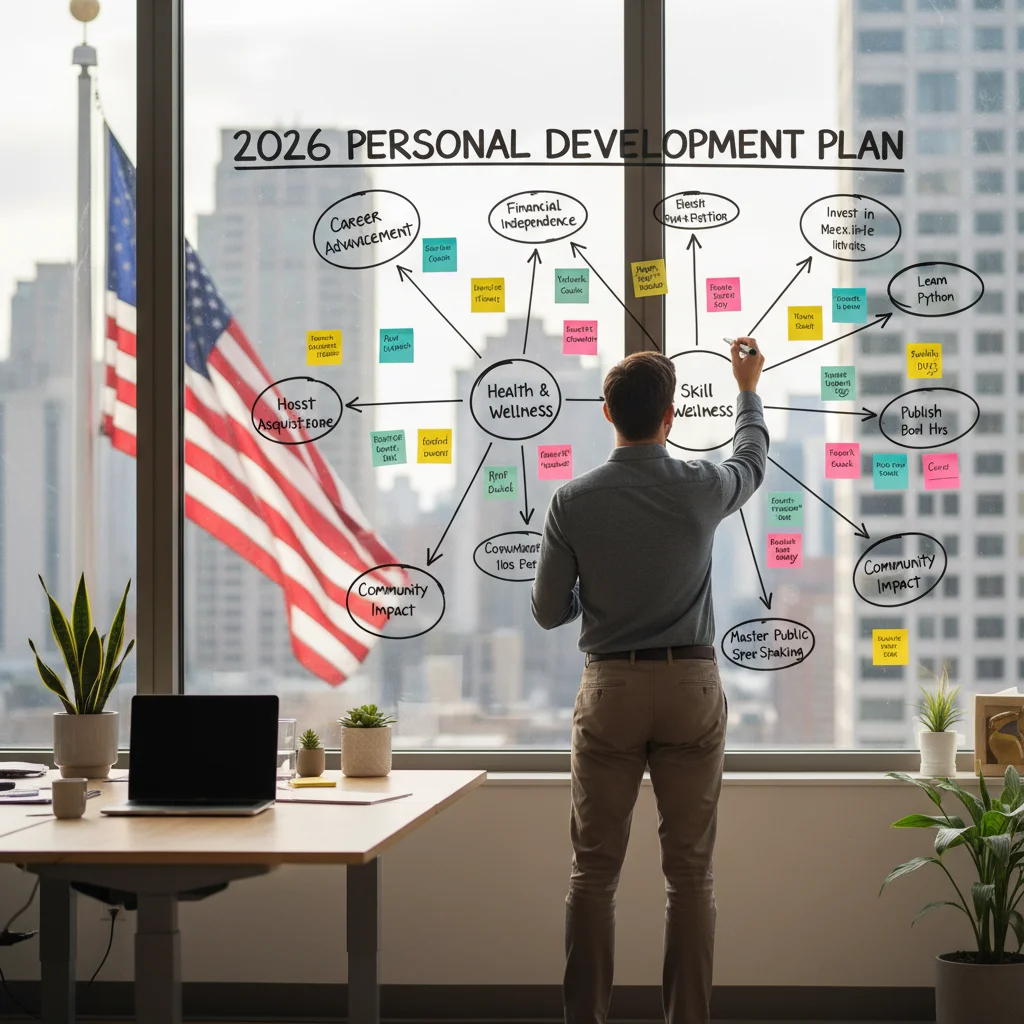
From Vision to Reality: Crafting Your 2026 Personal Development Plan for US Success
Are you ready to transform your aspirations into tangible achievements? The year 2026 might seem a distant future, but in the realm of personal growth and professional advancement, it’s closer than you think. Crafting a robust Personal Development 2026 plan is not merely an exercise in wishful thinking; it’s a strategic blueprint that will guide your journey towards unparalleled success in the United States. In an increasingly competitive landscape, proactive planning is the cornerstone of sustained growth and fulfillment. This comprehensive guide will walk you through every step of creating a dynamic and actionable personal development plan, tailored for the unique opportunities and challenges of the US environment.
Why a 2026 Personal Development Plan is Crucial for US Ambitions
The US market is a vibrant tapestry of innovation, opportunity, and fierce competition. Whether you’re an aspiring entrepreneur, a seasoned professional, or someone looking to make a significant career pivot, a well-defined Personal Development 2026 plan can be your most powerful asset. It allows you to:
- Navigate Rapid Change: The US economy and technological landscape evolve at an astonishing pace. A personal development plan helps you anticipate shifts, acquire relevant skills, and remain adaptable.
- Identify and Seize Opportunities: By clearly defining your goals and the skills needed to achieve them, you become adept at recognizing and leveraging opportunities that align with your vision.
- Enhance Your Competitive Edge: In a market teeming with talent, continuous learning and self-improvement are non-negotiable. Your plan ensures you stay ahead of the curve.
- Achieve Work-Life Balance: A structured approach to development isn’t just about career; it encompasses personal well-being, ensuring you build a sustainable and fulfilling life.
- Measure Progress and Stay Motivated: A tangible plan provides benchmarks for success, allowing you to track your progress and celebrate milestones, thereby sustaining motivation.
Without a clear roadmap, even the most ambitious individuals can find themselves adrift. Your Personal Development 2026 plan is your compass, guiding you through the complexities of professional and personal growth.
Phase 1: Self-Reflection & Vision Casting for Your 2026 – The Foundation of Your Plan
Before you can chart a course, you must know your starting point and your desired destination. This initial phase is about deep introspection and envisioning your ideal self by 2026.
1. Conduct a Comprehensive Self-Assessment:
Begin by evaluating your current strengths, weaknesses, opportunities, and threats (SWOT analysis). Be brutally honest with yourself. Consider:
- Skills & Competencies: What are you good at? Where do you excel? What skills are outdated or need significant improvement?
- Knowledge Gaps: What areas of knowledge are crucial for your desired path but currently lacking?
- Passions & Interests: What truly excites you? How can these be integrated into your professional or personal life?
- Values: What principles guide your decisions? Are your current actions aligned with your core values?
- Current Role & Responsibilities: Are you satisfied? What aspects would you change?
- Personal Life: How are your relationships, health, finances, and hobbies?
Utilize tools like personality assessments (e.g., Myers-Briggs, StrengthsFinder), 360-degree feedback from colleagues, or even a simple journal to gain insights. This honest assessment forms the bedrock for your Personal Development 2026.
2. Define Your Vision for 2026:
Imagine yourself three years from now. What does success look like? Be specific, detailed, and aspirational. Consider various life domains:
- Career/Professional: What position do you hold? What impact are you making? What projects are you leading? What salary are you earning?
- Financial: What are your savings, investments, and overall financial stability?
- Skills & Knowledge: What new expertise have you acquired? What certifications do you hold?
- Relationships: How are your relationships with family, friends, and colleagues?
- Health & Well-being: What is your physical and mental state? What habits have you cultivated?
- Personal Growth: What new experiences have you had? What personal challenges have you overcome?
Write down your vision in vivid detail. Create a vision board with images and words that represent your 2026 aspirations. This clarity is paramount for an effective Personal Development 2026 plan.
Phase 2: Setting SMART Goals – The Blueprint for Your 2026 Plan
Once your vision is clear, it&rsquos time to translate it into actionable goals. The SMART framework (Specific, Measurable, Achievable, Relevant, Time-bound) is indispensable here.
1. Break Down Your Vision into Long-Term Goals:
Based on your 2026 vision, identify 3-5 overarching goals across different domains (e.g., career, finance, health, learning). These are your 3-year objectives. For instance:
- Career: “By December 2026, I will be a Senior Project Manager at a leading tech firm in Silicon Valley, overseeing a team of 10 and managing projects with budgets exceeding $5 million.”
- Financial: “By December 2026, I will have saved $100,000 for a down payment on a house in Austin, Texas, and invested $20,000 in a diversified portfolio.”
- Skill Development: “By December 2026, I will have obtained a PMP certification and become proficient in Python for data analysis, applying these skills in my professional role.”
Ensure these goals are truly SMART. For example, “Get a better job” is not SMART. “Secure a promotion to a leadership role in my current company by Q4 2025, increasing my salary by 20%” is much better.
2. Deconstruct Long-Term Goals into Shorter-Term Milestones:
A 3-year goal can feel overwhelming. Break each long-term goal into annual, quarterly, and even monthly milestones. This makes your Personal Development 2026 plan manageable.
- Annual Goals (for 2024, 2025, 2026): What needs to happen each year to reach your 2026 objective?
- Quarterly Goals: What specific actions will you take in the next 90 days?
- Monthly/Weekly Tasks: These are the daily habits and specific actions that will drive your progress.
For the “Senior Project Manager” goal, quarterly milestones might include “Complete PMP exam preparation course by Q2 2024,” “Lead a smaller internal project independently by Q4 2024,” and “Network with three senior project managers monthly.”
Phase 3: Action Planning & Resource Allocation – Bringing Your 2026 Plan to Life
With your goals defined, the next step is to outline the specific actions and resources required to achieve them. This is where your Personal Development 2026 plan truly becomes actionable.
1. Identify Necessary Skills and Knowledge:
For each goal, list the specific skills, knowledge, or expertise you need to acquire or enhance. Categorize them:
- Hard Skills: Technical proficiencies (e.g., Python, advanced Excel, project management software, digital marketing tools).
- Soft Skills: Interpersonal abilities (e.g., leadership, communication, negotiation, emotional intelligence, public speaking).
- Specific Knowledge: Industry trends, regulatory frameworks, best practices (e.g., US healthcare regulations, AI ethics).
2. Outline Learning and Development Strategies:
How will you acquire these skills and knowledge? Consider a diverse range of strategies:
- Formal Education: Online courses (Coursera, edX), certifications (PMP, CSM), workshops, degrees (MBA, Master’s).
- Self-Study: Books, articles, podcasts, online tutorials, industry reports.
- Experiential Learning: Taking on new projects, volunteering for leadership roles, shadowing mentors, internships.
- Mentorship & Coaching: Seeking guidance from experienced professionals in your field.
- Networking: Attending industry conferences, joining professional associations, building relationships.

For example, if your goal is to master Python for data analysis, your strategies might include “Enroll in a Python for Data Science online course on Coursera by March 2024,” “Read ‘Python for Data Analysis’ by Wes McKinney by Q3 2024,” and “Apply Python skills to analyze real company data in a side project by Q4 2024.” This specificity is vital for your Personal Development 2026 plan.
3. Allocate Resources:
Development requires resources – time, money, and energy. Be realistic about what you can commit:
- Time: Block out dedicated time in your calendar for learning and development activities. Treat these appointments as non-negotiable.
- Financial: Budget for courses, certifications, conferences, books, or coaching. Explore company-sponsored training programs.
- Support Systems: Who can support you? A mentor, an accountability partner, family, or friends?
Phase 4: Execution, Monitoring & Adaptation – Sustaining Your 2026 Journey
A plan is only as good as its execution. This final phase focuses on putting your Personal Development 2026 plan into action, tracking progress, and making necessary adjustments.
1. Implement Your Plan Consistently:
The key to success is consistency. Break down your monthly and weekly milestones into daily tasks:
- Daily Habits: Dedicate 30-60 minutes daily to learning, practicing a new skill, or working on a personal project.
- Prioritize: Use time management techniques (e.g., Eisenhower Matrix, Pomodoro Technique) to ensure you’re focusing on high-impact activities.
- Overcome Procrastination: Start small, celebrate mini-victories, and remind yourself of your “why.”
2. Establish a Tracking and Review System:
Regularly monitor your progress. This is where the “measurable” aspect of SMART goals comes into play. Use:
- Progress Trackers: Spreadsheets, apps (e.g., Trello, Asana, Notion), or even a simple journal.
- Weekly Reviews: Take 15-30 minutes each week to review what you’ve accomplished, what challenges you faced, and what adjustments are needed for the upcoming week.
- Monthly/Quarterly Reviews: Conduct more in-depth reviews to assess progress against your larger milestones. Are you on track for your annual and 2026 goals?

During these reviews, ask yourself: “What’s working? What’s not working? What can I do differently?” This iterative process is crucial for maintaining the momentum of your Personal Development 2026 plan.
3. Be Flexible and Adaptable:
Life is unpredictable. Your Personal Development 2026 plan should not be set in stone. Be prepared to adjust your goals, strategies, and timelines as circumstances change. New opportunities might arise, or unexpected challenges might emerge. The ability to adapt is a strength, not a weakness. Revisit your self-assessment periodically to ensure your goals still align with your evolving aspirations and the market realities of the US.
4. Seek Feedback and Support:
Don’t embark on this journey alone. Actively seek feedback from mentors, peers, and supervisors. Their perspectives can offer valuable insights and identify blind spots. An accountability partner can also provide motivation and help you stay on track. Share your Personal Development 2026 goals with trusted individuals who can offer encouragement and constructive criticism.
Key Areas for Personal Development in the US Context for 2026
To maximize your impact and success in the US by 2026, consider focusing on these critical areas:
1. Digital Literacy & Emerging Technologies:
The US is at the forefront of technological innovation. Proficiency in areas like AI, machine learning, data analytics, cloud computing, cybersecurity, and digital marketing will be indispensable across almost all industries. Even if your role isn’t directly tech-focused, understanding these concepts will give you a significant advantage.
2. Soft Skills for the Modern Workplace:
While technical skills are important, soft skills are often the differentiators. Focus on:
- Critical Thinking & Problem Solving: The ability to analyze complex issues and devise innovative solutions.
- Adaptability & Resilience: Thriving in environments of constant change and bouncing back from setbacks.
- Emotional Intelligence: Understanding and managing your own emotions and those of others.
- Cross-Cultural Communication: Essential in the diverse US workforce.
- Leadership & Influence: Inspiring and guiding teams, regardless of your formal title.
3. Financial Literacy & Wealth Management:
Understanding personal finance, investment strategies, and tax implications in the US is crucial for long-term stability and growth. Incorporate learning about budgeting, saving, investing for retirement, and understanding the US financial system into your Personal Development 2026 plan.
4. Health & Well-being:
Your physical and mental health are the foundations of all other achievements. Prioritize:
- Stress Management: Techniques like mindfulness, meditation, or regular exercise.
- Healthy Habits: Balanced nutrition, adequate sleep, and physical activity.
- Mental Health Awareness: Recognizing signs of burnout and seeking support when needed.
5. Networking & Relationship Building:
In the US, “your network is your net worth” holds significant truth. Actively build and nurture professional relationships:
- Industry Events: Attend conferences, webinars, and local meetups.
- Online Platforms: Leverage LinkedIn for connections and thought leadership.
- Informational Interviews: Connect with professionals in your target roles or industries.
Overcoming Common Hurdles in Your Personal Development Journey
Even the best Personal Development 2026 plan can encounter obstacles. Here’s how to address them:
- Lack of Time: Re-evaluate your priorities. Can you delegate tasks? Can you wake up 30 minutes earlier? Even small, consistent efforts yield significant results over three years.
- Lack of Motivation: Reconnect with your “why.” Remind yourself of your 2026 vision. Break tasks into even smaller, more manageable steps. Find an accountability partner.
- Fear of Failure: Understand that setbacks are part of the learning process. Embrace a growth mindset, viewing challenges as opportunities for improvement.
- Overwhelm: If your plan feels too ambitious, scale back. Focus on 1-2 key goals at a time. Remember the power of incremental progress.
- Financial Constraints: Explore free online resources, library books, company training budgets, or scholarships. Networking can also open doors to mentorship and informal learning.
Conclusion: Your Journey to a Successful 2026 in the US Begins Now
Crafting a Personal Development 2026 plan is a powerful act of self-investment. It’s about taking control of your future, aligning your actions with your deepest aspirations, and systematically working towards the life you envision. The dynamic environment of the United States offers boundless opportunities for those who are prepared, adaptable, and committed to continuous growth.
By engaging in honest self-reflection, setting SMART goals, outlining clear action plans, and consistently monitoring your progress, you are not just dreaming of a better future – you are actively building it. Start today. Take that first step. Your 2026 self, thriving and successful in the US, will thank you for it. Embrace the journey of lifelong learning and watch as your vision transforms into your reality.