Mastering Habit Formation: Your 21-Day Blueprint for Lasting Change

Are you ready to truly transform your life, one small, consistent step at a time? In a world constantly pushing us towards instant gratification, the power of habit formation remains the most reliable path to sustainable personal growth. It’s not about grand, overnight changes, but about the cumulative effect of daily actions. This article will guide you through a comprehensive 21-Day Challenge designed to help you master habit formation, turning fleeting intentions into ingrained behaviors that serve your highest good. We will delve deep into the psychology behind habits, provide actionable strategies, and equip you with the tools to not only start new habits but to make them stick for good.
The Power of Habit Formation: Why 21 Days?
The idea that it takes 21 days to form a new habit is a widely cited notion, often attributed to Dr. Maxwell Maltz, a plastic surgeon who observed his patients took roughly 21 days to adjust to a new appearance. While modern research suggests the actual time frame can vary wildly from 18 to 254 days depending on the habit and the individual, the 21-day mark serves as an excellent psychological benchmark. It’s long enough to build momentum and see initial results, yet short enough to feel achievable. This habit formation challenge leverages this psychological sweet spot to kickstart your journey towards lasting change.
Think of the first 21 days as your foundational sprint. During this period, you’ll be intentionally focused on cultivating a new behavior, consciously building the neural pathways that will eventually make the habit feel automatic. This challenge isn’t just about doing something for 21 days; it’s about understanding the mechanics of habit, overcoming common pitfalls, and creating an environment where success is inevitable. By the end of this period, you won’t just have a new habit; you’ll have a deeper understanding of yourself and the process of sustainable change.
Understanding the Science of Habit Formation
Before we dive into the challenge itself, it’s crucial to grasp the fundamental principles of habit formation. Habits aren’t just random acts; they are neurological shortcuts our brains create to save energy. When we repeat a behavior in a consistent context, our brains become more efficient at performing that action, eventually making it automatic. This process can be broken down into what Charles Duhigg, author of ‘The Power of Habit,’ calls the ‘habit loop’: Cue, Routine, Reward.
The Habit Loop Explained: Cue, Routine, Reward
1. Cue: This is the trigger that tells your brain to go into automatic mode and which habit to use. Cues can be anything: a specific time of day, a location, a preceding action, certain emotions, or other people. For example, the alarm clock (cue) triggers you to check your phone (routine).
2. Routine: This is the behavior itself, the habit you perform. It could be physical, mental, or emotional. Continuing the example, checking your phone as soon as you wake up is the routine.
3. Reward: This is the positive outcome your brain gets from completing the routine. Rewards help your brain figure out if this particular loop is worth remembering for the future. The reward for checking your phone might be a hit of dopamine from social media notifications or feeling ‘up-to-date’ with the news.
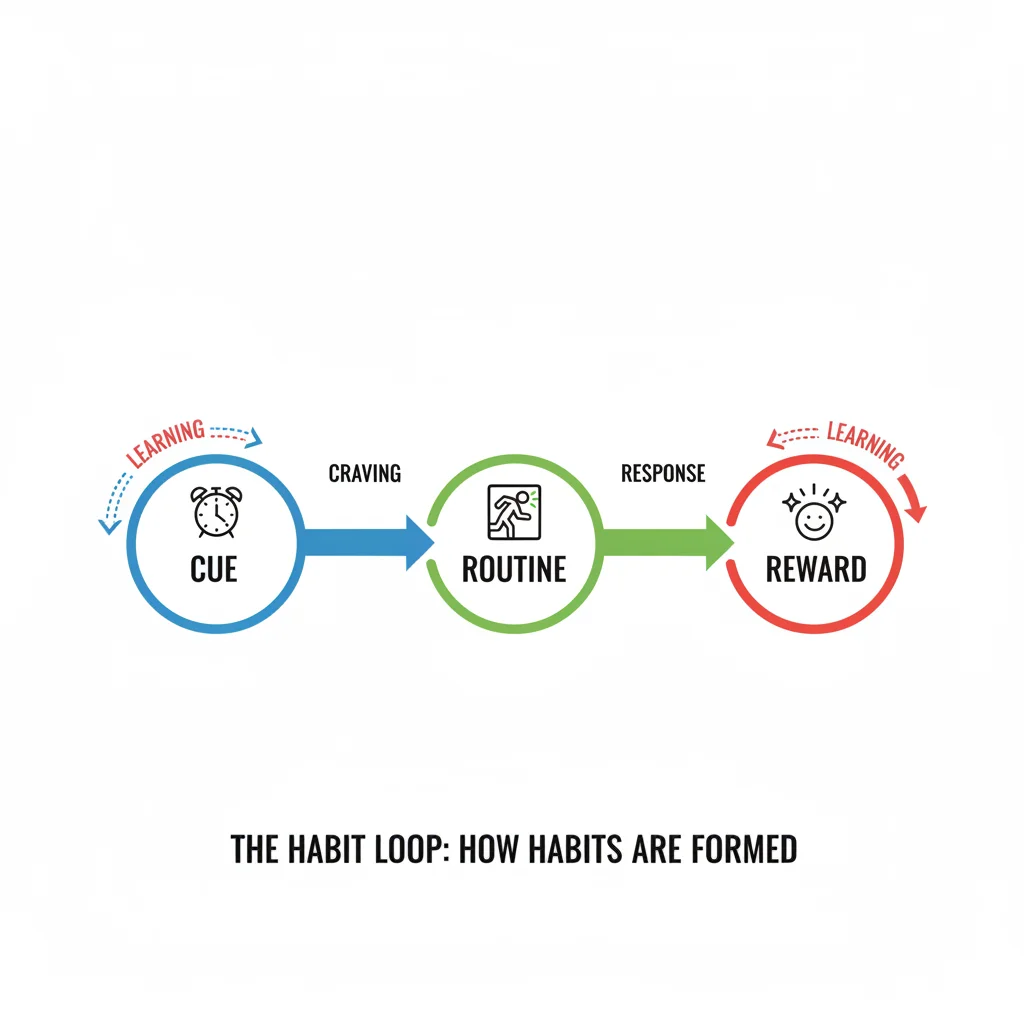
Understanding this loop is paramount for effective habit formation. To build a new habit, you need to consciously design a cue, make the routine as easy as possible, and ensure there’s a clear, immediate reward. To break a bad habit, you need to identify its loop and disrupt one of its components.
Preparing for Your 21-Day Habit Formation Challenge
Success in any challenge begins with thorough preparation. Here’s how to set yourself up for victory in your 21-day habit formation challenge:
1. Choose ONE Habit Wisely
The biggest mistake people make is trying to change too many things at once. For this 21-day challenge, select just ONE habit you want to cultivate. Make it specific, measurable, achievable, relevant, and time-bound (SMART).
- Good Example: “I will drink 8 glasses of water every day.”
- Better Example: “I will drink one 8oz glass of water immediately after waking up, another with each meal (breakfast, lunch, dinner), and four more spaced throughout the day, aiming for 8 glasses total.”
- Poor Example: “I will be healthier.” (Too vague)
2. Identify Your Why
Why is this habit important to you? What long-term benefits will it bring? Connect your chosen habit to your core values and aspirations. This deeper motivation will be your fuel when willpower wanes. Write it down and keep it visible.
3. Design Your Habit Loop
Consciously create the cue, routine, and reward for your new habit:
- Cue: What existing routine or specific time/place will trigger your new habit? (e.g., “After I brush my teeth…”)
- Routine: What is the exact action you will perform? (e.g., “…I will do 10 push-ups.”) Make it small and easy to start.
- Reward: What immediate, positive feeling or small treat will you give yourself after completing the routine? (e.g., “…then I’ll enjoy my morning coffee.”)
4. Prepare Your Environment
Make your desired habit as easy as possible to perform and your undesired habits harder. This is called ‘environment design’ or ‘friction reduction.’
- Example for exercise: Lay out your workout clothes the night before.
- Example for healthy eating: Pre-chop vegetables for easy meals.
- Example for reading: Keep a book by your bedside, put your phone away.
5. Track Your Progress
Visual tracking is incredibly motivating. Use a habit tracker app, a spreadsheet, or simply a calendar where you put an ‘X’ for every day you successfully complete your habit. Don’t break the chain!
The 21-Day Habit Formation Challenge: A Day-by-Day Guide
This challenge is structured to build momentum and resilience. Remember, consistency over perfection is the key to successful habit formation.
Days 1-7: The Initiation Phase – Building Awareness and Consistency
The first week is all about conscious effort and establishing the routine. You’ll likely feel motivated, but it requires deliberate action.
- Daily Task: Perform your chosen habit at its designated cue, and immediately give yourself the planned reward.
- Focus: Strict adherence to the routine. Don’t overthink it; just do it.
- Tip: If you miss a day, don’t despair! Get back on track immediately the next day. One missed day doesn’t ruin the whole challenge.
- Reflection: At the end of each day, briefly note how you felt executing the habit. Was it easy? Difficult? What obstacles arose?
Days 8-14: The Integration Phase – Overcoming Resistance and Adapting
This week can be challenging. The initial novelty might wear off, and old patterns of resistance might emerge. This is where true commitment to habit formation is tested.
- Daily Task: Continue performing your habit. If you encounter resistance, revisit your ‘why.’
- Focus: Automating the habit. Try to make it feel less like a chore and more like a natural part of your day.
- Tip: If you’re struggling, reduce the habit to its absolute minimum. (e.g., instead of 10 push-ups, do 1. Instead of 30 minutes of reading, read for 5.) The goal is to maintain the streak, not necessarily perfect execution.
- Reflection: What internal or external factors are making this challenging? How can you modify your cue or environment to make it easier?
Days 15-21: The Autonomy Phase – Solidifying and Embracing Ownership
By this point, your habit should start to feel more automatic. You’ll notice less internal debate and more natural execution. This phase is about solidifying that feeling and taking full ownership.
- Daily Task: Continue the habit, focusing on the positive feelings and benefits you’re already experiencing.
- Focus: Internalizing the habit. It should now feel like ‘who you are’ rather than ‘what you do.’
- Tip: Start thinking about how you can integrate this habit even more deeply into your life. Can you scale it up slightly? Can you introduce another small, related habit?
- Reflection: How has this habit changed you? What new opportunities has it opened up?
Advanced Strategies for Sustainable Habit Formation
Completing 21 days is a monumental achievement, but true habit formation is about long-term sustainability. Here are some advanced strategies to ensure your new habits stick:
1. Habit Stacking
This technique, popularized by James Clear in ‘Atomic Habits,’ involves attaching a new habit to an existing one. The existing habit acts as the cue for the new habit, making it easier to remember and execute.
- Formula: “After [Current Habit], I will [New Habit].”
- Example: “After I pour my morning coffee, I will meditate for one minute.”
2. The Two-Minute Rule
If a habit takes less than two minutes to do, then do it. This rule is designed to make starting a habit so easy that you can’t say no. The goal is to master the art of showing up.
- Example: “Read before bed” becomes “Read one page before bed.”
- Example: “Go for a run” becomes “Put on my running shoes.”
3. Identity-Based Habits
Instead of focusing on what you want to achieve, focus on who you want to become. Your habits are a reflection of your identity. If you want to be a reader, then readers read. If you want to be healthy, then healthy people make healthy choices.
- Shift your language: Instead of “I need to exercise,” think “I am an active person.”
- Reinforce: Every time you perform your habit, tell yourself, “This is what an active person does.”
4. Accountability Partners and Communities
Sharing your goals with someone else significantly increases your chances of success. An accountability partner or a supportive community can provide encouragement, gentle nudges, and a sense of shared purpose.
- Find a friend: Ask a friend to join you in the 21-day challenge or simply check in with you daily/weekly.
- Join a group: Online forums or local groups dedicated to personal growth can offer immense support.
5. Plan for Failure (The ‘Never Miss Twice’ Rule)
You’re human; you will miss a day. The key is not to let one slip-up derail your entire progress. The ‘never miss twice’ rule states that if you miss your habit one day, make sure you perform it the next. Consistency is about getting back on track quickly, not perfection.
Maintaining Momentum Beyond 21 Days
The 21-day challenge is a powerful springboard, but the real work of habit formation extends beyond that initial period. Here’s how to ensure your new habits become lifelong companions:
1. Celebrate Small Wins
Acknowledge your progress, no matter how small. Each completed day, week, or even the completion of the 21-day challenge itself deserves recognition. This positive reinforcement strengthens the neural pathways associated with your habit.
2. Regularly Review and Adjust
Life changes, and so should your strategies. Periodically review your habits. Are they still serving you? Can they be optimized? Are there new habits you want to incorporate? This ongoing self-assessment is crucial for continuous personal growth.

3. Increase the Challenge (Gradually)
Once a habit is firmly established, you can gradually increase its intensity or duration. If you started with 5 minutes of meditation, try 10. If you walked for 15 minutes, try 20 or add a light jog. This keeps you engaged and continuously progressing.
4. Connect Habits to Your Vision
Always keep your bigger vision in mind. How does this habit contribute to the person you want to become or the life you want to live? This long-term perspective provides enduring motivation, especially when you face plateaus or setbacks.
5. Be Patient and Kind to Yourself
Habit formation is a journey, not a destination. There will be good days and bad days. Treat yourself with compassion, acknowledge your efforts, and understand that consistency, not perfection, is the ultimate goal. Every small step forward is progress.
Common Pitfalls in Habit Formation and How to Avoid Them
While the 21-day habit formation challenge offers a clear path, it’s wise to be aware of common obstacles:
1. Overwhelm from Too Many Habits
As mentioned, trying to tackle multiple habits at once dilutes your focus and energy. Stick to one habit for the 21-day challenge, then consider adding another once the first is firmly established.
2. Lack of Specificity
Vague goals like “eat healthier” or “be more productive” are rarely achieved. Define your habit with crystal clarity: what, when, where, how much?
3. Relying Solely on Willpower
Willpower is a finite resource. Design your environment and use strategies like habit stacking to reduce the need for constant willpower. Make the desired action the path of least resistance.
4. Neglecting the Reward
The reward is critical for reinforcing the habit loop. Ensure your reward is immediate, enjoyable, and doesn’t undermine the habit itself (e.g., don’t reward a healthy eating habit with a sugary treat).
5. Perfectionism and All-or-Nothing Thinking
One missed day does not mean you’ve failed. It means you’re human. The key is to recover quickly and not let a single slip-up spiral into abandoning the habit entirely. Focus on the long-term trend, not daily perfection.
The Long-Term Impact of Effective Habit Formation
The true beauty of mastering habit formation lies in its compounding effect. Small, consistent improvements over time lead to remarkable transformations. Imagine the person you could become a year from now if you consistently implemented just one new positive habit every 21 days.
From improved physical health to enhanced mental clarity, greater productivity, and deeper relationships, the benefits are boundless. Habits create the structure for your days, freeing up mental energy for more complex problem-solving and creative endeavors. They build self-efficacy and confidence, proving to yourself that you are capable of consistent action and meaningful change.
Conclusion: Your Journey to Lasting Change Begins Now
This 21-Day Habit Formation Challenge is more than just a temporary endeavor; it’s an invitation to rewrite your personal narrative. By understanding the science of habits, meticulously planning your approach, and staying resilient through the inevitable ups and downs, you can cultivate behaviors that fuel your success and well-being.
Don’t wait for motivation to strike; create the conditions for motivation to thrive. Choose your habit, commit to the process, and embark on this transformative journey. The person you aspire to be is built, one consistent habit at a time. Start today, and witness the profound impact of intentional habit formation on your life. Your future self will thank you.