Rainwater Harvesting US Homes 2026: 30% Water Bill Reduction Potential

Rainwater Harvesting for US Homes in 2026: A Cost-Benefit Analysis Showing 30% Water Bill Reduction
As the conversation around sustainability intensifies and water scarcity becomes a pressing concern in many regions, homeowners across the United States are increasingly exploring alternative water sources. Among the most promising and accessible is rainwater harvesting. This age-old practice, modernized for contemporary living, offers not only a pathway to environmental stewardship but also a tangible solution for reducing household expenses. By 2026, experts predict that widespread adoption of efficient rainwater harvesting systems could lead to a significant 30% reduction in average residential water bills.
This comprehensive guide delves into the world of rainwater harvesting for US homes, providing a detailed cost-benefit analysis, exploring system components, debunking common myths, and outlining the regulatory landscape. If you’re looking to cut down on utility costs, enhance your home’s resilience, and contribute to a more sustainable future, understanding the nuances of rainwater harvesting US homes is your first crucial step.
Understanding Rainwater Harvesting Systems
At its core, rainwater harvesting is the process of collecting and storing rainwater for later use. While seemingly simple, modern systems are sophisticated and designed to meet various household needs, from irrigation to non-potable indoor uses, and even potable applications with advanced filtration. The effectiveness and cost-efficiency of rainwater harvesting US homes depend heavily on the system’s design and the specific needs of the household.
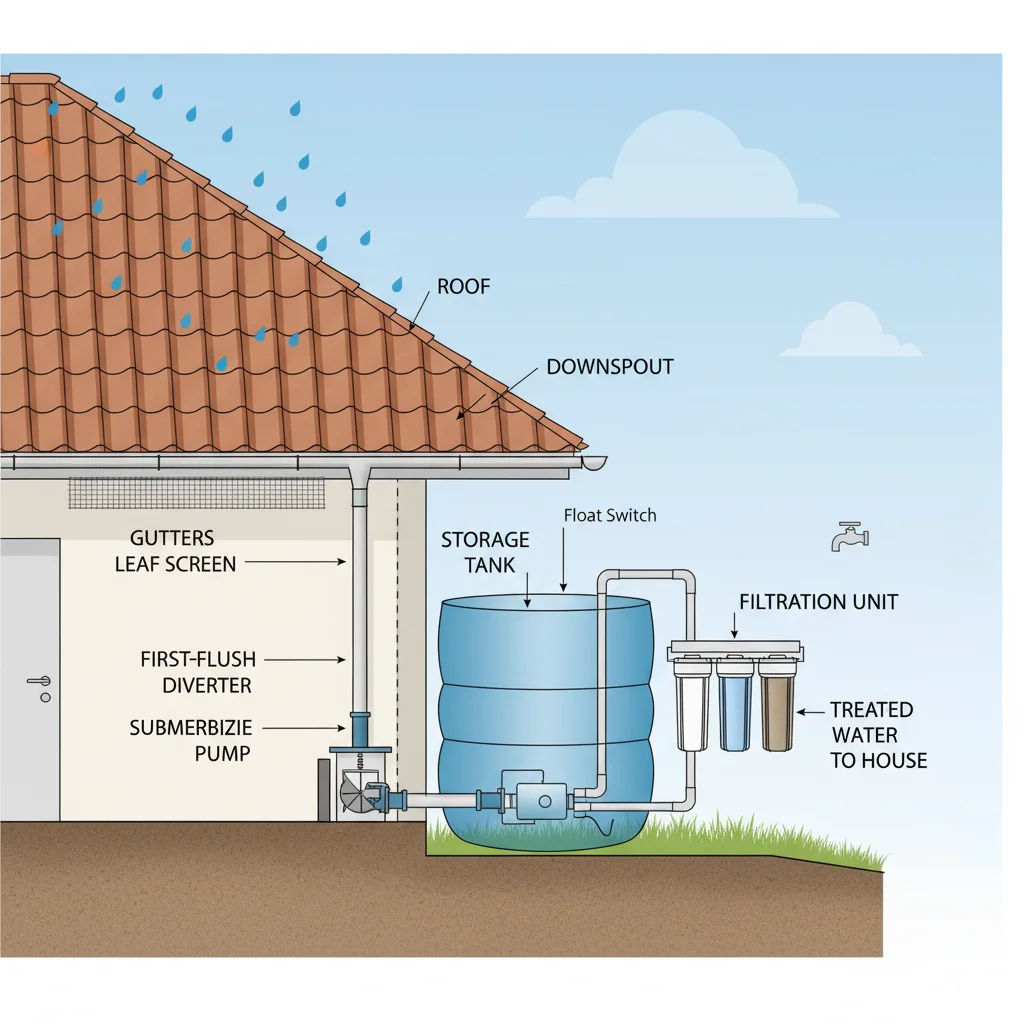
Key Components of a Rainwater Harvesting System:
- Catchment Surface: Typically your roof. The larger and cleaner the roof surface, the more water you can collect.
- Gutters and Downspouts: These channels direct water from the roof to the storage system. Regular cleaning is essential to prevent contamination and blockages.
- Leaf Screens and First-Flush Diverters: These crucial preliminary filters remove debris (leaves, twigs) and divert the initial flush of rainwater, which often contains the most contaminants from the roof surface, ensuring cleaner water enters the main storage.
- Storage Tanks: Ranging from small barrels to large underground cisterns, tanks are where the collected rainwater is stored. Material (polyethylene, fiberglass, concrete), size, and placement (above or below ground) are key considerations.
- Conveyance System: Pipes and pumps move the water from the storage tank to its point of use.
- Filtration and Purification: Depending on the intended use, various levels of filtration (sediment filters, carbon filters) and purification (UV sterilization, reverse osmosis) may be necessary. For non-potable uses like gardening or toilet flushing, basic filtration might suffice. For potable uses, rigorous multi-stage treatment is imperative.
The Financial Case: 30% Water Bill Reduction by 2026
The promise of a 30% reduction in water bills is a powerful motivator for many homeowners considering rainwater harvesting US homes. This figure isn’t arbitrary; it’s based on projections factoring in rising water costs, increasing system efficiency, and growing awareness. Let’s break down how this reduction is achievable.
Initial Investment vs. Long-Term Savings
The upfront cost of installing a rainwater harvesting system can vary significantly, typically ranging from $1,500 for a basic irrigation-only system to $15,000 or more for a comprehensive whole-house potable system. Factors influencing this cost include:
- System Size and Capacity: Larger tanks and more extensive collection areas cost more.
- Complexity of Installation: Underground tanks require excavation, increasing labor costs.
- Intended Use: Potable systems require more advanced and expensive filtration and purification components.
- Local Regulations and Permits: Some areas have specific requirements that might add to the cost.
- DIY vs. Professional Installation: While DIY can save on labor, professional installation ensures compliance and optimal performance.
Despite the initial outlay, the long-term savings are compelling. Consider an average US household’s water bill. If you’re paying $70-$100 per month on water, a 30% reduction translates to $21-$30 in monthly savings, or $252-$360 annually. Over a system’s lifespan (20+ years for tanks, 5-10 years for pumps/filters), these savings accumulate significantly, often leading to a payback period of 5 to 15 years, depending on the system and local water rates.
Factors Contributing to Savings:
- Reduced Municipal Water Usage: This is the most direct saving. Every gallon of rainwater used is a gallon not purchased from the utility.
- Decreased Wastewater Charges: In many areas, sewer charges are tied to water consumption. Using rainwater for non-potable applications can reduce these charges as well.
- No Water Restrictions: During droughts or water shortages, municipalities often impose restrictions on outdoor water use. Rainwater harvesting allows you to bypass these restrictions, keeping your garden green without incurring fines or higher rates.
- Potential for Rebates and Incentives: Many states, counties, and cities offer rebates, tax credits, or other incentives for installing rainwater harvesting systems, further reducing the net cost.
Designing Your Rainwater Harvesting System for Optimal Performance
Successful rainwater harvesting US homes requires careful planning and design. The goal is to maximize collection and utilization while minimizing costs and maintenance.
Assessing Your Needs and Location:
- Rainfall Data: Research average annual rainfall for your specific location. This will dictate how much water you can realistically collect. Tools like the EPA’s Rainwater Harvesting Calculator can be invaluable.
- Roof Size and Material: Calculate the square footage of your roof that can be used for collection. Asphalt shingle roofs are common and good for collection, but metal roofs offer cleaner water.
- Water Demand: Estimate your household’s non-potable water needs (irrigation, toilet flushing, laundry) and potentially potable needs. This will help determine the required tank size.
- Space Availability: Consider where you can place storage tanks – above ground for easier access but visible, or underground for aesthetics but higher installation cost.
System Sizing and Design:
A common formula for calculating potential rainwater collection is:
Gallons Collected = Roof Area (sq ft) x Annual Rainfall (inches) x 0.62 (gallons per sq ft per inch of rain) x Efficiency Factor (0.75-0.90 for roof type)
This calculation helps you determine the appropriate tank size to meet your demands. Oversizing can lead to unnecessary costs, while undersizing means you might run out of water during dry spells.
Choosing the Right Components:
- Tanks: Consider UV-resistant, food-grade polyethylene tanks for above-ground storage. For underground, concrete or fiberglass are durable options. Ensure tanks are opaque to prevent algae growth.
- Pumps: Select a pump appropriate for your water pressure needs and the distance/height water needs to be moved. Submersible pumps are quiet and efficient for underground tanks.
- Filtration: For irrigation, a simple leaf screen and first-flush diverter might suffice. For indoor non-potable uses, add a sediment filter. For potable water, a multi-stage system including sediment, carbon, and UV filters, possibly even reverse osmosis, is essential.
Beyond Savings: Environmental and Resilience Benefits
While the financial incentives are strong, the benefits of rainwater harvesting US homes extend far beyond your wallet.
Environmental Impact:
- Water Conservation: Reduces demand on municipal water supplies, especially crucial in drought-prone areas or regions with rapidly growing populations.
- Reduced Stormwater Runoff: Collecting rainwater mitigates runoff, which can carry pollutants into natural waterways and contribute to erosion and flooding.
- Lower Energy Consumption: Municipal water treatment and pumping are energy-intensive processes. Using rainwater reduces the energy footprint associated with your water consumption.
- Groundwater Recharge: When used for irrigation, rainwater slowly seeps into the ground, contributing to local groundwater tables.
Home Resilience and Independence:
- Backup Water Supply: In the event of municipal water supply interruptions, a rainwater harvesting system provides a crucial independent water source.
- Improved Garden Health: Rainwater is naturally soft and free of chlorine and other chemicals found in treated tap water, making it ideal for plants and gardens.
- Increased Property Value: A well-designed and integrated rainwater harvesting system can be an attractive feature for environmentally conscious buyers, potentially increasing your home’s market value.
Navigating Regulations and Permitting for Rainwater Harvesting US Homes
One of the most critical aspects of installing a rainwater harvesting system in the US is understanding the local regulatory landscape. While historically some states had restrictions (often due to outdated water rights laws), the trend is overwhelmingly towards encouraging and incentivizing rainwater collection.
State and Local Regulations:
- Permitting: Many jurisdictions require permits for installing rainwater harvesting systems, especially for larger systems or those connected to indoor plumbing. Check with your local planning department or building authority.
- Plumbing Codes: Systems intended for indoor use must comply with local plumbing codes to prevent cross-contamination with the potable water supply. This often involves distinct piping and clear labeling.
- Water Rights: In some western states, water rights (riparian or prior appropriation) have historically complicated rainwater harvesting. However, many of these laws have been updated to explicitly allow or encourage collection for residential use. States like Colorado, for example, have significantly relaxed their laws in recent years.
- Incentives and Rebates: Research state, county, and city programs that offer financial incentives. These can significantly offset installation costs. Examples include tax credits in Texas, rebates in Arizona, and grant programs in various municipalities.
It is paramount to consult with local authorities and a knowledgeable professional installer to ensure your system complies with all relevant regulations. Non-compliance can lead to fines or the requirement to dismantle the system.

Maintenance and Longevity of Your System
Like any home utility, a rainwater harvesting system requires regular maintenance to ensure optimal performance and longevity. Proper care can extend the life of your system and maximize your water bill savings.
Routine Maintenance Tasks:
- Gutter and Downspout Cleaning: Annually or semi-annually, clear leaves, twigs, and debris. This prevents blockages and ensures clean water collection.
- First-Flush Diverter Cleaning: Regularly empty and clean the first-flush diverter to ensure it functions correctly.
- Filter Replacement: Sediments and carbon filters need periodic replacement according to manufacturer recommendations, typically every 6-12 months, depending on water quality and usage. UV lamps also have a lifespan (usually 9,000 hours of operation).
- Tank Inspection: Periodically check the tank for sediment buildup, algae growth, or damage. Tanks may need to be cleaned every few years, especially if water quality is a concern.
- Pump Check: Ensure your pump is operating efficiently and quietly. Address any unusual noises or reduced pressure promptly.
- Water Quality Testing: If using water for potable purposes, regular testing (at least annually) is critical to ensure it meets health standards.
Proactive maintenance not only guarantees a continuous supply of quality water but also prevents costly repairs down the line. A well-maintained system for rainwater harvesting US homes can serve your household efficiently for decades.
Debunking Common Myths About Rainwater Harvesting
Despite its growing popularity, several misconceptions about rainwater harvesting persist.
- Myth 1: Rainwater is always dirty and unsafe. While initial runoff can contain contaminants, modern filtration and purification systems can make rainwater safe for various uses, including potable consumption. The key is appropriate treatment for the intended use.
- Myth 2: Rainwater harvesting is only for rural areas. Urban and suburban homes can greatly benefit, especially with compact vertical tanks or underground systems that fit discreetly into smaller lots.
- Myth 3: It’s illegal everywhere. As discussed, laws have largely shifted to permit and even encourage rainwater collection, though specific regulations vary by location.
- Myth 4: Systems are too expensive for the average homeowner. While comprehensive systems can be a significant investment, basic systems for irrigation are quite affordable, and the long-term savings often justify the cost for more extensive setups.
- Myth 5: It’s complicated to maintain. Routine maintenance is straightforward and comparable to other home systems like HVAC or gutter cleaning.
The Future of Water: Rainwater Harvesting in the US by 2026 and Beyond
By 2026, the landscape of water management in US homes is expected to be significantly influenced by the continued adoption of rainwater harvesting. The confluence of rising water costs, increasing environmental awareness, technological advancements, and supportive legislation is creating a perfect storm for this sustainable practice to flourish.
We anticipate that more homeowners will view rainwater harvesting not as an alternative, but as an integral part of a modern, resilient home. The 30% water bill reduction is not just a projection; it’s a realistic target for many, particularly those in regions with ample rainfall and rising utility prices.
Emerging Trends:
- Smart Systems: Integration with smart home technology for automated monitoring, pump control, and water quality alerts.
- Modular and Aesthetic Designs: Tanks and components that are more visually appealing and easier to integrate into diverse architectural styles.
- Increased Educational Resources: More accessible information and training for homeowners and installers.
- Favorable Policy Changes: Continued relaxation of restrictive laws and expansion of incentive programs nationwide.
Conclusion: Embrace the Future with Rainwater Harvesting
Investing in a rainwater harvesting system for your US home is more than just an eco-friendly choice; it’s a financially savvy decision that offers significant returns in the form of reduced water bills, enhanced home resilience, and a smaller environmental footprint. The potential for a 30% reduction in water expenses by 2026 is a powerful testament to the efficacy and growing accessibility of these systems.
By carefully planning your system, adhering to local regulations, and committing to routine maintenance, you can harness the power of nature to meet a substantial portion of your household’s water needs. Explore the possibilities of rainwater harvesting US homes today and step towards a more sustainable and economically sound future.