
Reclaim Your Day: Master Daily Time Management for Personal Growth in the US
In the relentless pace of modern life, especially in the United States, finding time for personal growth often feels like an impossible dream. Between demanding careers, family responsibilities, and an endless stream of digital distractions, our days seem to vanish before our eyes. Yet, what if you could consistently reclaim at least two hours daily, dedicating that invaluable time to your personal development? This isn’t a fantasy; it’s an achievable reality through effective daily time management. This comprehensive guide will equip you with the strategies, tools, and mindset shifts necessary to transform your schedule, maximize your productivity, and foster significant personal growth.
The pursuit of personal growth is not a luxury; it’s a necessity for a fulfilling and impactful life. Whether it’s learning a new skill, deepening relationships, pursuing a passion, or simply engaging in self-reflection, these activities fuel our spirit and expand our capabilities. However, without a deliberate approach to managing our time, these crucial aspects of life often get pushed to the wayside. This article delves into practical, actionable methods to integrate personal growth seamlessly into your daily routine, proving that even the busiest individuals can find and utilize that extra time.
The Foundation: Understanding Your Current Time Usage
Before you can reclaim time, you must first understand where your time is currently going. Many people underestimate how much time they spend on non-essential activities or how much time is lost to inefficiencies. This initial self-assessment is critical for effective daily time management.
The Time Audit: A Week-Long Revelation
The most effective way to understand your time usage is to conduct a time audit. For one week, meticulously track every activity you perform and the time it takes. You can use a spreadsheet, a dedicated app, or even a simple notebook. Be honest and detailed. Record everything from checking emails to scrolling social media, working on projects, commuting, and even idle moments.
- Why it works: A time audit provides undeniable data. It reveals patterns, identifies time sinks, and highlights areas where you might be overestimating or underestimating time spent. You might be surprised to find how much time is consumed by seemingly small, inconsequential tasks that add up over a day or week.
- What to look for: Pay attention to recurring activities, how long breaks truly last, and instances of multitasking that might be leading to reduced efficiency. Identify prime productivity hours and periods of low energy.
Identifying Time Sinks and Productivity Killers
Once you have your time audit data, analyze it to pinpoint the biggest culprits that steal your time. Common time sinks include:
- Excessive screen time: Social media, endless news feeds, streaming services.
- Unnecessary meetings: Meetings without clear agendas or objectives.
- Context switching: Constantly jumping between different tasks, which significantly reduces focus and efficiency.
- Perfectionism: Spending too much time on tasks that only require a ‘good enough’ standard.
- Lack of planning: Starting the day without a clear plan, leading to reactive work.
- Procrastination: Delaying important tasks, leading to rushed work and added stress.
Recognizing these patterns is the first step towards breaking free from them and optimizing your daily time management for personal growth.
Strategic Planning: Designing Your Ideal Day
With an understanding of your current time usage, you can now proactively design a schedule that incorporates your personal growth goals. This isn’t about rigid adherence but about intentional structure.
The Power of Prioritization: What Truly Matters?
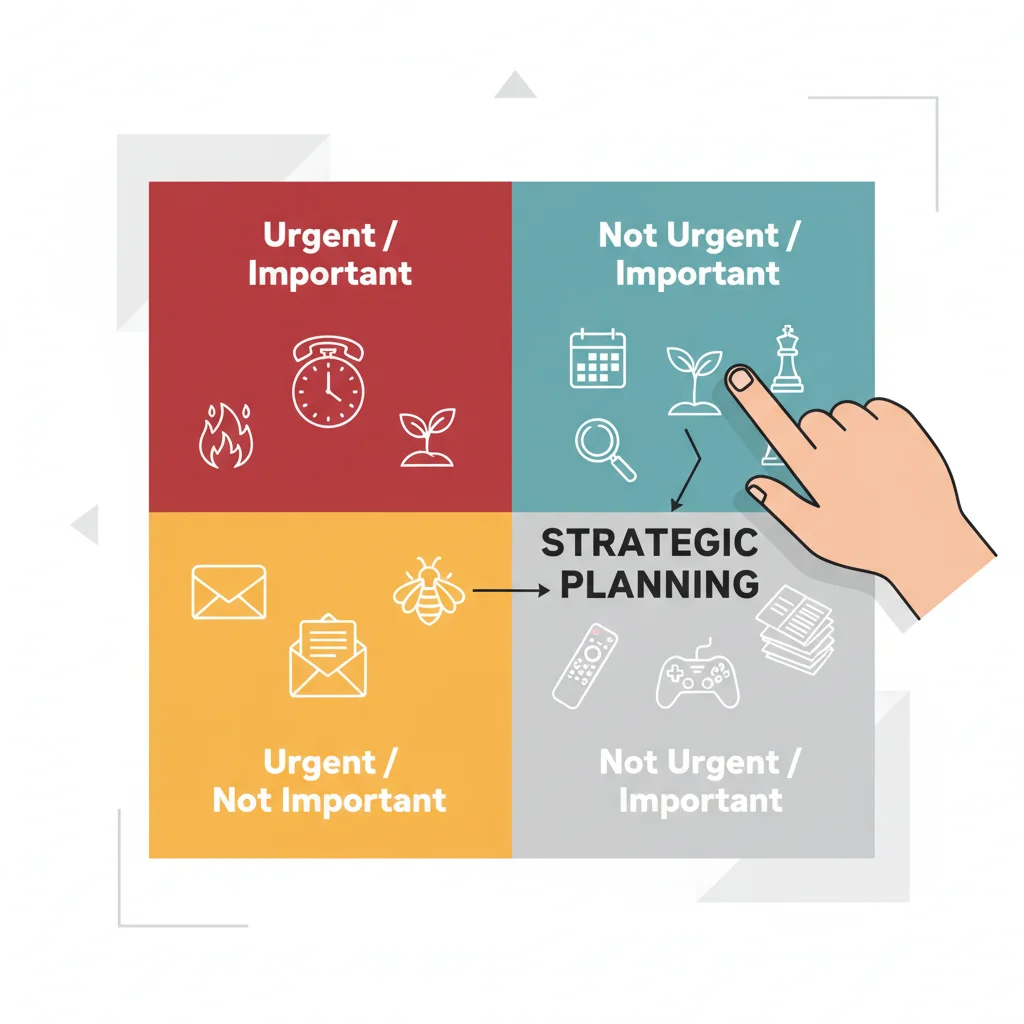
Not all tasks are created equal. To reclaim time, you must distinguish between urgent, important, and trivial. A popular tool for this is the Eisenhower Matrix:
- Urgent & Important (Do First): Crises, deadlines, pressing problems.
- Not Urgent & Important (Schedule): Prevention, relationship building, new opportunities, personal growth activities. This is where your reclaimed time will primarily go.
- Urgent & Not Important (Delegate): Interruptions, some emails, certain meetings.
- Not Urgent & Not Important (Eliminate): Time wasters, some trivial activities.
By consciously categorizing tasks, you ensure that your energy is directed towards what truly moves the needle, both professionally and personally. Making conscious choices about what to focus on is a cornerstone of effective daily time management.
Time Blocking: Scheduling Your Success
Time blocking is a highly effective technique where you allocate specific blocks of time for specific tasks. Instead of having a to-do list, you have a schedule of what you’ll be doing and when. This includes your personal growth activities.
- How to implement: Open your calendar (digital or physical) and block out time for your most important tasks first. This includes work-related tasks, but crucially, also block out time for your personal growth activities. Treat these blocks as non-negotiable appointments. For example, ‘6:00 AM – 7:00 AM: Learning a new language,’ or ‘8:00 PM – 9:00 PM: Reading personal development book.’
- Benefits: Time blocking reduces decision fatigue, minimizes distractions (because you know what you should be working on), and creates a clear structure for your day. It ensures that your personal growth activities are not just aspirations but scheduled commitments, integral to your daily time management plan.
Themed Days and Batching Tasks
Consider dedicating certain days to specific types of tasks or batching similar tasks together. For example:
- Themed Days: ‘Deep Work Mondays,’ ‘Meeting Tuesdays,’ ‘Creative Fridays.’ This can reduce context switching and improve focus.
- Task Batching: Respond to all emails at designated times (e.g., 10 AM and 3 PM) rather than checking them reactively throughout the day. Similarly, batch administrative tasks, errands, or content creation. This efficiency frees up significant chunks of time.
Practical Strategies to Reclaim Two Hours Daily
Now that you have a strategic framework, let’s dive into concrete, actionable steps you can take to find those extra two hours every single day.
1. Optimize Your Morning Routine
The first few hours of your day often set the tone for the rest. A well-designed morning routine can give you a significant head start on your personal growth goals.
- Wake up earlier: Even 30 minutes earlier can make a huge difference. Use this time for meditation, exercise, reading, or planning your day without interruptions. This is often the most peaceful and productive time.
- Avoid digital distractions: Resist the urge to check your phone immediately. Give yourself at least the first 30-60 minutes to focus on yourself before engaging with the digital world.
- The ‘Miracle Morning’ concept: Incorporate practices like silence, affirmations, visualization, exercise, reading, and scribing (journaling) into your morning. Even short bursts of each can be powerful for your daily time management and overall well-being.
2. Master Your Digital Environment
Our digital devices are powerful tools, but they can also be massive time vacuums if not managed consciously.
- Turn off notifications: Most app notifications are designed to pull you back into the app. Disable all non-essential notifications on your phone and computer.
- Schedule email and social media checks: Instead of constantly checking, dedicate specific times to engage with these platforms. Outside of these times, close the tabs or put your phone away.
- Use productivity apps wisely: Apps like Forest, Freedom, or StayFocusd can help block distracting websites during your focused work periods.
- Declutter your digital space: A messy desktop or an overflowing inbox can create mental clutter and slow you down. Organize your files, unsubscribe from unnecessary emails, and clear out old documents.
3. Optimize Your Work Habits
Your professional life is a major consumer of your time. By optimizing your work habits, you can free up significant time for personal endeavors.
- The Pomodoro Technique: Work in focused 25-minute intervals, followed by a 5-minute break. After four Pomodoros, take a longer 15-30 minute break. This technique enhances focus and prevents burnout, making your work periods more efficient.
- Learn to say ‘No’: Protect your time by politely declining requests that don’t align with your priorities or contribute to your goals. This is a crucial skill for effective daily time management.
- Delegate tasks: If possible, delegate tasks that others can do. This frees you up to focus on your highest-value activities.
- Automate where possible: Look for opportunities to automate repetitive tasks using software or tools. This can save hours over the long run.
- Minimize meetings: Challenge the necessity of every meeting. Can it be an email? Can it be shorter? Can fewer people attend?
4. Leverage Micro-Moments
You don’t always need large blocks of time for personal growth. Many small moments throughout the day can be leveraged.
- Commute time: Listen to audiobooks, podcasts, or language learning programs.
- Waiting in line: Read an article, review notes, or practice mindfulness.
- Lunch breaks: Instead of eating at your desk while working, use part of your lunch break for a short walk, meditation, or reading.
- Before bed: Dedicate 15-30 minutes to reading, journaling, or planning for the next day.
These seemingly small fragments of time, when used intentionally, can add up to significant progress in your personal growth journey, demonstrating the power of consistent daily time management.
5. Strategic Breaks and Rest
It might seem counterintuitive to take breaks to reclaim time, but strategic rest is essential for sustained productivity and focus. Burnout is a major time killer.
- Short, frequent breaks: Step away from your screen, stretch, or take a short walk. This recharges your mental energy.
- Disconnect after work: Create a clear boundary between work and personal life. Avoid checking work emails or taking calls after hours.
- Prioritize sleep: Adequate sleep (7-9 hours for most adults) is non-negotiable for cognitive function, mood, and energy levels. A well-rested mind is a productive mind, making your waking hours more efficient.

Putting It All Together: A Sample Day Reclaiming 2 Hours
Let’s illustrate how these strategies can create a day where you reclaim two hours for personal growth:
Original Day (Hypothetical):
- 7:00 AM: Wake up, check phone, scroll social media (30 mins)
- 7:30 AM: Get ready, grab quick breakfast (30 mins)
- 8:00 AM: Commute, listen to music/news (30 mins)
- 8:30 AM – 12:30 PM: Work, frequent email checks (4 hours)
- 12:30 PM – 1:00 PM: Lunch at desk, browsing (30 mins)
- 1:00 PM – 5:00 PM: Work, context switching (4 hours)
- 5:00 PM: Commute home (30 mins)
- 5:30 PM – 7:00 PM: Errands, dinner prep (1.5 hours)
- 7:00 PM – 10:00 PM: TV, social media, unstructured time (3 hours)
- 10:00 PM: Wind down, bed (30 mins)
Optimized Day with 2+ Hours Reclaimed for Personal Growth:
- 6:00 AM: Wake up (Reclaimed 1 hour from evening/sleep shift)
- 6:00 AM – 7:00 AM: Personal Growth Block 1 (1 hour) – e.g., Exercise, meditation, language learning.
- 7:00 AM – 7:30 AM: Get ready, healthy breakfast (30 mins)
- 7:30 AM – 8:00 AM: Commute, listen to educational podcast (30 mins, effectively reclaiming part of this time)
- 8:00 AM – 12:00 PM: Focused Work (4 hours) – No constant email checking due to time blocking.
- 12:00 PM – 12:30 PM: Lunch break, short walk (30 mins)
- 12:30 PM – 4:30 PM: Focused Work (4 hours) – Utilizing Pomodoro technique.
- 4:30 PM – 5:00 PM: Commute home, listen to audiobook (30 mins, effectively reclaiming part of this time)
- 5:00 PM – 6:00 PM: Errands, dinner prep (1 hour – 30 mins saved by efficiency)
- 6:00 PM – 7:00 PM: Family time/Dinner (1 hour)
- 7:00 PM – 8:00 PM: Personal Growth Block 2 (1 hour) – e.g., Reading, journaling, working on a side project.
- 8:00 PM – 9:30 PM: Relax, connect with loved ones, light chores (1.5 hours)
- 9:30 PM – 10:00 PM: Wind down, prepare for bed (30 mins)
In this optimized scenario, you’ve clearly carved out two dedicated hours for personal growth, plus leveraged commute time for learning, all without sacrificing essential work or personal responsibilities. This demonstrates the power of intentional daily time management.
Overcoming Challenges and Maintaining Momentum
Implementing new time management strategies isn’t always easy. You’ll encounter challenges, but with the right mindset, you can overcome them.
Be Flexible, Not Rigid
Life happens. There will be days when your carefully planned schedule goes awry. Don’t let one off day derail your entire effort. Acknowledge the disruption, adjust your plan for the next day, and move forward. The goal is progress, not perfection. Flexibility is a key component of sustainable daily time management.
Review and Adjust Regularly
Your needs and priorities will change. What worked last month might not work this month. Regularly review your time audit data and your schedule. At the end of each week, take 15-30 minutes to assess what worked, what didn’t, and how you can optimize for the coming week. This continuous improvement loop is vital.
Build Habits Gradually
Don’t try to implement all these strategies at once. Choose one or two to start with, master them, and then gradually add more. Small, consistent changes are far more sustainable than drastic overhauls. For example, start by just waking up 15 minutes earlier, or commit to 30 minutes of reading every evening.
Accountability and Support
Share your goals with a trusted friend, family member, or mentor. Having someone to hold you accountable can provide the extra motivation needed to stick to your plans. You might even find a ‘productivity buddy’ who is also working on their daily time management.
Celebrate Small Wins
Acknowledge your progress, no matter how small. Successfully sticking to your morning routine for a week, or completing a personal growth task you’d been procrastinating on, deserves recognition. Positive reinforcement strengthens new habits.
The Profound Impact of Reclaiming Your Time
The benefits of consistently reclaiming two hours daily for personal growth extend far beyond simply learning a new skill or reading more books. They permeate every aspect of your life:
- Enhanced Well-being: Dedicating time to activities you enjoy and that contribute to your personal development significantly reduces stress and increases overall happiness and life satisfaction.
- Increased Confidence: As you achieve personal goals and develop new competencies, your self-confidence will naturally grow.
- Improved Relationships: With better time management, you can be more present and intentional in your interactions with loved ones, strengthening those bonds.
- Career Advancement: New skills, expanded knowledge, and a more focused mindset can directly lead to career opportunities and success.
- Greater Resilience: Personal growth often involves learning to overcome challenges, building mental fortitude, and developing a more positive outlook on life.
- A Sense of Purpose: When you actively invest in your growth, you cultivate a deeper sense of purpose and direction, leading to a more meaningful existence.
Conclusion: Your Journey to Mastery of Daily Time Management Begins Now
Reclaiming two hours daily for personal growth is not an overnight transformation, but a journey of intentional choices and consistent effort. By understanding your current time usage, strategically planning your days, and implementing actionable strategies, you can unlock a wealth of time that you might not have realized you had. The key lies in viewing time as a precious, finite resource that you have the power to control, rather than something that controls you.
Start small, be patient with yourself, and celebrate every step of progress. The investment you make in mastering daily time management will pay dividends in every area of your life, leading to a more fulfilling, productive, and personally enriched existence. The time to start building the life you envision is not tomorrow, but today.