Navigating the Future: Emerging Trends in Sustainable Living for a Conscious Lifestyle
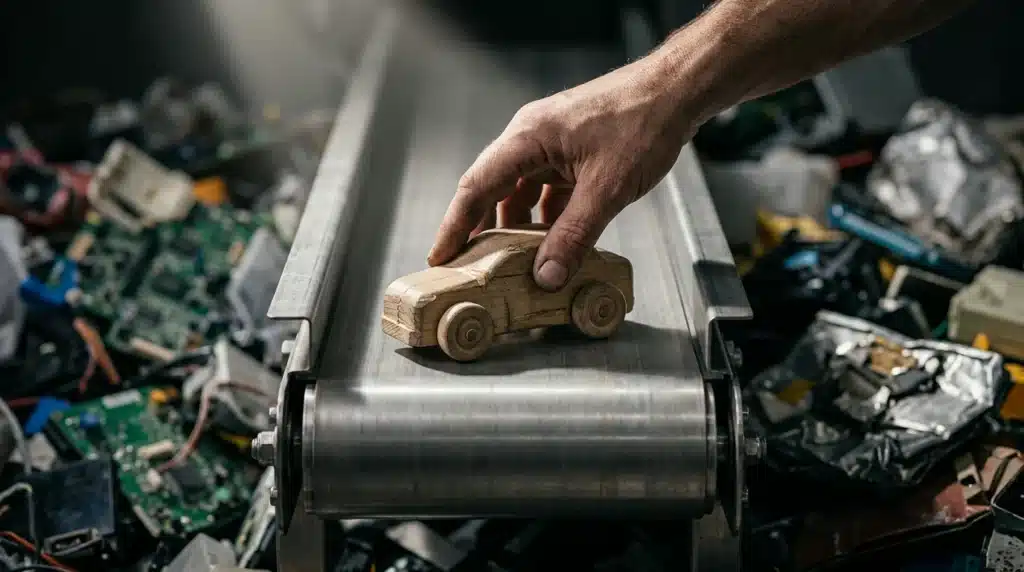
We’re surrounded by stuff. From the constant stream of packages arriving at our doors to the gadgets that become obsolete in a flash, modern life can feel like an endless cycle of acquisition and disposal. For years, the answer to the resulting eco-guilt has been a simple mantra: reduce, reuse, recycle. But what if that’s no longer enough? What if the problem isn’t just our individual habits, but the entire system we’re participating in?
A quiet but powerful revolution is underway, challenging the very foundation of our “take-make-dispose” economy. This movement suggests that true sustainability isn’t about deprivation or simply doing less harm; it’s about fundamentally redesigning our world to be more intelligent, efficient, and regenerative. It’s a shift from a linear path that ends in a landfill to a circular one where waste is designed out from the start, and value is preserved, not destroyed.
This isn’t some far-off utopian dream; it’s happening right now. This guide navigates the most impactful trends shaping the future of conscious living. We’ll explore the rise of the circular economy and the innovative business models it’s creating. We’ll see how smart technology is turning our homes into active partners in conservation, examine the revolution on our plates with new food systems, and look at how our wardrobes can reflect our values. Finally, we’ll touch on the profound shift away from owning things and toward experiencing life, creating a roadmap for a more sustainable and fulfilling future.
The Rise of Circularity: Beyond Reduce, Reuse, Recycle
For decades, the mantra for sustainable living has been “reduce, reuse, recycle.” While these principles are valuable, they often represent the end of a conversation rather than the beginning. A more profound shift is taking place, centered on the idea of a circular economy. This model redesigns the entire system of production and consumption, aiming to eliminate waste and keep materials in use for as long as possible. It’s a basic change in thinking.
Imagine our traditional economy as a one-way street: we take resources, make products, use them, and then throw them away. This linear “take-make-dispose” model is inherently wasteful and finite. A circular economy, by contrast, is more like a city’s complex traffic grid with roundabouts, where resources are continuously looped back into the system, repaired, or regenerated. The goal is to design out waste from the very start. What most people miss is that this isn’t just about better recycling; it’s about rethinking ownership, materials, and product lifecycles entirely.
Innovative Business Models Driving Circularity
Companies are beginning to see the economic potential in closing the loop. This has led to new approaches that challenge the traditional sales model, focusing instead on durability and service. These aren’t just niche experiments anymore; they are becoming scalable and profitable ventures that redefine our relationship with “stuff.”
Product-as-a-Service (PaaS) Growth
One of the most significant shifts is the growth of Product-as-a-Service (PaaS) models. Instead of buying a product outright, consumers pay for the service it provides. Think of it as a refined rental or lease agreement. Companies retain ownership of the product, which means they are financially incentivized to make it durable, easy to repair, and simple to disassemble for parts at the end of its life. This changes everything.
For example, companies like Phillips now offer “Light as a Service,” where clients pay for illumination, while Phillips owns and maintains all the fixtures. A report from the World Economic Forum suggests that transitioning to these circular models could generate billions in economic value. It aligns the company’s success with the product’s longevity, a direct reversal of the planned obsolescence that defined previous generations of manufacturing.
Repair and Upcycling Communities
Parallel to corporate innovation, a grassroots movement is reclaiming the lost art of repair. Community-led “Repair Cafes” are popping up worldwide, where volunteers with technical skills help others fix everything from toasters to trousers. These events foster a culture of maintenance over disposal and build strong local ties—a core aspect of sustainable community & culture.
Online, platforms like iFixit provide free repair guides for thousands of devices, empowering consumers to fight back against products designed to be unfixable. This hands-on approach directly supports Zero-Waste Home Practices by extending the life of items we already own. It’s about seeing a broken item not as trash, but as a puzzle to be solved.
Consumer Engagement in the Circular Shift
Businesses cannot drive this change alone; consumer behavior is a powerful force. As awareness grows, people are increasingly voting with their wallets for brands that embrace sustainable consumption. According to a study by the Boston Consulting Group, over 73% of consumers state they are more likely to purchase from a brand that is transparent about its environmental impact.
This demand pushes companies to offer take-back programs, use recycled materials, and design for disassembly. But how does an individual participate beyond just buying “green” products? It involves asking different questions before a purchase: Can this be repaired? What happens to it when I’m done with it? Is there a way to access the function of this product without owning it? This shift in mindset is where the real power lies.
Here is a simplified comparison of the two economic models:
| Feature | Linear Economy (Traditional) | Circular Economy (Emerging) |
|---|---|---|
| Resource Use | Extract raw materials, use, then discard. | Keep resources in use; regenerate natural systems. |
| Product Design | Designed for a single use or planned obsolescence. | Designed for durability, repair, and disassembly. |
| End of Life | Products become waste and are landfilled or incinerated. | Materials are recovered and reused, recycled, or composted. |
| Economic Driver | Volume of sales (selling more units). | Performance and service (selling long-lasting value). |
Challenges and Opportunities in a Circular Future
Transitioning to a fully circular economy is not without its hurdles. It requires significant upfront investment to re-engineer supply chains, redesign products, and develop reverse logistics for taking products back—a consideration for anyone interested in Financial Planning for Sustainable Investments. There are also behavioral challenges in shifting a culture accustomed to the convenience of disposability.
Yet, the opportunities are immense. A circular model can create new jobs in repair, remanufacturing, and logistics while reducing dependence on volatile raw material markets. For consumers, it promises higher-quality products that last longer and may even cost less over their lifetime. The path forward involves both top-down policy changes and bottom-up consumer action, gradually weaving these circular principles into the fabric of our daily lives.
Tech for Good: Smart Solutions for Eco-Conscious Homes
The principles of a circular economy are finding a powerful partner in technology. While reusing and repairing are required, the next frontier is optimizing what we use in real-time. A smart home is no longer just about convenience; it’s about creating a responsive environment that actively reduces its own footprint through data-driven decisions.
This shift represents a more proactive approach to sustainability. It’s about building efficiency directly into the walls of our homes, turning passive structures into active participants in resource conservation.
AI and IoT in Home Energy Management
The most significant impact of smart technology is on energy efficiency. Devices connected through the Internet of Things (IoT)—from thermostats to light bulbs—gather data on your household’s patterns. An AI then analyzes this information to eliminate waste you might not even notice, like heating an empty room or leaving lights on in unused areas. It’s like having a meticulous financial planner for your kilowatt-hours.
The results are quite tangible. A report from the American Council for an Energy-Efficient Economy (ACEEE) suggests that homes with integrated smart thermostats can reduce heating and cooling costs by an average of 12%. When paired with smart lighting and energy-monitoring plugs, some households see total electricity savings reach as high as 23%. What most people miss is how these systems also support the grid, especially for those with Renewable Energy Solutions like solar panels, by optimizing when to pull power or send it back.
Water Conservation Innovations
Energy isn’t the only resource getting a smart upgrade. Water management technology is rapidly advancing, addressing everything from lawn care to plumbing. Smart sprinkler systems, for instance, use weather data to water landscapes only when necessary—a far cry from the old set-it-and-forget-it timers. Inside the home, IoT sensors can detect microscopic leaks in pipes long before they become a visible, and costly, problem.
Dr. Alisha Vance, a hydrologist at the Colorado School of Mines, explains, “The majority of residential water waste is invisible, stemming from over-irrigation and slow leaks. AI-powered systems bring this waste into the light and automate the solution.” Could this finally be the tool that makes a real dent in urban water consumption? These technologies are not just gadgets; they are primary tools for responsible resource stewardship in an increasingly thirsty world.
The majority of residential water waste is invisible, stemming from over-irrigation and slow leaks. AI-powered systems bring this waste into the light and automate the solution.
— Dr. Alisha Vance, Hydrologist at the Colorado School of Mines
| Feature | Linear Economy (Traditional) | Circular Economy (Emerging) |
|---|---|---|
| Resource Use | Extract raw materials, use, then discard. | Keep resources in use; regenerate natural systems. |
| Product Design | Designed for a single use or planned obsolescence. | Designed for durability, repair, and disassembly. |
| End of Life | Products become waste and are landfilled or incinerated. | Materials are recovered and reused, recycled, or composted. |
| Economic Driver | Volume of sales (selling more units). | Performance and service (selling long-lasting value). |
The Green Plate Revolution: Evolving Sustainable Food Systems
The conversation around sustainable eating has moved far beyond simply choosing paper over plastic at the grocery store. What we put on our plates is a powerful expression of our values and has a direct line to the planet’s health. The environmental cost of conventional agriculture, from water usage to greenhouse gas emissions, is pushing us to rethink our entire food chain. This isn’t just about sacrifice; it’s about discovery.
Modern sustainable eating is exploring two major frontiers: the very substance of our food and the journey it takes to reach our kitchens. How do we feed a growing population without depleting our resources? The answers are surprisingly complex and are being developed in both laboratories and local farms.
Beyond Plant-Based: Novel Protein Sources
Plant-based diets have entered the mainstream, but the search for sustainable protein is already entering its next phase. Scientists are now focused on cultivated meat, which involves growing real animal meat from cells in a controlled environment—no animal farming required. According to a landmark study from Oxford University, this process could potentially reduce the greenhouse gas emissions of meat production by over 78% and land use by more than 99% compared to conventional beef.
Of course, there are hurdles. The cost of production remains high, and what most people miss is the significant challenge of consumer acceptance (the “ick factor” is real). Other alternatives, like protein derived from insects, offer incredible efficiency but face similar cultural barriers in Western markets. The underrated factor here is how quickly public perception can shift once an option becomes both affordable and accessible.
Reimagining the Local Food Movement
Sourcing food locally has always been a core tenet of sustainable living, but its definition is expanding. While farmers’ markets and Community Supported Agriculture (CSA) programs remain vital, technology is enabling new forms of local production. Think of vertical farming, where crops are grown in stacked layers inside buildings, often in the heart of urban centers. It’s like a high-rise apartment building for lettuce, drastically cutting down on “food miles” and the associated carbon footprint.
This localized approach also presents a powerful tool against one of our biggest problems: food waste. The nonprofit ReFED reports that an astonishing 38% of all food in the United States goes unsold or uneaten. This is a massive drain on resources.
Innovative solutions are tackling this head-on. Apps like Too Good To Go connect consumers with restaurants and cafes to buy surplus food at a discount, directly supporting both Ethical Consumerism and Zero-Waste Home Practices. The challenge ahead is weaving these different threads—novel proteins, hyper-local farming, and waste reduction—into a cohesive and equitable food system for all.
Eco-Fashion Forward: Ethical Choices in Your Wardrobe
The fashion industry’s impact is staggering, with reports from the Ellen MacArthur Foundation suggesting a garbage truck’s worth of textiles is landfilled every second. Responding to this, a new wave of sustainable fashion is gaining momentum, moving beyond just organic cotton. It’s a complete rethinking of our relationship with clothes. This shift focuses on longevity and circularity over disposability.
Emerging trends offer practical fast fashion alternatives that are becoming more accessible. Clothing rental services allow you to refresh your look without the ownership footprint, while upcycling and repair workshops are turning old garments into unique new pieces. The most significant development, I suspect, is the demand for supply chain transparency. But how do you spot a genuinely ethical brand?
Making conscious choices starts with asking the right questions. Look for brands that openly share information about their factories and material sourcing — a core principle of Ethical Consumerism. Check for certifications like Fair Trade or B Corp status. Consider the materials themselves; are they recycled, organic, or biodegradable? This approach isn’t about achieving perfection, but making small, informed decisions that collectively reduce harm.
Ultimately, this movement is less about a specific aesthetic and more about a mindset. It connects the contents of your closet directly to your values, mirroring the ideals found in Personal Growth through Minimalism by championing quality over quantity. The future of fashion seems to be not what’s new, but what lasts.
Mindful Consumption: Shifting Towards Experiential Living
There’s a quiet but powerful movement away from accumulating physical things. Instead, people are investing in memories and skills through what is now called the experiential economy. A recent study by the consumer research group Mintel found that 78% of adults would rather spend money on an experience, like a concert or a trip, than on a physical item. This pivot isn’t just about fun; it’s a form of mindful consumption rooted in a desire for a more meaningful life.
This approach directly aligns with the principles of minimalism. What most people miss is that minimalism isn’t about stark, empty rooms or owning less than 100 things. It’s about intentionality. Think of it like packing a car for a cross-country road trip — you don’t bring everything you own, just what’s useful and what will make the journey better. Adopting this mindset often leads to exploring topics like Personal Growth through Minimalism as you decide what adds value to your life.
But how does this translate into daily choices? Instead of buying the latest smartphone, someone might invest in a pottery class, a language course, or tickets to a local play. These choices create lasting personal enrichment over the short-term satisfaction of a new purchase. It’s about collecting skills, not stuff.
Ultimately, fewer products purchased means less manufacturing demand and less waste in landfills.
The underrated factor here is how this individual shift redefines our concept of wealth. Moving from material assets to a rich portfolio of life experiences reflects a deeper engagement with Ethical Consumerism. The question remains how this growing personal preference will reshape markets that have long depended on us simply wanting more.
Community-Led Green Initiatives: Local Action, Global Impact
While individual choices in minimalism and conscious consumption are powerful, the next wave of sustainable living focuses on collective action. The shift is from “what can I do?” to “what can we do together?” This approach recognizes that systemic change often starts at the block party, not the boardroom. Real, lasting impact is happening in neighborhoods that decide to take matters into their own hands.
These grassroots movements are building resilience from the ground up. They create localized solutions that are often more effective and adaptable than top-down policies. It’s about neighbors pooling resources, knowledge, and effort to create a shared, sustainable future.
The Power of Local Food Hubs
One of the most visible trends in community sustainability is the effort to relocalize food systems. Centralized agriculture has a massive carbon footprint, but local food hubs shorten the supply chain dramatically. This reduces food miles, supports local economies, and often provides access to healthier, fresher produce for residents.
Community Gardens as Social Connectors
Beyond the simple act of growing food, community gardens have become vital social spaces. They foster connections between neighbors who might otherwise never interact, creating a stronger, more tight-knit community fabric. What most people miss is that the social benefits can be just as significant as the environmental ones. A report from the American Community Gardening Association found that neighborhoods with established gardens see a measurable drop in crime rates—as much as 11% in some Chicago districts.
These plots of land are more than just sources of tomatoes and kale. They are outdoor classrooms where skills are shared, and intergenerational bonds are formed. It’s a tangible demonstration of shared purpose.
Tool Libraries and Repair Cafes
The concept of a circular neighborhood extends beyond food to the very items we use every day. Why should every household on a street own a power drill that gets used for maybe 15 minutes a year? This question has fueled the rise of tool libraries and repair cafes, which are central to practicing Zero-Waste Home Practices at a community level.
A tool library works a lot like a public book library, but for everything from lawnmowers to sewing machines. A small annual fee—say, $50 at the “West Philly Tool Library”—gives members access to thousands of tools, saving them money and reducing consumption. Repair cafes take this a step further by providing a space and expert volunteers to help people fix broken items—from toasters to torn jeans—instead of throwing them away. This directly challenges the throwaway culture promoted by so much of modern commerce.
Advocacy and Policy Influence at the Grassroots
Local action often builds momentum that can influence municipal policy. A neighborhood group that starts a successful composting pilot program can present concrete data to city hall, advocating for a city-wide initiative. This is where individual passion translates into structural change. For instance, a community association in Portland, Oregon, successfully lobbied for zoning changes to allow for more “accessory dwelling units” (ADUs), promoting denser, more energy-efficient housing.
These groups become powerful advocates for bike lanes, green spaces, and local renewable energy projects. They prove that a concept works on a small scale, which de-risks the decision for policymakers to adopt it more broadly. This connection between hyperlocal projects and broader policy is perhaps the most underrated factor in creating sustainable cities for the future.
From Ownership to Stewardship
As these trends converge, from circular product design to experiential living, a single, powerful idea emerges: a collective shift away from the burden of ownership and towards the freedom of access and stewardship. We are beginning to understand that the value of a product isn’t in possessing it, but in the function it performs. This mindset transforms our relationship with the material world, turning us from passive consumers into active curators of a more intentional life. The ultimate question is no longer how we can consume less, but how we can live more richly with what we choose to use. What would you be willing to give up owning if you could have better access to the experience it provides?
Frequently Asked Questions
What are the most impactful sustainable living changes I can make today?
Focus on high-impact areas rather than sweating every small detail. The most significant changes often relate to reducing food waste, especially meat consumption, and rethinking large purchases like transportation and fast fashion. Prioritizing fewer, better-quality items that last longer has a greater effect than simply recycling more packaging.
How can I identify sustainable products and brands?
Look for transparency and third-party validation. Genuinely sustainable brands often provide detailed information on their supply chains and are certified by bodies like B Corp or Fair Trade. Also, consider their business model—do they offer repair services or use recycled materials? These are strong indicators of a deeper commitment.
Is sustainable living expensive, and how can I make it affordable?
While some eco-friendly products have a higher upfront cost, a sustainable lifestyle often saves money in the long run. Embracing practices like repairing items, buying secondhand, cooking at home to reduce food waste, and investing in quality over quantity leads to significant savings over time. It’s a shift from frequent, cheap purchases to infrequent, valuable ones.
What role does technology play in making sustainable choices easier?
Technology is a powerful enabler for sustainable living. Smart home devices automate energy and water savings, while apps connect you to surplus food from local restaurants to prevent waste. Online platforms also provide repair guides and marketplaces for secondhand goods, making it easier than ever to extend the life of your belongings.
How can communities collectively foster more sustainable environments?
Community action amplifies individual efforts significantly. Initiatives like community gardens, tool-lending libraries, and local “Repair Cafes” build a culture of sharing and maintenance. Collectively, communities can also advocate for better public infrastructure, such as improved public transit, bike lanes, and full recycling programs.