Digital Community Hubs 2026: Nextdoor, Facebook, & TownSquare Compared
The Rise of Digital Community Hubs: A Comparison of 3 Platforms for US Neighborhood Connection in 2026
In an increasingly digitized world, the concept of ‘neighborhood’ has expanded beyond mere geographical boundaries. While physical proximity remains important, the glue that binds communities together often finds its strength in virtual spaces. Welcome to 2026, where Digital Community Hubs are not just a convenience but a cornerstone of local interaction, information sharing, and mutual support across the United States. These platforms have evolved significantly, moving beyond simple social networking to become indispensable tools for civic engagement, local commerce, and fostering genuine human connection.
The quest for effective digital tools to connect neighbors is more relevant than ever. From organizing local events and sharing safety alerts to recommending trusted service providers and simply borrowing a cup of sugar, these platforms streamline interactions that were once left to chance encounters or bulletin boards. But with a growing number of options, how do communities and individuals choose the right digital home? This article delves into a comprehensive comparison of three prominent Digital Community Hubs dominating the US landscape in 2026: Nextdoor, Facebook Groups, and the emerging player, TownSquare. We will explore their unique features, evaluate their strengths and weaknesses, and provide insights into which platform might best suit different neighborhood needs.
Understanding the Evolution of Digital Community Hubs
Before we dive into the specifics of each platform, it’s crucial to understand the trajectory of Digital Community Hubs. What started as simple online forums or email lists has blossomed into sophisticated ecosystems designed to cater to the multifaceted needs of local populations. The early 2020s saw a surge in demand for hyper-local information and support networks, largely fueled by global events that emphasized the importance of community resilience. This demand spurred innovation, leading to platforms with enhanced privacy features, more robust moderation tools, and integrated functionalities that extend beyond mere communication.
By 2026, the ideal Digital Community Hub is expected to offer a blend of social networking, civic engagement, local commerce, and emergency communication. It should be intuitive for users of all technological proficiencies, secure in its data handling, and effective in fostering a sense of belonging. The platforms we are examining – Nextdoor, Facebook Groups, and TownSquare – each approach these ideals from different angles, reflecting their foundational philosophies and target audiences. Their continued evolution is a testament to the enduring human need for connection, adapted for the digital age.
The societal impact of these hubs is profound. They empower residents to become more informed and engaged citizens, facilitate mutual aid, and even support local economies by connecting consumers with small businesses. However, they also face challenges, including managing misinformation, ensuring inclusivity, and preventing digital divides. Our comparison will consider these broader implications alongside the technical features.
Nextdoor: The Established Neighborhood Network
Overview and Core Philosophy
Nextdoor remains a titan among Digital Community Hubs, having carved out a niche as the dedicated social network for neighborhoods. Launched in 2011, it has consistently focused on connecting verified neighbors within specific geographical boundaries. Its core philosophy revolves around fostering real-world connections and building stronger, safer communities. By 2026, Nextdoor has refined its algorithms and features to enhance relevance and reduce noise, aiming to be the go-to platform for all things local.
Key Features in 2026
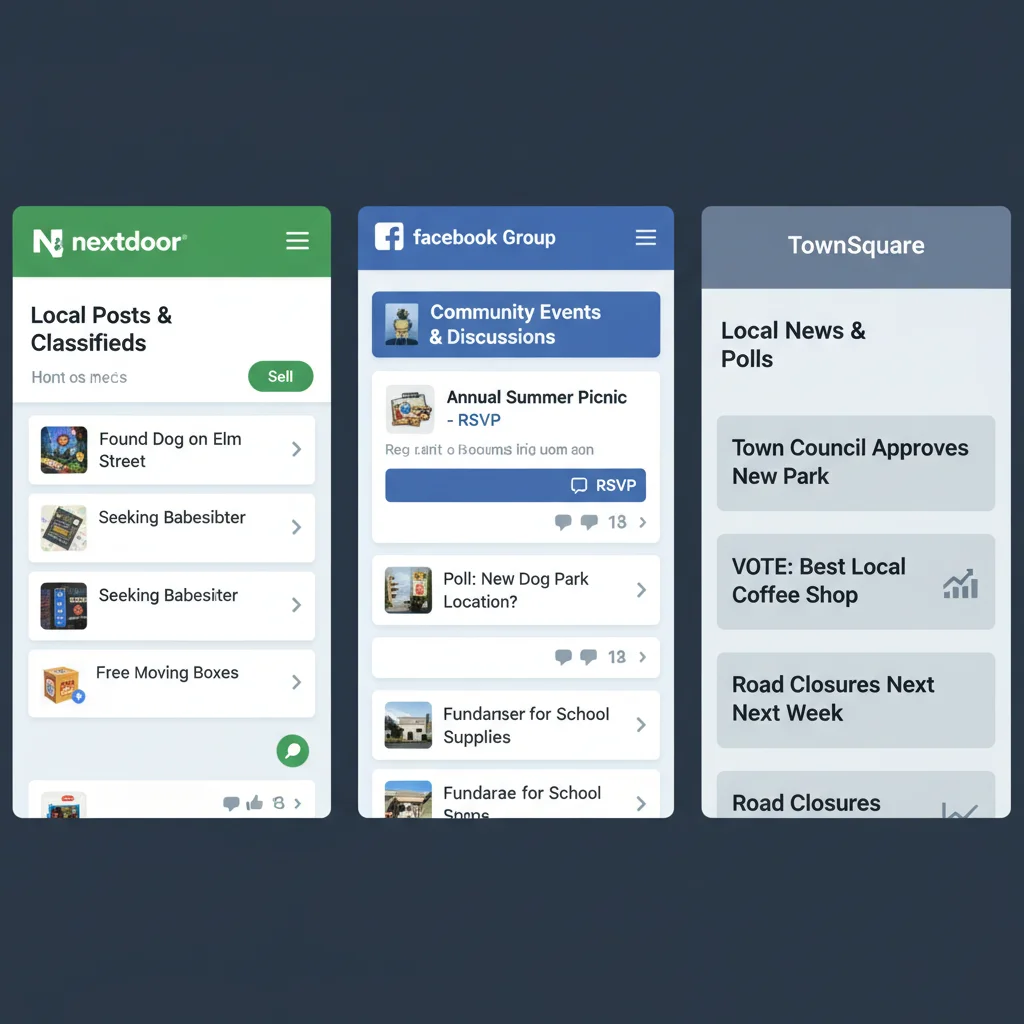
- Hyper-local Feeds: Users see posts and updates primarily from their immediate neighborhood, with options to expand visibility to nearby areas. This ensures highly relevant content, from lost pets to crime alerts and local recommendations.
- Verification Process: Nextdoor’s strict verification process (requiring a physical address) remains a cornerstone, aiming to ensure that users are indeed residents of the neighborhoods they claim to be part of. This enhances trust and accountability.
- Neighborhood Groups: Beyond the main feed, users can create smaller, interest-based groups for specific activities like book clubs, gardening, or parent support, offering a more intimate connection.
- Local Business Directory & Recommendations: An enhanced directory allows neighbors to find and recommend local businesses, services, and tradespeople. This feature has become more sophisticated, integrating reviews and direct messaging capabilities.
- Public Agency Integration: Partnerships with local police departments, fire departments, and city services allow official alerts and information to be disseminated directly to residents, proving invaluable during emergencies.
- Events Calendar: A robust calendar feature helps neighbors discover and organize local events, from block parties to farmers’ markets.
- ‘For Sale & Free’ Section: A popular feature for decluttering and finding local deals, operating like a neighborhood classifieds board.
Strengths of Nextdoor
Nextdoor’s primary strength lies in its dedicated focus on hyper-locality and its robust verification system. This creates a relatively trusted environment for neighbors to interact. Its integration with public services is a significant advantage for safety and civic information. The platform’s commitment to local commerce also empowers small businesses and encourages residents to ‘buy local.’
Challenges and Criticisms
Despite its strengths, Nextdoor has faced criticism regarding moderation, particularly concerning instances of racial profiling and the spread of misinformation. While the platform has invested heavily in AI-powered moderation and community guidelines, maintaining a positive and inclusive environment across millions of neighborhoods remains a continuous challenge. Another point of contention can be the ‘noise’ level in feeds, with some users reporting an overload of non-essential posts, although Nextdoor’s 2026 algorithms aim to mitigate this through personalized feeds.
Facebook Groups: The Flexible Giant
Overview and Core Philosophy
Facebook Groups, while not exclusively designed as Digital Community Hubs, have become de facto ones for countless neighborhoods across the US. Leveraging Facebook’s massive user base and versatile platform, neighborhood-specific groups offer a flexible, familiar environment for local interaction. Their philosophy is rooted in Facebook’s broader mission of connecting people, adapted to a local context. By 2026, Facebook has continued to refine group functionalities, recognizing their critical role in local engagement.
Key Features in 2026
- Massive User Base & Familiarity: The sheer number of Facebook users means many neighbors are already on the platform, lowering the barrier to entry.
- Versatile Content Sharing: Groups support a wide array of content types – text posts, photos, videos, live streams, polls, and documents – making them highly adaptable for various community needs.
- Event Management: Facebook’s powerful event creation and management tools are a huge asset for organizing local gatherings, complete with RSVPs, discussions, and reminders.
- File Sharing & Collaborative Documents: Useful for community projects, shared resources, or local initiatives.
- Moderation Tools: Group administrators have a comprehensive suite of tools to manage membership, approve posts, and enforce rules, allowing for tailored community governance.
- Integration with Marketplace: For buying, selling, or giving away items locally, Facebook Marketplace is seamlessly integrated, offering a broad reach.
- Notifications & Digests: Users can customize how they receive updates from groups, ensuring they stay informed without being overwhelmed.
Strengths of Facebook Groups
The biggest strength of Facebook Groups as Digital Community Hubs is their ubiquity and the familiarity of the interface. This makes adoption easy. The versatility of content types and robust event management tools are also significant advantages. Groups can be private, public, or secret, offering flexibility in terms of privacy and access, which can be crucial for sensitive community discussions or exclusive neighborhood associations.
Challenges and Criticisms
The primary challenge for Facebook Groups is the lack of inherent geographical verification. While group admins can set rules, there’s no system-level guarantee that all members are actual residents of the specified neighborhood, potentially leading to less trusted interactions or an influx of irrelevant members. Furthermore, the broader Facebook ecosystem can be distracting, and privacy concerns associated with the parent company sometimes deter users. Moderation can also be a heavy burden on volunteer administrators, leading to inconsistent experiences across different groups.
TownSquare: The Emerging Local Connector
Overview and Core Philosophy
TownSquare, a newer entrant in the Digital Community Hubs space, has gained significant traction by 2026, particularly in urban and suburban areas looking for a more curated and less ‘noisy’ local experience. Its philosophy centers on simplicity, data privacy, and empowering local organizations. TownSquare aims to be a clean, efficient platform for essential local communication and engagement, often partnering directly with homeowner associations, city councils, and local businesses.
Key Features in 2026
- Clean, Ad-Free Interface: A major draw for many users, TownSquare prioritizes user experience with a minimalist design and a commitment to being ad-free, relying on subscription models or partnerships with local entities.
- Verified Local News & Announcements: Emphasizes official announcements from local government, community organizations, and verified businesses, reducing the spread of unverified information.
- Robust Polling & Survey Tools: Designed for efficient gathering of community feedback on local issues, facilitating civic participation.
- Direct Messaging & Group Chats: Standard communication features allowing for one-on-one or small group interactions.
- Community-Managed Resource Directory: A collaborative list of local services, amenities, and points of interest, maintained by the community and verified by administrators.
- Focus on Data Privacy: TownSquare positions itself as a privacy-first platform, with transparent data handling policies and limited data sharing, appealing to users wary of larger social media giants.
- Integration with Smart City Initiatives: In some regions, TownSquare integrates with smart city infrastructure to provide real-time updates on public transport, utility outages, or environmental data.
Strengths of TownSquare
TownSquare’s strengths lie in its emphasis on quality over quantity. The clean, ad-free interface and focus on verified information create a more pleasant and trustworthy environment. Its robust polling tools are excellent for civic engagement, and its commitment to data privacy resonates with a growing segment of the population. By partnering directly with local governance and organizations, TownSquare can become an official communication channel, adding a layer of authority and reliability that other Digital Community Hubs might lack.
Challenges and Criticisms
As a newer and often subscription-based or partnership-dependent platform, TownSquare’s primary challenge is adoption and scale. It may not have the immediate critical mass of users that Facebook Groups enjoy, or the established presence of Nextdoor. Its curated nature, while a strength, can also be a weakness if communities desire a more free-flowing, less moderated discussion space. The reliance on formal partnerships might also limit its organic growth in areas without proactive local organizations.
Comparative Analysis: Nextdoor vs. Facebook Groups vs. TownSquare
To truly understand which of these Digital Community Hubs stands out, let’s conduct a side-by-side comparison across several critical dimensions.
1. User Verification and Trust
- Nextdoor: Strongest verification via physical address, fostering a higher level of trust among neighbors.
- Facebook Groups: No inherent geographical verification; relies on group admin rules and manual checks. Trust can vary widely between groups.
- TownSquare: Often relies on official partnerships (HOAs, city) for initial user onboarding or verification, providing a high level of trust for official communications, but potentially less for casual neighbor-to-neighbor interactions.
2. Content Focus and User Experience
- Nextdoor: Hyper-local news, classifieds, crime/safety alerts, recommendations. Can be noisy but highly relevant.
- Facebook Groups: Highly versatile; can be anything from event planning to general discussions. User experience is familiar but can be distracting due to the broader Facebook ecosystem.
- TownSquare: Curated, official announcements, polls, and essential local information. Clean, ad-free experience with less ‘social’ noise.
3. Moderation and Community Management
- Nextdoor: Mix of community-led moderation and platform-level AI/staff. Still faces challenges with content quality.
- Facebook Groups: Entirely dependent on volunteer group administrators, leading to inconsistent moderation.
- TownSquare: Often professionally managed or tightly controlled by partnering local organizations, ensuring higher content quality and adherence to guidelines.
4. Privacy and Data Handling
- Nextdoor: Publicly traded company; data usage outlined in privacy policy, generally adheres to industry standards for social networks.
- Facebook Groups: Part of Facebook’s vast data ecosystem; users often have concerns about data privacy and targeted advertising.
- TownSquare: Positions itself as privacy-first, often with clearer, more restrictive data usage policies, appealing to privacy-conscious users.
5. Local Commerce and Business Support
- Nextdoor: Strong local business directory and recommendation features, actively promotes local commerce.
- Facebook Groups: Integrates with Facebook Marketplace; many groups allow local business promotions, but less structured than Nextdoor.
- TownSquare: Often features a curated directory of partner businesses or local services, with less emphasis on open classifieds.
6. Emergency Communication and Civic Engagement
- Nextdoor: Excellent for emergency alerts due to public agency partnerships and hyper-local focus. Strong for general civic discussion.
- Facebook Groups: Can be effective for rapid dissemination of information if admins are active, but lacks official partnerships. Polls and discussions are common.
- TownSquare: Exceptionally strong for official civic engagement and emergency communication when integrated with local government or HOAs, thanks to its curated nature and polling tools.
Choosing the Right Digital Community Hub for Your Neighborhood in 2026
The ‘best’ Digital Community Hub isn’t a one-size-fits-all answer. It largely depends on the specific needs, demographics, and priorities of a given neighborhood or community. Here’s a guide to help you decide:
Choose Nextdoor if:
- Your priority is a dedicated, verified neighborhood network for general local interactions, safety alerts, and local recommendations.
- You want a platform with strong integration with local public services.
- You value a structured environment primarily focused on geographic proximity.
- You are comfortable with a platform that includes local advertising and user-generated content that can sometimes be varied in quality.
Choose Facebook Groups if:
- Your community members are already heavily invested in the Facebook ecosystem and prefer a familiar interface.
- You need a highly versatile platform for diverse content types, robust event management, and broad reach.
- You have dedicated, proactive administrators willing to manage membership and moderate content effectively.
- The neighborhood thrives on less formal, more free-flowing discussions.
Choose TownSquare if:
- Your community (e.g., HOA, city council, planned development) seeks an official, curated, and ad-free communication channel.
- Data privacy and a minimalist, focused user experience are paramount.
- You prioritize official local news, polls for civic engagement, and verified resources over general social chatter.
- Your community is willing to support a platform through direct partnerships or subscriptions for a premium experience.
The Future Landscape of Digital Community Hubs
As we look beyond 2026, the landscape of Digital Community Hubs will undoubtedly continue to evolve. We can anticipate further advancements in AI-driven content moderation, personalized feeds that truly understand individual neighbor preferences, and deeper integrations with smart home technologies and IoT devices for seamless local interactions.
The emphasis on data privacy is likely to intensify, pushing platforms to offer more transparent and user-controlled data management features. Furthermore, the convergence of online and offline experiences will become even more fluid, with digital hubs serving as launchpads for real-world community building, volunteer efforts, and local economic growth. The challenge for all platforms will be to balance scale with the intimacy and authenticity that defines a true community.
Ultimately, the goal of these platforms remains the same: to foster a stronger sense of belonging and mutual support within our neighborhoods. Whether it’s through the established network of Nextdoor, the flexible expanse of Facebook Groups, or the curated calm of TownSquare, the digital bridge to our local communities is becoming increasingly sophisticated and essential.
Conclusion
The year 2026 presents a rich and diverse array of Digital Community Hubs, each with its unique approach to connecting US neighborhoods. Nextdoor continues to serve as the default for many, offering a verified, hyper-local network. Facebook Groups provide unparalleled flexibility and reach through their massive user base. TownSquare emerges as a compelling alternative for those seeking a more curated, privacy-focused, and officially supported platform.
For individuals, the choice often comes down to a balance of desired features, privacy concerns, and the prevailing platform within their specific neighborhood. For community leaders and organizations, selecting the right hub involves a strategic assessment of community needs, administrative capacity, and a vision for how digital tools can best enhance real-world connections. By understanding the nuances of Nextdoor, Facebook Groups, and TownSquare, communities can make informed decisions that strengthen the fabric of local life in the digital age.
The ongoing journey of these platforms reflects a fundamental human desire for connection and cooperation. As technology continues to advance, so too will our ability to build and nurture vibrant, resilient neighborhoods, both online and offline. The future of Digital Community Hubs is not just about the tools themselves, but about the stronger, more connected communities they help to build.