Mastering 2026 Tax-Loss Harvesting: Cut Capital Gains by 15%
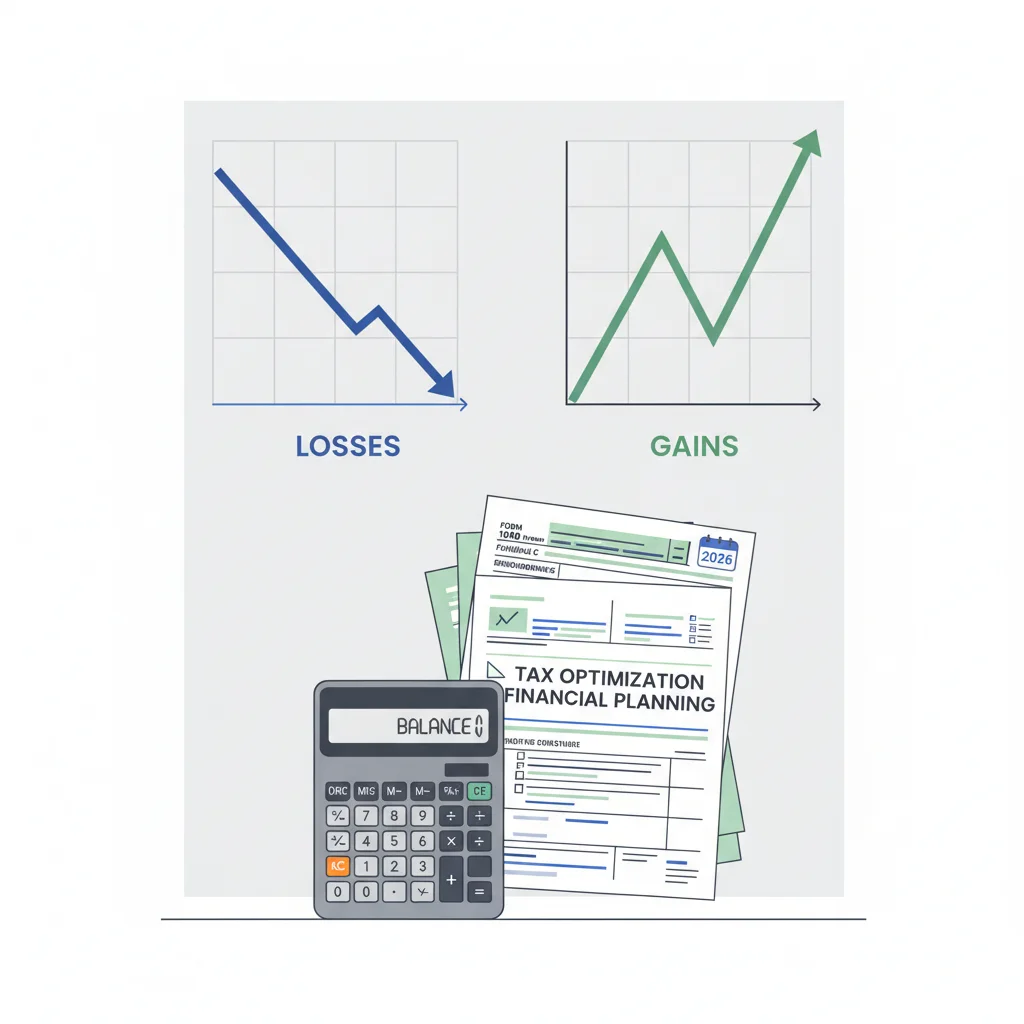
In the dynamic world of investing, every percentage point counts, especially when it comes to taxes. As we look towards 2026, savvy investors are already strategizing to optimize their portfolios and minimize their tax liabilities. One of the most powerful, yet often underutilized, tools in this arsenal is Tax-Loss Harvesting 2026. This sophisticated strategy allows you to sell investments at a loss to offset capital gains and, in some cases, even a portion of your ordinary income. For those who master its nuances, the potential to reduce capital gains taxes by up to 15% or more is a tangible and highly attractive goal.
This comprehensive guide will delve deep into the advanced techniques of Tax-Loss Harvesting 2026, providing you with the knowledge and actionable insights needed to implement these strategies effectively. We’ll explore not just the basics, but also the more intricate aspects, including navigating the wash-sale rule, understanding the implications for different types of investors, and integrating tax-loss harvesting into a broader financial plan. Whether you are a seasoned investor or just beginning to explore advanced tax strategies, this article will equip you with the expertise to make informed decisions and significantly enhance your after-tax returns.
Understanding the Fundamentals of Tax-Loss Harvesting for 2026
Before we dive into advanced strategies, it’s crucial to solidify our understanding of what tax-loss harvesting entails. At its core, tax-loss harvesting involves selling investments that have declined in value to realize a capital loss. These realized losses can then be used to offset any capital gains you may have incurred from other investments. If your capital losses exceed your capital gains, you can use up to $3,000 of the remaining loss to offset ordinary income each year. Any unused losses can be carried forward indefinitely to offset future capital gains or ordinary income.
The beauty of Tax-Loss Harvesting 2026 lies in its ability to turn a negative (an investment loss) into a positive (a tax reduction). In an volatile market, opportunities for realizing losses can be abundant. Identifying these opportunities proactively and executing the strategy before year-end is key to maximizing its benefits. For 2026, it’s important to keep an eye on market trends and economic indicators that might create these harvesting opportunities.
The Basic Mechanism: How Losses Offset Gains
Let’s illustrate with a simple example. Suppose in 2026, you sold Stock A for a $10,000 capital gain. Simultaneously, you hold Stock B, which has declined in value, resulting in a $7,000 unrealized loss. By selling Stock B, you realize that $7,000 capital loss. You can then use this $7,000 loss to offset $7,000 of your $10,000 capital gain from Stock A. This reduces your taxable capital gain to $3,000, saving you a substantial amount in taxes, depending on your tax bracket.
If you had a $12,000 capital loss from Stock B and only a $10,000 capital gain from Stock A, you would offset the entire $10,000 gain. The remaining $2,000 loss could then be used to offset up to $2,000 of your ordinary income. The remaining $1,000 (from the $3,000 ordinary income offset limit) would be carried forward to future tax years.
Advanced Strategies for Tax-Loss Harvesting 2026
Moving beyond the basics, advanced tax-loss harvesting involves a more nuanced approach, integrating it seamlessly into your overall investment and financial planning. These strategies aim to maximize tax efficiency while maintaining your desired asset allocation and investment objectives.
1. The Wash-Sale Rule: A Critical Consideration
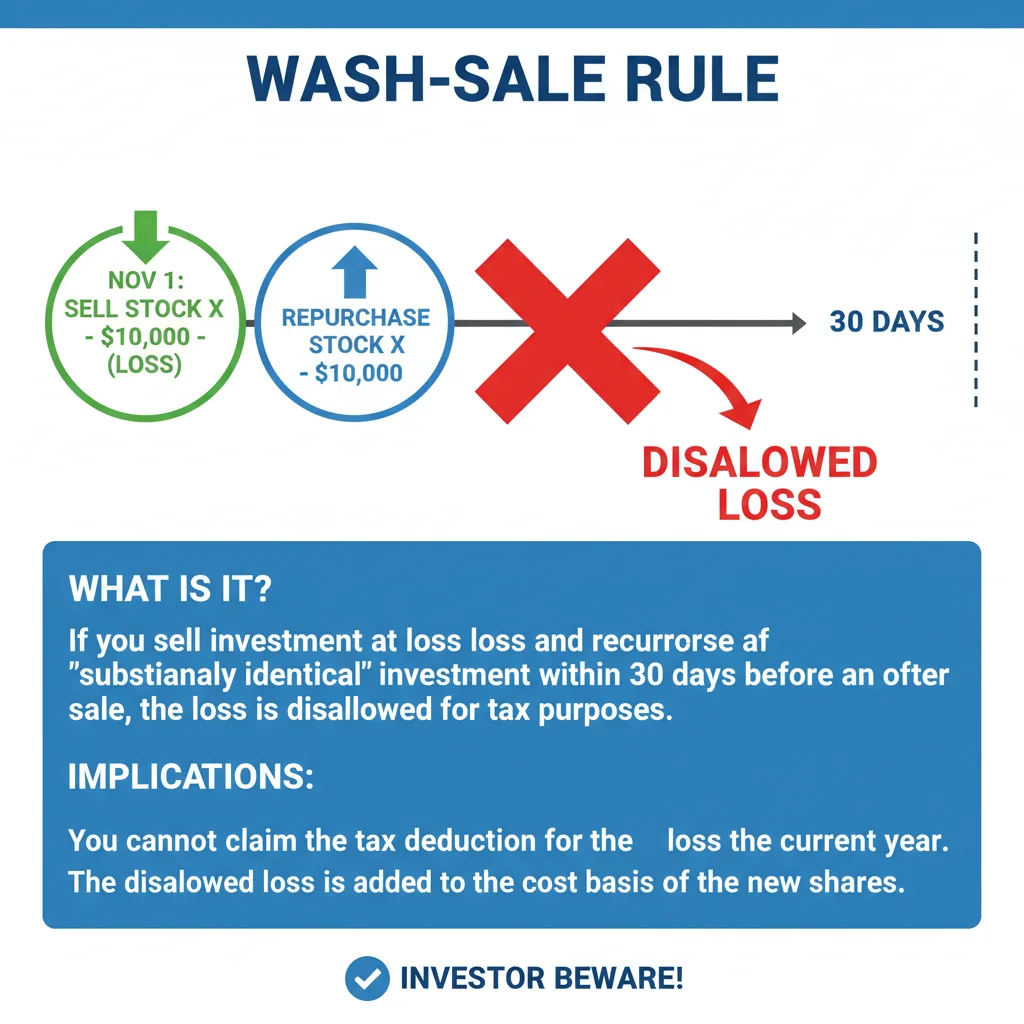
One of the most important rules to understand in Tax-Loss Harvesting 2026 is the wash-sale rule. The IRS defines a wash sale as occurring when you sell or trade stock or securities at a loss and, within 30 days before or after the sale, you buy substantially identical stock or securities, or acquire a contract or option to do so. If a wash sale occurs, the IRS disallows the loss, meaning you cannot use it to offset gains or income. The disallowed loss is typically added to the cost basis of the newly acquired stock or securities.
To navigate the wash-sale rule, investors often employ a few tactics:
- Buying a Similar, Not Identical, Investment: Instead of repurchasing the exact same security, you can buy a similar but not substantially identical investment. For example, if you sell an S&P 500 index fund, you might buy a total stock market index fund or an S&P 500 ETF from a different provider with a different underlying index methodology. The key is ‘substantially identical’ – this can be a gray area, so careful research or professional advice is recommended.
- Waiting the 31 Days: The simplest way to avoid a wash sale is to wait at least 31 days before repurchasing the same security. This approach requires you to be comfortable with being out of the market for that period, potentially missing out on gains if the market rebounds.
- Using Different Accounts: While less common and requiring careful coordination, some investors might attempt to harvest losses in one account (e.g., a taxable brokerage account) and buy a similar security in a different, unrelated account (e.g., a spouse’s account or an IRA). However, the IRS considers all accounts owned by you and your spouse when applying the wash-sale rule, so this strategy is generally not effective and can lead to complications.
2. Strategic Timing and Frequency of Harvesting
Many investors think of tax-loss harvesting as a year-end activity. While year-end is a popular time, especially for realizing cumulative losses, opportunities for Tax-Loss Harvesting 2026 can arise throughout the year. Markets can be volatile, and individual securities can experience significant declines at any point. Proactive investors monitor their portfolios regularly and harvest losses whenever they occur, rather than waiting. This is often referred to as ‘opportunistic’ or ‘continuous’ tax-loss harvesting.
Automated platforms and robo-advisors have made continuous tax-loss harvesting more accessible. These services can automatically identify and execute loss-harvesting opportunities, ensuring that you don’t miss out on potential tax savings. However, even with automation, understanding the underlying principles and reviewing the actions taken is crucial.
3. Integrating with Rebalancing Strategies
Tax-loss harvesting can be seamlessly integrated with portfolio rebalancing. When you rebalance your portfolio, you typically sell appreciated assets to buy underperforming ones, bringing your asset allocation back to your target. If some of those underperforming assets are at a loss, you can combine the rebalancing trade with a tax-loss harvesting opportunity. This allows you to maintain your desired asset allocation while simultaneously generating tax benefits.
For example, if your international stock allocation has fallen due to poor performance, you might sell an international ETF at a loss, harvest that loss, and then use the proceeds (plus potentially new capital) to buy a different, non-substantially identical international ETF to restore your allocation. This dual benefit makes it a highly efficient strategy for Tax-Loss Harvesting 2026.
4. Utilizing Specific Identification of Shares
When you sell shares of a security, you have the option to choose which specific shares you are selling. This is known as specific identification. If you’ve purchased shares of the same security at different prices over time, some lots might be at a gain while others are at a loss. By specifically identifying and selling the shares with the highest unrealized losses, you can maximize your harvested loss.
Conversely, if you need to realize a gain (perhaps to offset carried-forward losses), you can specifically sell shares with the lowest cost basis. Most brokerage firms allow you to specify which lots to sell. If you don’t specify, the IRS generally defaults to a First-In, First-Out (FIFO) method, which might not be the most tax-efficient approach.
Beyond Capital Gains: Offsetting Ordinary Income
The power of Tax-Loss Harvesting 2026 extends beyond just offsetting capital gains. As mentioned, if your capital losses exceed your capital gains, you can use up to $3,000 of the remaining net capital loss to offset ordinary income. This can be particularly valuable for high-income earners, as it directly reduces your taxable income, potentially pushing you into a lower tax bracket.
Consider an investor with a high salary who has realized significant capital losses. After offsetting all capital gains, they can use $3,000 of the remaining loss to reduce their taxable income from their salary. This $3,000 deduction, especially for someone in a high tax bracket, can translate into hundreds or even thousands of dollars in tax savings. Any losses exceeding the $3,000 ordinary income offset can be carried forward indefinitely, meaning you can continue to benefit from these losses in future years until they are fully utilized.
Long-Term vs. Short-Term Losses: The Distinction Matters
The IRS distinguishes between short-term capital losses (from assets held for one year or less) and long-term capital losses (from assets held for more than one year). This distinction is important because short-term losses are first used to offset short-term gains, and long-term losses are first used to offset long-term gains.
If you have a net short-term loss, it offsets net long-term gains. Similarly, if you have a net long-term loss, it offsets net short-term gains. If losses still remain, they can then be used to offset ordinary income up to the $3,000 limit. Understanding this netting process is crucial for optimizing your Tax-Loss Harvesting 2026 strategy, as short-term gains are generally taxed at higher ordinary income rates, making short-term loss harvesting particularly valuable.
Practical Considerations for Implementing Tax-Loss Harvesting 2026
While the benefits are clear, effective implementation requires careful planning and attention to detail. Here are some practical considerations:
1. Record Keeping is Paramount
Accurate and meticulous record-keeping is essential for successful tax-loss harvesting. You need to keep track of your cost basis for each investment, the dates of purchase and sale, and the realized gains or losses. This information is critical for correctly reporting your taxes and for navigating the wash-sale rule. Many brokerage firms provide detailed tax statements, but it’s always good practice to maintain your own records.
2. Tax-Loss Harvesting Beyond Stocks and Mutual Funds
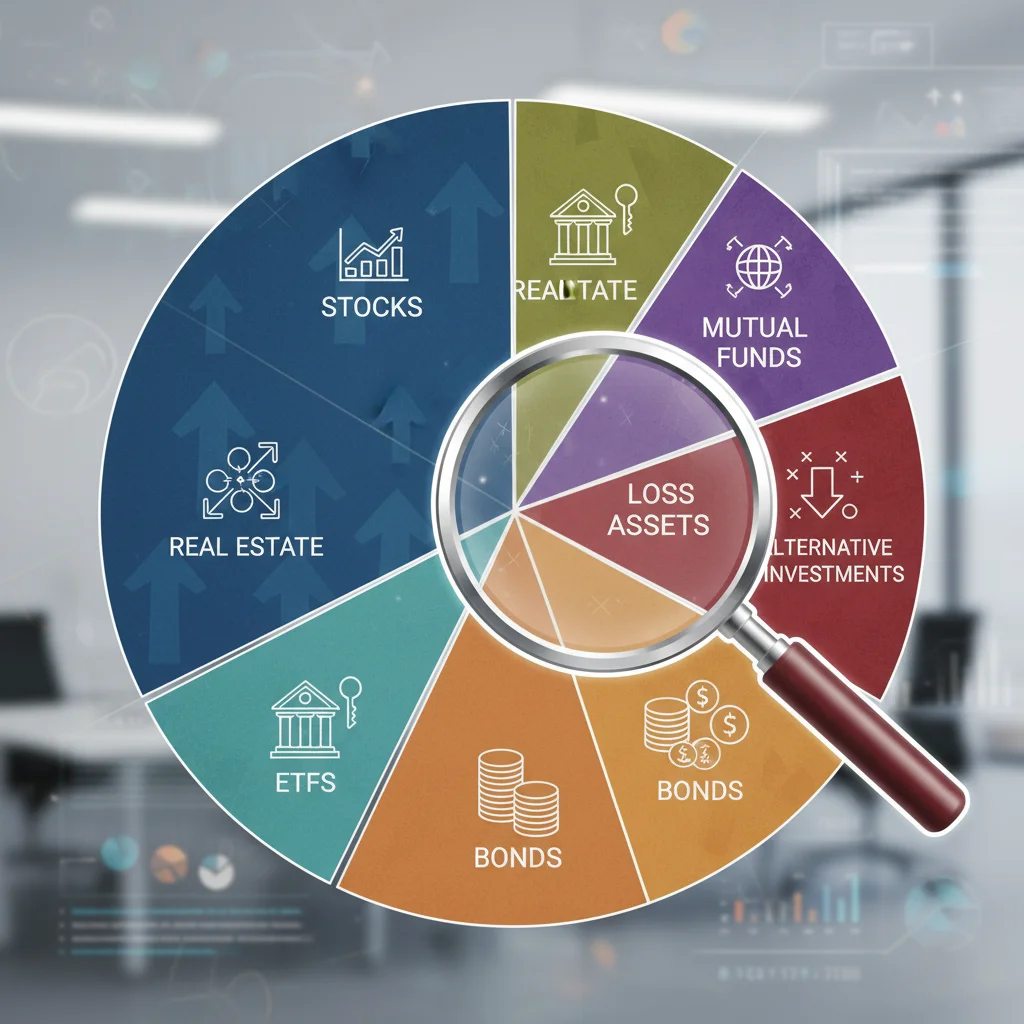
While often associated with stocks and mutual funds, tax-loss harvesting can apply to a broader range of assets. This includes bonds, ETFs, and even certain real estate investments (though the rules for real estate can be more complex). For cryptocurrency investors, the rules can be particularly nuanced, as the IRS treats crypto as property. Understanding how losses in these different asset classes can be harvested is vital for a comprehensive Tax-Loss Harvesting 2026 strategy.
3. The Role of Professional Advice
Given the complexity of tax laws and the potential for costly mistakes (like violating the wash-sale rule), seeking professional advice is highly recommended. A qualified financial advisor or tax professional can help you navigate the intricacies of Tax-Loss Harvesting 2026, ensure compliance with IRS regulations, and integrate the strategy effectively into your overall financial plan. They can also provide personalized advice based on your unique financial situation and investment goals.
4. Behavioral Biases and Emotional Investing
One of the biggest hurdles in tax-loss harvesting can be emotional investing. Investors often hold onto losing investments too long, hoping for a rebound, or they might be reluctant to sell a security they believe in, even if it’s currently at a loss. Overcoming these behavioral biases is crucial. Tax-loss harvesting is a purely quantitative strategy designed to improve your after-tax returns; it should not be driven by emotion. Viewing losses as opportunities for tax savings can help reframe your perspective.
Long-Term Benefits and Future Planning with Tax-Loss Harvesting 2026
The impact of effective Tax-Loss Harvesting 2026 extends far beyond a single tax year. By consistently harvesting losses, you build up a pool of carried-forward losses that can be used to offset future capital gains, even those from highly appreciated assets. This can be particularly beneficial for investors with long time horizons, as it provides a valuable hedge against future tax liabilities.
Estate Planning Implications
For individuals engaged in estate planning, tax-loss harvesting can play a strategic role. While assets generally receive a step-up in basis at death (meaning unrealized gains are wiped out for heirs), realized losses can still be valuable. If you have significant carried-forward losses, these can be used to offset gains realized by your estate or even by yourself before death, creating a more tax-efficient transfer of wealth.
Retirement Planning and Withdrawals
In retirement, when you might be drawing income from your investment accounts, capital gains can still be a factor. Having a reserve of carried-forward losses can help manage the tax impact of selling appreciated assets to fund your retirement. This proactive approach ensures that your hard-earned savings are not unnecessarily eroded by taxes during your golden years.
Potential Pitfalls and How to Avoid Them
While highly beneficial, Tax-Loss Harvesting 2026 is not without its potential pitfalls. Being aware of these can help you avoid common mistakes:
- Ignoring the Wash-Sale Rule: This is arguably the biggest mistake investors make. Rebuying a substantially identical security within the 30-day window will disallow your loss, rendering your harvesting efforts useless for that specific transaction. Always be mindful of the 30-day window.
- Focusing Only on Taxes: While tax savings are the goal, investment decisions should primarily be driven by sound financial principles and your overall investment strategy. Don’t let the pursuit of a tax loss lead you to make poor investment choices that compromise your portfolio’s long-term health.
- Over-Trading: Continuous tax-loss harvesting can sometimes lead to excessive trading, especially if done manually. This can incur transaction costs, which, if significant, can eat into your tax savings. Automated platforms can help manage this by optimizing trades.
- Not Understanding Your Tax Situation: The value of tax-loss harvesting depends on your individual tax situation, including your income, other deductions, and capital gains. What works for one investor might not be optimal for another. A personalized approach, often with professional guidance, is best.
Conclusion: Maximizing Your After-Tax Returns in 2026
Tax-Loss Harvesting 2026 is a sophisticated and powerful strategy that, when implemented correctly, can significantly reduce your capital gains tax liability and even offset a portion of your ordinary income. By understanding the fundamentals, mastering advanced techniques, and being mindful of potential pitfalls, investors can unlock substantial tax savings and enhance their overall investment performance. The ability to cut capital gains by up to 15% or more is a compelling reason to integrate this strategy into your financial planning.
As you navigate the investment landscape in 2026, remember that proactive tax planning is just as important as astute investment selection. Regular portfolio reviews, diligent record-keeping, and strategic execution of tax-loss harvesting opportunities will position you for greater financial success. Don’t leave money on the table; leverage the power of tax-loss harvesting to optimize your returns and build a more robust financial future.
Consulting with a financial advisor or tax professional is always recommended to tailor these strategies to your specific circumstances and ensure compliance with the latest tax regulations. By taking these steps, you can confidently approach Tax-Loss Harvesting 2026 and reap its considerable benefits.