Geothermal Heating & Cooling 2026: Innovations Cutting US Energy Use by 40%

Geothermal Heating & Cooling 2026: Innovations Cutting US Energy Use by 40%
The pursuit of sustainable living and reduced energy consumption has never been more critical. As we look towards 2026, the landscape of home heating and cooling is undergoing a significant transformation, with geothermal energy emerging as a frontrunner in this revolution. For homeowners across the United States, the promise of substantial energy savings – up to 40% – coupled with a dramatically reduced carbon footprint, is becoming an increasingly tangible reality. This article delves into the exciting world of geothermal heating innovations, exploring three recent advancements that are poised to redefine residential comfort and efficiency.
Geothermal heating and cooling systems leverage the stable temperatures beneath the Earth’s surface to provide highly efficient climate control. Unlike traditional HVAC systems that rely on burning fossil fuels or consuming large amounts of electricity to create heat or cold, geothermal systems simply transfer existing heat. In winter, they extract heat from the earth and transfer it indoors; in summer, they reverse the process, moving heat from the house back into the cooler ground. This fundamental principle makes them inherently more efficient, but recent technological breakthroughs are pushing these efficiencies to unprecedented levels.
The market for geothermal heating innovations is not just growing; it’s evolving rapidly. Driven by consumer demand for lower utility bills, government incentives for renewable energy, and a global push for environmental sustainability, manufacturers and researchers are continually developing more sophisticated, compact, and cost-effective geothermal solutions. The goal is clear: to make geothermal energy accessible and appealing to a broader segment of the US residential market, moving beyond niche applications to become a mainstream choice for home climate control.
Understanding the impact of these innovations requires a look at the core benefits of geothermal systems. Beyond the impressive energy savings, homeowners can expect enhanced indoor air quality, quieter operation compared to air-source heat pumps, and a remarkably long lifespan for the system components, often exceeding 25 years for indoor units and 50 years for ground loops. These advantages, combined with the latest advancements, position geothermal heating and cooling as a pivotal technology for the future of residential energy.
This comprehensive exploration will guide you through the intricacies of these new geothermal heating innovations, providing insights into how they work, their benefits, and what they mean for the average US homeowner contemplating an upgrade or new construction. We will also touch upon the broader implications for energy independence and environmental stewardship, painting a picture of a more sustainable and comfortable future.
The Foundation of Geothermal Efficiency: How It Works
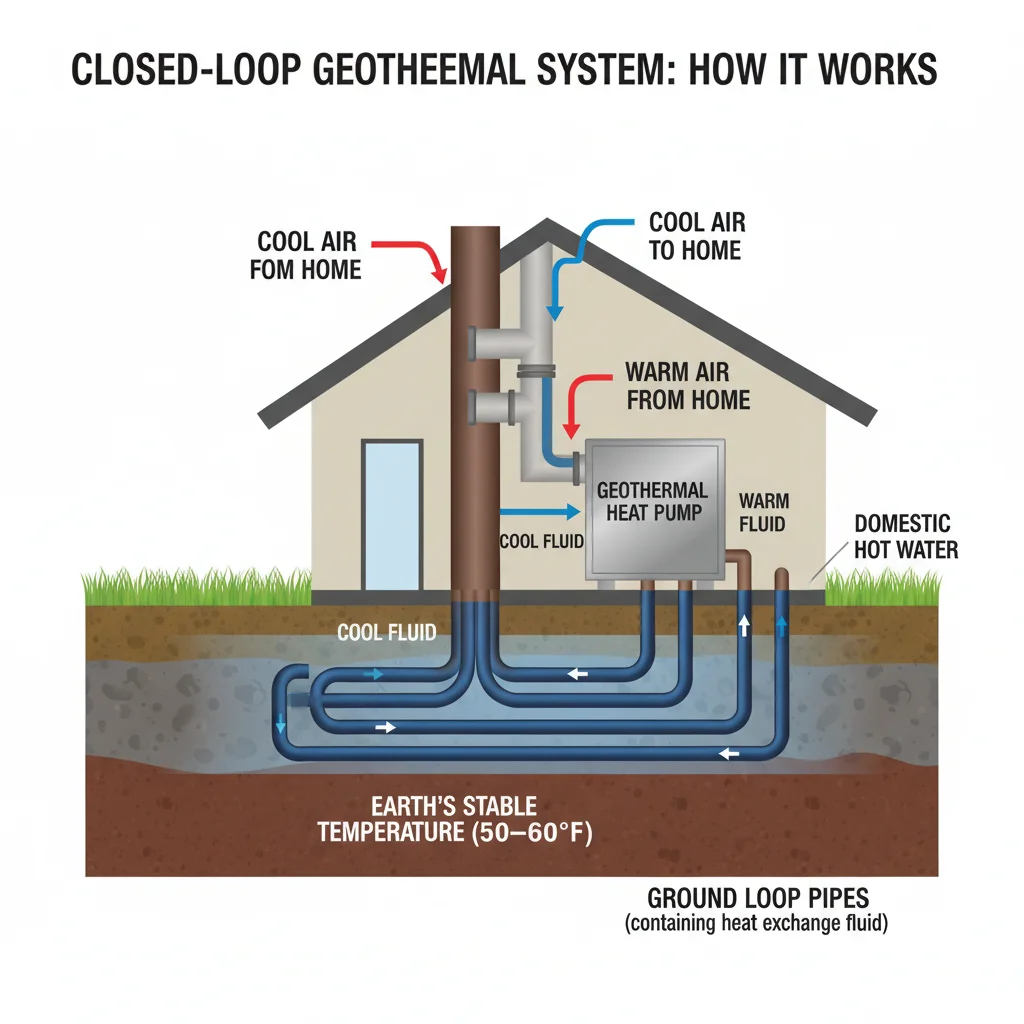
Before diving into the latest geothermal heating innovations, it’s crucial to grasp the fundamental principles that make geothermal systems so effective. At its heart, a geothermal system consists of three main components: an underground loop system, a geothermal heat pump, and an air delivery system (ductwork). The magic happens beneath our feet, where the Earth maintains a relatively constant temperature, typically between 45°F and 75°F (7°C and 24°C), regardless of the season or surface air temperature.
The underground loop system, often made of durable high-density polyethylene pipes, is buried in the ground either horizontally or vertically. A fluid, usually a mixture of water and antifreeze, circulates through these pipes. In winter, as the fluid travels through the warmer earth, it absorbs heat. This warmed fluid then flows into the geothermal heat pump inside the home. The heat pump uses a refrigeration cycle to concentrate this absorbed heat and transfer it to the home’s air distribution system, effectively warming the house.
Conversely, in summer, the process reverses. The heat pump extracts heat from the indoor air and transfers it to the fluid circulating in the ground loop. As the fluid carries this heat into the cooler earth, it dissipates, and the cooled fluid returns to the heat pump, which then circulates cool air throughout the home. This continuous exchange of heat with the stable ground temperature is what gives geothermal systems their unparalleled efficiency, requiring only a small amount of electricity to operate the pump and fan, rather than to generate heat or cold directly.
There are generally two types of ground loop systems: closed-loop and open-loop. Closed-loop systems are the most common for residential applications, where the fluid continuously circulates within a sealed system. Open-loop systems, less common and typically used where there’s an abundant supply of clean well water, draw water from a well, extract or dissipate heat, and then discharge the water back into a different well or surface body. The innovations we’ll discuss primarily focus on enhancing the performance and applicability of closed-loop geothermal heating innovations, making them more accessible and efficient for a wider range of US residences.
The efficiency of a geothermal system is measured by its Coefficient of Performance (COP) for heating and Energy Efficiency Ratio (EER) for cooling. A typical geothermal system boasts COPs of 3 to 5 and EERs of 15 to 30, meaning they deliver 3 to 5 units of heating or 15 to 30 units of cooling for every unit of electricity consumed. Compare this to conventional furnaces with COPs less than 1 (as they burn fuel directly) or air conditioners with EERs ranging from 13 to 21, and the efficiency advantage of geothermal becomes strikingly clear. The advancements in geothermal heating innovations are pushing these numbers even higher, promising even greater energy savings.
Understanding this foundational mechanism allows us to appreciate the ingenuity behind the latest geothermal heating innovations. Each advancement aims to refine this heat exchange process, reduce installation costs, improve system control, or broaden the applicability of geothermal technology, ultimately making sustainable home comfort a more attainable goal for millions of Americans.
Innovation 1: Advanced Hybrid Geothermal Systems
One of the most significant geothermal heating innovations poised to make a substantial impact by 2026 is the development and widespread adoption of advanced hybrid geothermal systems. While traditional geothermal systems are incredibly efficient, their upfront installation costs, particularly for the ground loop, can be a barrier for some homeowners. Hybrid systems aim to mitigate this by combining the inherent efficiency of geothermal technology with a supplementary, often smaller, conventional heating or cooling source.
These hybrid systems are intelligently designed to optimize performance and cost. Instead of relying solely on a large and expensive ground loop capable of meeting peak heating and cooling demands, a hybrid system uses a smaller, more cost-effective geothermal loop to handle the majority of the load. During extreme weather conditions, when the geothermal component might struggle to meet the full demand, the supplementary system (e.g., a high-efficiency furnace, an air-source heat pump, or even solar thermal) kicks in to provide the additional capacity needed. This approach significantly reduces the initial investment in the ground loop, which is often the most expensive part of a geothermal installation, while still retaining a very high level of overall energy efficiency.
The key to the success of these advanced hybrid geothermal heating innovations lies in sophisticated control algorithms. These intelligent controls constantly monitor indoor and outdoor temperatures, energy prices, and system performance to determine the most efficient and cost-effective way to operate. For instance, on a moderately cold day, the system might run purely on geothermal. On a severely cold day, it might engage the supplemental furnace for a short period to reach the desired temperature, ensuring comfort without over-sizing the geothermal component. This dynamic optimization ensures that the homeowner benefits from the lowest possible operating costs without compromising on comfort.
Another advantage of hybrid systems is their flexibility in retrofitting existing homes. Installing a full-sized ground loop in an established property can sometimes be challenging due to landscaping, existing infrastructure, or property size constraints. Hybrid systems allow for smaller, less intrusive ground loop installations, making geothermal technology accessible to a broader range of existing homes. This expansion of applicability is crucial for accelerating the adoption of geothermal heating innovations across the US residential sector.
Furthermore, some advanced hybrid systems integrate with other renewable energy sources, such as solar photovoltaic (PV) panels. In such setups, the solar panels can generate electricity to power the geothermal heat pump, creating a nearly net-zero energy home. This synergy between different renewable technologies represents a powerful step towards complete energy independence and drastically reduced utility bills. The development of sophisticated energy management systems that seamlessly orchestrate these different components is a cornerstone of these geothermal heating innovations.
The energy savings from advanced hybrid systems are still remarkably high, often approaching the 40% mark compared to conventional HVAC systems. By strategically sizing the geothermal component for base load and using a smaller, efficient auxiliary system for peak loads, homeowners can achieve excellent return on investment and enjoy the environmental benefits of geothermal without the prohibitive upfront costs of a fully traditional large-scale geothermal installation. This balance of cost and performance makes advanced hybrid systems a compelling option for the future.
Innovation 2: Compact & Modular Geothermal Heat Pumps
Space constraints and ease of installation have historically been minor hurdles for geothermal systems, particularly in urban or densely populated areas. However, the second major wave of geothermal heating innovations addresses this directly: the emergence of compact and modular geothermal heat pumps. These next-generation systems are designed to be smaller, more flexible, and easier to install, significantly broadening their appeal and applicability for a wider range of residential properties.
Traditional geothermal heat pumps can sometimes be bulky, requiring dedicated utility closet space or even a small mechanical room. New compact designs, however, are shrinking the footprint of these units without sacrificing performance. This miniaturization is achieved through advancements in compressor technology, heat exchanger design, and insulation materials. Smaller units mean they can be installed in more diverse locations within a home, such as basements, attics, or even utility closets that were previously too small for a geothermal system. This increased flexibility is a game-changer for retrofits and homes with limited available space.
Beyond compactness, modularity is another critical aspect of these geothermal heating innovations. Modular systems allow for greater scalability and easier maintenance. Instead of a single, monolithic unit, a modular system comprises several smaller, interconnected components. This means that if one part of the system requires servicing or an upgrade, it can be done without affecting the entire system. It also allows for systems to be tailored precisely to the heating and cooling load of a specific home, preventing over- or under-sizing, which can impact efficiency and cost.
Another exciting development in modular geothermal heating innovations is the integration of ‘plug-and-play’ features. Manufacturers are working towards simplifying the installation process, reducing the need for highly specialized technicians for every step. While ground loop installation will always require expertise, the indoor heat pump components are becoming more standardized and easier to connect, potentially reducing labor costs and installation times. This ease of installation is vital for driving broader adoption and making geothermal a more competitive option against conventional HVAC.
Furthermore, these compact and modular systems often incorporate advanced diagnostics and remote monitoring capabilities. Homeowners and service providers can track system performance in real-time, identify potential issues early, and even perform remote adjustments. This proactive approach to maintenance ensures optimal efficiency throughout the system’s long lifespan and minimizes downtime, further enhancing the appeal of these geothermal heating innovations.
The impact of compact and modular designs extends beyond just space and installation. They can also contribute to aesthetic appeal, as outdoor components are virtually eliminated (unlike air-source heat pumps), and indoor units can be more discreetly integrated. For homeowners who value both efficiency and design, these advancements offer a compelling solution. As manufacturing processes become more refined and economies of scale are achieved, the cost of these compact and modular units is also expected to become more competitive, making geothermal energy a more accessible luxury.
Innovation 3: Enhanced Ground Loop Technologies & Installation Methods
While the heat pump itself is crucial, the efficiency of a geothermal system fundamentally depends on its interaction with the earth – specifically, the performance of the ground loop. The third category of significant geothermal heating innovations focuses on enhancing ground loop technologies and revolutionizing their installation methods. These advancements are tackling some of the historical challenges associated with geothermal, such as the invasiveness and cost of drilling.
One prominent innovation is the development of advanced geothermal borefield designs. Rather than simply drilling a series of vertical wells, new modeling software and geological surveying techniques allow for more optimized placement and sizing of ground loops. This leads to more efficient heat exchange with the earth, requiring fewer bores or shallower depths to achieve the same thermal capacity. Smarter design translates directly into lower installation costs and improved system performance, making these geothermal heating innovations more attractive.
Another exciting development is the rise of alternative ground loop configurations, such as helical or ‘slinky’ loops that can be installed in trenches rather than vertical bores. While not entirely new, advancements in material science and installation techniques are making these options more viable and efficient for certain property types. Furthermore, direct exchange (DX) geothermal systems, which circulate refrigerant directly through copper pipes in the ground rather than a water/antifreeze solution, are seeing renewed interest due to their potentially higher efficiency and reduced pumping power requirements. These systems, while requiring careful installation, represent a powerful evolution in geothermal heating innovations.
Perhaps the most transformative advancements are in installation methods themselves. Traditional vertical drilling can be time-consuming and expensive. However, new drilling technologies are emerging that are faster, quieter, and less disruptive. These include compact drilling rigs that can access tighter spaces, as well as innovative techniques like sonic drilling or horizontal directional drilling (HDD) which can install ground loops under existing structures or landscaping with minimal disturbance. These methods significantly reduce the ‘mess factor’ and installation time, addressing a major concern for homeowners considering geothermal. The aim is to reduce the overall ground loop installation cost by 20-30% in the coming years, making geothermal heating innovations more competitive.
Furthermore, there’s a growing emphasis on integrating geothermal loops with other subsurface infrastructure. For example, some projects are exploring the possibility of embedding geothermal loops into foundation piles during construction or even within road infrastructure. While these are still primarily commercial or large-scale applications, the underlying principles and technologies could eventually trickle down into residential development, offering incredibly cost-effective and integrated geothermal solutions in the future. These synergistic approaches represent the pinnacle of geothermal heating innovations.
Finally, research into advanced heat transfer fluids and ground enhancement materials is ongoing. These innovations aim to improve the thermal conductivity between the ground loop pipes and the surrounding earth, allowing for more efficient heat exchange and potentially smaller, more efficient ground loops. By maximizing the efficiency of heat transfer at the source, these ground loop innovations contribute significantly to the overall energy savings of the entire geothermal system, pushing the 40% efficiency gain even further.
The Impact on US Residences by 2026: 40% Energy Savings and Beyond
The cumulative effect of these geothermal heating innovations – advanced hybrid systems, compact and modular heat pumps, and enhanced ground loop technologies – is set to profoundly impact US residences by 2026. The headline figure of 40% energy savings is not merely an aspiration; it’s a realistic target made achievable by these converging technological advancements. This level of savings translates directly into significantly lower utility bills for homeowners, offering a tangible financial incentive for adoption.
For the average American household, heating and cooling represent the largest portion of their energy consumption, often accounting for more than half of their total utility costs. A 40% reduction in this category can mean hundreds, if not thousands, of dollars in annual savings. Over the lifespan of a geothermal system, which can easily exceed 25-50 years, these savings compound dramatically, providing an excellent return on investment, even with the initial upfront cost.
Beyond the financial benefits, the environmental impact of widespread geothermal heating innovations cannot be overstated. By shifting away from fossil fuel-based heating and less efficient conventional cooling, residences equipped with geothermal systems will significantly reduce their carbon footprint. This contributes to cleaner air, reduced greenhouse gas emissions, and a more sustainable energy future for the nation. As more states and municipalities implement stricter building codes and incentives for green technologies, geothermal will become an increasingly attractive, and in some cases, mandated, option.
The increased accessibility offered by compact designs and less invasive installation methods means that geothermal will no longer be a technology limited to new construction or large properties. Existing homes, even those with smaller lots or complex landscaping, will find it easier and more affordable to transition to geothermal. This democratization of geothermal technology is crucial for achieving broad-scale energy transformation across the residential sector.
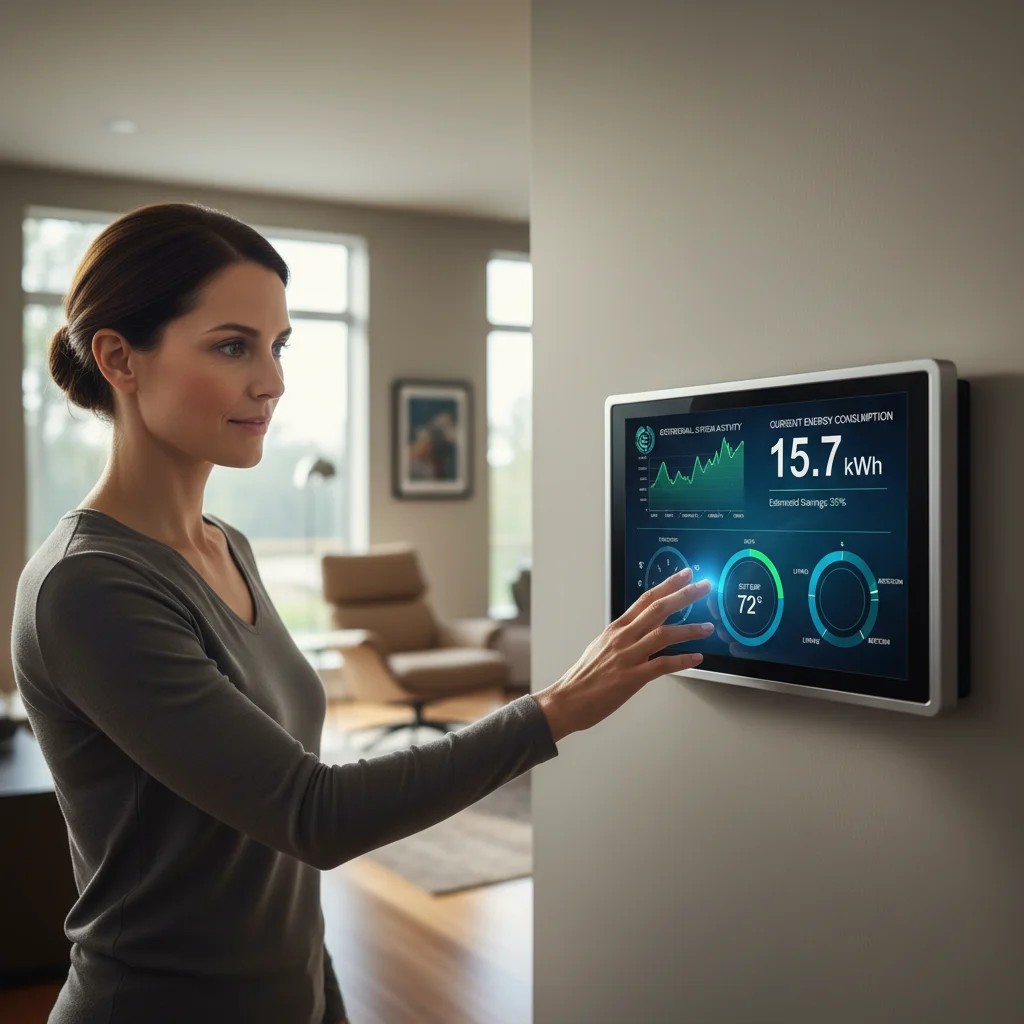
Furthermore, the integration of smart controls and remote monitoring capabilities in these new geothermal heating innovations will empower homeowners with greater control over their energy usage. Real-time data, predictive analytics, and seamless integration with other smart home devices will allow for optimized performance, personalized comfort settings, and even participation in demand-response programs from utility companies, potentially earning additional savings or credits.
The reliability and longevity of geothermal systems, further enhanced by modular designs and advanced diagnostics, offer peace of mind to homeowners. With fewer moving parts exposed to the elements and underground loops designed to last for decades, maintenance requirements are typically lower than conventional HVAC systems, leading to reduced long-term ownership costs.
Government incentives, tax credits, and financing programs are also playing a crucial role in accelerating the adoption of geothermal heating innovations. Federal tax credits, state-level rebates, and local utility incentives can significantly offset the initial investment, making the financial case for geothermal even stronger. As the technology matures and becomes more mainstream, these incentives, combined with falling installation costs, will make geothermal a highly competitive and often superior choice compared to traditional heating and cooling solutions.
In conclusion, the landscape of residential heating and cooling is on the cusp of a major transformation. The geothermal heating innovations emerging by 2026 are not just incremental improvements; they represent a fundamental shift towards more efficient, sustainable, and accessible home climate control. For US residences, this means not only substantial energy savings of 40% or more but also a healthier planet, enhanced comfort, and greater energy independence for decades to come. The future of home comfort is undoubtedly rooted in the earth’s stable embrace.