Unveiling the 2026 Community Resilience Index: A New Era of U.S. Neighborhood Adaptation and Engagement
In an increasingly interconnected yet volatile world, the capacity of local communities to withstand and adapt to social, economic, and environmental shocks has become paramount. The Community Resilience Index serves as a critical barometer for measuring this capacity. As we delve into the findings of the 2026 report, a clear and encouraging trend emerges: U.S. neighborhoods are not just surviving; they are thriving through proactive adaptation and significantly enhanced local engagement. This year’s index reveals an impressive 15% improvement in local engagement across the nation, signaling a pivotal shift in how communities are building their resilience from the ground up.
The Community Resilience Index, a comprehensive analytical tool, assesses various facets of community strength, including social cohesion, economic stability, environmental sustainability, and governance effectiveness. Its annual publication provides invaluable insights for policymakers, urban planners, community leaders, and residents alike, offering a roadmap for fostering more robust and sustainable local environments. The 2026 report specifically highlights the innovative strategies and collaborative efforts that have led to this remarkable surge in resilience, particularly focusing on the measurable impact of increased local engagement.
Understanding the Community Resilience Index: What Does It Measure?
Before we dissect the 2026 findings, it’s essential to grasp the core components of the Community Resilience Index. This index is not merely a snapshot; it’s a dynamic assessment built upon a multi-dimensional framework. It considers:
- Social Cohesion: This dimension evaluates the strength of social networks, trust among residents, access to social support systems, and the presence of inclusive community spaces. High social cohesion is a bedrock of resilience, enabling communities to mobilize quickly in times of crisis and foster a sense of shared responsibility.
- Economic Vitality: A resilient community possesses a diverse and stable local economy. This includes factors like employment rates, local business growth, access to affordable housing, economic equity, and the presence of local supply chains that can withstand external disruptions.
- Environmental Sustainability: With climate change presenting unprecedented challenges, a community’s ability to manage its natural resources, implement green infrastructure, reduce its carbon footprint, and prepare for environmental hazards is crucial. This aspect also considers access to green spaces and sustainable transportation options.
- Infrastructure and Services: Reliable access to essential services such as healthcare, education, transportation, communication networks, and emergency services is fundamental. The adaptability and redundancy of these systems are key indicators of resilience.
- Governance and Leadership: Effective local governance, transparent decision-making processes, community participation in planning, and strong local leadership are vital for coordinating resilience efforts and ensuring equitable outcomes.
- Local Engagement: This specific dimension, which has seen significant growth, measures the extent to which residents are actively involved in community decision-making, volunteering, local initiatives, and civic life. It reflects the collective agency of a neighborhood.
Each of these pillars contributes to a holistic understanding of a community’s capacity to absorb shocks, adapt to change, and transform into a more robust and equitable place for all its inhabitants. The 2026 Community Resilience Index report has meticulously analyzed data across these categories from thousands of U.S. neighborhoods, providing a granular view of progress and areas for continued focus.
The 15% Leap in Local Engagement: A Deeper Dive
The most striking finding of the 2026 Community Resilience Index is the remarkable 15% increase in local engagement. This isn’t just a statistical anomaly; it represents a fundamental shift in how U.S. neighborhoods are approaching collective action and problem-solving. This surge can be attributed to several interconnected factors:
Increased Awareness and Education
There has been a concerted effort by local governments, non-profits, and grassroots organizations to educate residents about the importance of community resilience. Workshops, public forums, and accessible online resources have demystified complex issues like climate adaptation, economic diversification, and social equity, empowering individuals with knowledge and a sense of agency. This heightened awareness has translated into a greater willingness to participate.
Digital Tools for Collaboration
The proliferation of user-friendly digital platforms has revolutionized local engagement. Neighborhood-specific apps, online forums, and virtual town halls have made it easier for residents to voice their opinions, report issues, and collaborate on initiatives. These tools have lowered barriers to participation, particularly for those with busy schedules or mobility constraints, fostering a more inclusive form of civic engagement. The Community Resilience Index has noted a direct correlation between the adoption of these platforms and higher engagement scores.
Grassroots Movement and Resident-Led Initiatives
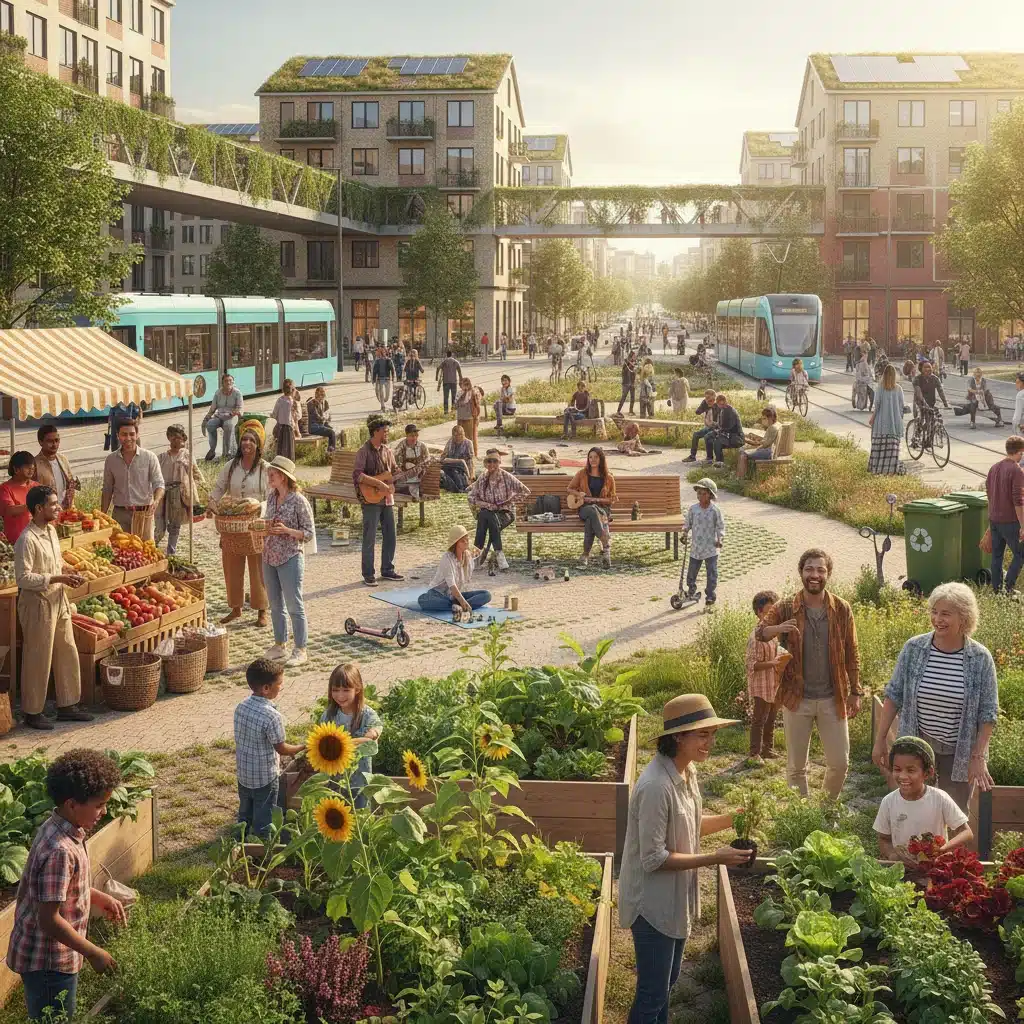
Many of the improvements in local engagement are organically driven by residents themselves. From community gardens and neighborhood watch programs to skill-sharing networks and local advocacy groups, citizens are taking the lead in identifying needs and implementing solutions. These grassroots movements are often highly effective because they are deeply rooted in local context and directly address the concerns of the community members they serve. The Community Resilience Index celebrates these bottom-up approaches.
Investment in Community Spaces
The revitalization and creation of public spaces – parks, community centers, libraries, and local markets – have played a crucial role. These spaces act as catalysts for interaction, fostering a sense of belonging and providing neutral ground for diverse groups to connect. When people have inviting places to gather, engage, and collaborate, local engagement naturally flourishes. This investment is a key factor in the improved Community Resilience Index scores.
Inclusive Decision-Making Processes
A growing number of municipalities and community organizations have adopted more inclusive decision-making models, such as participatory budgeting and citizen assemblies. These approaches give residents a direct say in how local resources are allocated and policies are shaped, leading to greater buy-in and sustained engagement. When people feel their voices are genuinely heard and valued, they are more likely to invest their time and energy in community efforts.
Case Studies in Enhanced Resilience: Success Stories from the 2026 Community Resilience Index
The 2026 Community Resilience Index report features numerous examples of U.S. neighborhoods that have leveraged increased engagement to build formidable resilience. Here are a few illustrative cases:
The ‘Green Connect’ Initiative in Portland, Oregon
Portland’s ‘Green Connect’ initiative, a resident-led program focused on urban greening and sustainable living, has seen a 20% increase in volunteer participation since 2023. Through community-managed gardens, rainwater harvesting projects, and neighborhood-level composting programs, residents have not only enhanced their local environment but also built stronger social bonds. The initiative’s success is directly linked to robust local engagement, which empowered residents to design and implement solutions tailored to their specific block-by-block needs. This has significantly boosted Portland’s environmental sustainability and social cohesion scores in the Community Resilience Index.
Economic Diversification in Detroit, Michigan
Detroit has long been a city synonymous with industrial shifts. In response to economic vulnerabilities, several neighborhoods have launched ‘Local First’ campaigns, encouraging residents to support local businesses and fostering entrepreneurship. These campaigns, driven by community organizers and small business owners, have led to the creation of new co-operative ventures and skill-sharing programs. The 2026 Community Resilience Index highlights how this heightened economic engagement has diversified local economies, making them less susceptible to external market fluctuations and creating more local jobs.

Disaster Preparedness in Miami, Florida
Given its vulnerability to climate-related disasters, several Miami neighborhoods have invested heavily in community-based disaster preparedness networks. These networks, fueled by enthusiastic local engagement, train residents in first aid, establish communication protocols, and create neighborhood-specific emergency plans. The 2026 Community Resilience Index shows that these highly engaged communities recover faster and experience significantly less disruption during extreme weather events, demonstrating the tangible benefits of collective action in the face of adversity.
Challenges and Future Outlook for the Community Resilience Index
While the 2026 Community Resilience Index paints an optimistic picture, challenges remain. Disparities in resilience levels persist across different socio-economic groups and geographic regions. Bridging these gaps will require targeted interventions and continued investment in underserved communities. Factors such as digital literacy, access to resources, and historical inequalities can still hinder engagement in certain areas.
Looking ahead, the future of the Community Resilience Index and the trajectory of U.S. neighborhoods will depend on several critical factors:
Sustaining Engagement
The challenge now is to sustain the momentum generated by the 15% increase in local engagement. This requires ongoing support for grassroots initiatives, continuous investment in community infrastructure, and adaptive governance models that evolve with community needs. The Community Resilience Index will continue to track these trends.
Addressing Digital Divides
While digital tools have boosted engagement, ensuring equitable access to technology and digital literacy training remains crucial. Neighborhoods without reliable internet access or residents lacking digital skills risk being left behind in this new wave of civic participation. Future iterations of the Community Resilience Index will likely incorporate more granular metrics on digital inclusion.
Integrating Resilience into Policy
For resilience efforts to be truly effective, they must be integrated into comprehensive urban planning and public policy. This means moving beyond reactive measures to proactive, preventative strategies that are co-created with community input. The insights from the Community Resilience Index provide a strong evidence base for such policy shifts.
Promoting Inter-Community Learning
Encouraging knowledge sharing and best practice exchange between different neighborhoods can accelerate resilience building. Platforms that allow communities to learn from each other’s successes and failures will be invaluable in scaling up effective strategies. The Community Resilience Index can serve as a catalyst for this exchange.
The Role of Technology in Boosting the Community Resilience Index
Technology’s influence on the 2026 Community Resilience Index cannot be overstated. Beyond simple communication, advanced technologies are enabling communities to monitor environmental conditions, manage resources more efficiently, and even predict potential disruptions. Smart city initiatives, for example, are leveraging data analytics to optimize public services, reduce waste, and enhance emergency response times. These technological advancements, when coupled with robust local engagement, create a powerful synergy that amplifies a neighborhood’s adaptive capacity.
Consider the rise of localized microgrids powered by renewable energy. These systems, often community-owned and managed, provide energy independence and significantly reduce vulnerability to grid failures, a key aspect of the Community Resilience Index‘s infrastructure dimension. Similarly, AI-driven platforms are helping urban planners simulate the impact of various climate scenarios, allowing communities to proactively design resilient infrastructure. The integration of such technologies, driven by community needs and participation, is a hallmark of the progress seen in the 2026 report.
Furthermore, citizen science initiatives, often facilitated by mobile apps and online platforms, allow residents to contribute valuable data on local environmental quality, biodiversity, and urban heat islands. This data not only informs local policy but also deepens residents’ understanding of their environment, fostering a sense of stewardship and contributing directly to the environmental sustainability component of the Community Resilience Index. The ability to visualize and understand local data empowers communities to make informed decisions and advocate for changes that directly impact their resilience.

Building Social Capital: The Unsung Hero of the Community Resilience Index
While tangible infrastructure and economic indicators are crucial, the 2026 Community Resilience Index implicitly underscores the profound importance of social capital. Social capital refers to the networks of relationships among people who live and work in a particular society, enabling that society to function effectively. The 15% increase in local engagement is, at its heart, an increase in social capital.
Strong social ties mean that during a crisis, neighbors are more likely to check on each other, share resources, and offer support. This informal safety net can be as critical, if not more so, than formal emergency services. Moreover, high social capital fosters a culture of trust and cooperation, which is essential for collective action on long-term challenges like climate change or economic inequality. The Community Resilience Index recognizes that communities rich in social capital are inherently more adaptive, innovative, and capable of self-organization.
Initiatives like community-led mentorship programs, intergenerational learning exchanges, and cultural festivals contribute immensely to building this social fabric. These activities, often seen as ‘soft’ infrastructure, are in fact the vital arteries of a resilient community. They create shared experiences, build empathy, and reinforce a collective identity, all of which are fundamental to the social cohesion dimension of the Community Resilience Index.
Policy Implications of the 2026 Community Resilience Index
The findings of the 2026 Community Resilience Index have significant implications for policy at all levels of government. The clear correlation between local engagement and improved resilience metrics suggests that policies should actively seek to empower and enable community-led initiatives rather than solely relying on top-down approaches.
- Funding for Grassroots Organizations: Directing more funding and resources to local non-profits and community groups that are on the ground fostering engagement can yield substantial returns in resilience building.
- Participatory Urban Planning: Mandating or incentivizing participatory planning processes for new developments and infrastructure projects ensures that community needs and priorities are central to decision-making.
- Digital Inclusion Programs: Investing in broadband infrastructure and digital literacy training in underserved areas is not just about equity; it’s about enabling a fundamental component of modern community engagement and resilience.
- Cross-Sector Partnerships: Encouraging collaborations between local government, businesses, educational institutions, and community organizations can create synergistic effects, pooling resources and expertise for more impactful resilience projects.
- Data-Driven Decision Making: Utilizing the granular data provided by the Community Resilience Index to identify specific vulnerabilities and strengths at the neighborhood level allows for more targeted and effective policy interventions.
Ultimately, the 2026 Community Resilience Index serves as a powerful call to action: investing in people and fostering their active participation is the most effective pathway to building resilient communities capable of navigating the complexities of the 21st century. The 15% jump in local engagement is not just a statistic; it’s a testament to the power of collective human spirit and the potential for a more resilient future.
Conclusion: A Resilient Future, Built Together
The 2026 Community Resilience Index offers a compelling narrative of progress and potential. The 15% improvement in local engagement across U.S. neighborhoods is a powerful indicator that communities are actively taking charge of their destinies, adapting to social change, and strengthening their collective fabric. This upward trend is a testament to the effectiveness of bottom-up initiatives, the strategic use of technology, and a renewed focus on building social capital.
As we move forward, the lessons learned from this year’s Community Resilience Index will be crucial. Sustaining this momentum, addressing existing disparities, and integrating resilience into every facet of urban planning and governance will be key to ensuring that all neighborhoods can flourish. The journey towards a truly resilient nation is ongoing, but with the collaborative spirit and heightened engagement observed in 2026, the path ahead looks brighter than ever. The power of community, when mobilized and empowered, is truly transformative, shaping a future where adaptability and collective strength are the hallmarks of every U.S. neighborhood.