Top 3 Carbon Footprint Calculators for US Households in 2026: Track & Reduce Emissions by 10% Annually

Top 3 Carbon Footprint Calculators for US Households in 2026: Track & Reduce Emissions by 10% Annually
In an era where environmental consciousness is no longer a niche concern but a global imperative, understanding and reducing your personal and household environmental impact has become paramount. The concept of a household carbon footprint, representing the total greenhouse gas emissions caused directly and indirectly by an individual or family, is a critical metric in this endeavor. As we move into 2026, the tools available to help US households accurately measure and mitigate their emissions have become more sophisticated, user-friendly, and actionable. This comprehensive guide will delve into the importance of tracking your household carbon footprint, explore the top three calculators recommended for US households in 2026, and provide actionable strategies to help you achieve an ambitious yet attainable goal: reducing your emissions by 10% annually.
The urgency to address climate change is undeniable. Scientific consensus points to human activities, primarily the burning of fossil fuels, as the main driver of increased greenhouse gas concentrations in the atmosphere. These gases trap heat, leading to a warming planet and a cascade of environmental consequences, from extreme weather events to rising sea levels. While governments and industries play a significant role, individual actions, particularly those taken at the household level, collectively contribute to a substantial portion of global emissions. By understanding and actively working to reduce your household carbon footprint, you become an integral part of the solution, fostering a more sustainable future for generations to come.
This article aims to empower you with the knowledge and resources to make informed decisions about your environmental impact. We’ll not only introduce you to the best tools but also guide you through practical steps and lifestyle changes that can significantly shrink your carbon footprint. Prepare to embark on a journey towards greater environmental responsibility and a greener way of living.
The Imperative of Understanding Your Household Carbon Footprint
Before diving into the tools, let’s solidify why measuring your household carbon footprint is so crucial. It’s not just about guilt or compliance; it’s about empowerment, efficiency, and impact.
Why Measure? The Benefits of Tracking Emissions
- Awareness and Education: Many people are unaware of the extent of their environmental impact. A calculator provides a clear, data-driven picture, highlighting which aspects of your lifestyle contribute most to your emissions. This awareness is the first step towards informed action.
- Identifying Hotspots: Is it your daily commute, your home’s energy consumption, or your diet that’s the biggest contributor? Carbon footprint calculators pinpoint these ‘hotspots,’ allowing you to prioritize your reduction efforts where they will have the most significant effect.
- Informed Decision-Making: Armed with data, you can make smarter choices. Should you invest in solar panels, buy an electric vehicle, or change your dietary habits? The calculator helps you understand the carbon implications of these decisions.
- Financial Savings: Often, reducing your carbon footprint goes hand-in-hand with saving money. Lower energy consumption means lower utility bills, and conscious consumption can lead to reduced waste and spending.
- Contributing to Global Goals: Every reduction, no matter how small it seems, collectively contributes to broader climate goals. When millions of households take action, the cumulative impact is enormous.
- Inspiring Others: Your actions can inspire family, friends, and community members to also take steps towards reducing their environmental impact, creating a ripple effect.
In 2026, with technological advancements and increased public awareness, the expectation for individuals to understand and act on their environmental impact is growing. These calculators are no longer niche tools but essential instruments for responsible citizenship.
Key Factors Contributing to Your Household Carbon Footprint
Your household carbon footprint is a complex calculation influenced by various aspects of your daily life. Understanding these categories helps in interpreting calculator results and devising effective reduction strategies.
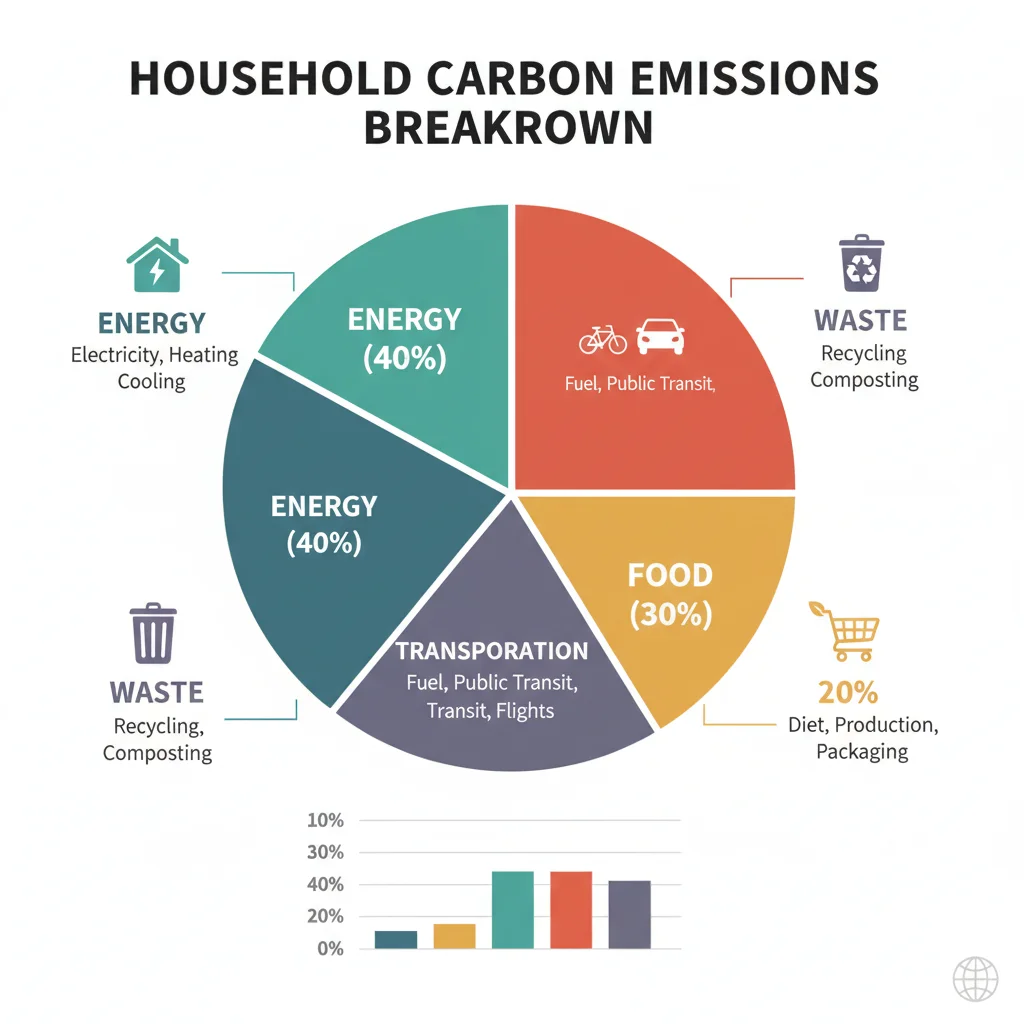
The primary contributors typically fall into these categories:
- Energy Consumption (Home): This is often the largest component. It includes electricity for lighting, appliances, heating, and cooling your home. The source of your electricity (e.g., coal-fired power plants vs. renewables) significantly impacts this figure.
- Transportation: How you get around matters. This includes fuel consumption from personal vehicles (cars, motorcycles), air travel, public transportation (buses, trains), and even the emissions associated with manufacturing these vehicles.
- Food: The food you eat has a surprisingly large footprint. This includes emissions from agricultural practices (e.g., methane from livestock, fertilizer production), transportation of food, processing, packaging, and food waste.
- Goods and Services (Consumption): Everything you buy, from clothing and electronics to furniture and cleaning supplies, has an embedded carbon footprint from its production, transportation, and eventual disposal.
- Waste: The amount of waste your household generates and how it’s managed (landfilling, recycling, composting) also contributes to emissions, particularly methane from decomposing organic matter in landfills.
- Water Usage: The energy required to pump, treat, and heat water in your home adds to your footprint.
Each of these categories offers opportunities for reduction, and the best carbon footprint calculators provide insights into where your efforts will be most effective.
Top 3 Carbon Footprint Calculators for US Households in 2026
Choosing the right calculator is essential. The best tools are those that are accurate, user-friendly, provide actionable insights, and are regularly updated to reflect current data and methodologies. Here are our top picks for US households in 2026, designed to help you track and significantly reduce your household carbon footprint.
1. EPA Household Carbon Footprint Calculator (Environmental Protection Agency)
Overview: The U.S. Environmental Protection Agency (EPA) offers one of the most authoritative and reliable carbon footprint calculators specifically tailored for US households. It’s a gold standard for its comprehensive data sources and alignment with national emission factors.
Key Features:
- Government-Backed Data: Leverages robust, scientifically sound data from national sources, ensuring accuracy for US-specific emissions factors.
- Detailed Categories: Covers home energy (electricity, natural gas, heating oil, propane), transportation (car, motorcycle, public transit, air travel), waste (recycling, composting), and offers options for additional consumption inputs.
- Actionable Advice: Provides personalized suggestions for reducing emissions based on your input, often linking to EPA resources and programs.
- User-Friendly Interface: While comprehensive, the interface is designed to be intuitive, guiding users through each section with clear questions.
- Comparison Tools: Allows users to compare their footprint to the national average, providing context for their impact.
- No Personal Data Storage: Focuses on providing an immediate calculation without requiring personal account creation or data storage, which can be a plus for privacy-conscious users.
Pros: High accuracy for US data, trusted source, comprehensive breakdown, actionable advice, good for understanding the basics and getting a reliable baseline.
Cons: Can be quite detailed, requiring specific utility bill information for maximum accuracy; lacks long-term tracking features or goal setting within the tool itself.
Best for: Households seeking a highly accurate, government-backed assessment of their carbon footprint with detailed breakdowns and reliable reduction suggestions.
How to Leverage for 10% Annual Reduction: Start by meticulously entering your utility data and travel habits. Identify the largest emission categories. The EPA’s suggestions are a great starting point. For instance, if home energy is high, explore their resources on energy efficiency upgrades or switching to renewable energy providers. If transportation is a major factor, consider carpooling, public transport, or investigating EV options. Re-calculate quarterly to track progress against your 10% annual reduction goal, adjusting strategies as needed.
2. Carbon Footprint Calculator by Terrapass
Overview: Terrapass is a well-known company in the carbon offsetting space, and their calculator is designed not only to measure your emissions but also to offer solutions for offsetting them. It provides a holistic view of your impact and a direct pathway to take action.
Key Features:
- Comprehensive Scope: Covers home energy, travel (air, car, public transport), and ‘other’ emissions which often include daily consumption and diet.
- Focus on Solutions: Integrates seamlessly with Terrapass’s carbon offsetting programs, allowing users to immediately mitigate their calculated footprint through verified projects.
- Scenario Planning: Some versions allow for ‘what-if’ scenarios, helping you visualize the impact of lifestyle changes before you make them.
- Educational Resources: Provides context for the numbers and explains the various ways emissions are generated and how they can be reduced.
- Relatively Quick Input: Designed to be more streamlined than some government calculators, making it faster to get an initial estimate.
Pros: Easy to use, direct link to offsetting solutions, good for getting a quick yet comprehensive estimate, educational content.
Cons: While accurate, it might not offer the same granular detail as the EPA calculator for specific energy sources; the primary focus is on offsetting, which should ideally come after reduction efforts.
Best for: Individuals and families who want a straightforward calculation, actionable offsetting options, and a good balance between detail and ease of use.
How to Leverage for 10% Annual Reduction: Use Terrapass to get a baseline. Then, focus on the ‘other’ consumption categories it highlights. Can you reduce waste, buy less, or shift to a more plant-based diet? Track these changes over time. While the tool promotes offsetting, prioritize direct reduction first. For example, if your air travel footprint is significant, explore alternative vacation plans or consider offsetting only after reducing other categories. The immediate feedback and offsetting options can be motivating for sustained effort towards your 10% goal.
3. The Nature Conservancy Carbon Footprint Calculator
Overview: The Nature Conservancy (TNC) is a global environmental non-profit, and their calculator is designed to educate and engage individuals in conservation efforts. It’s known for its user-friendly interface and focus on everyday choices.
Key Features:
- Simplicity and Accessibility: One of the easiest calculators to navigate, making it ideal for those new to carbon footprint tracking.
- Focus on Lifestyle: Asks questions related to lifestyle choices rather than just raw data, making it relatable and less intimidating.
- Educational Emphasis: Provides explanations for how different choices impact emissions and offers practical tips for reduction, often linking to TNC’s broader conservation work.
- Clear Results and Recommendations: Presents results in an easy-to-understand format with straightforward, actionable recommendations.
- No Registration Required: Like the EPA tool, it typically allows for anonymous calculations without requiring personal data storage.
Pros: Very user-friendly, excellent for education, focuses on actionable lifestyle changes, good for a quick estimate and understanding general impact.
Cons: Less granular than the EPA calculator, which might lead to slightly less precise figures for highly specific household situations; the recommendations are general rather than deeply personalized.
Best for: Beginners, those who prefer an intuitive interface, and individuals looking for high-level insights and practical, everyday reduction tips.
How to Leverage for 10% Annual Reduction: The Nature Conservancy’s calculator is excellent for identifying general areas where your lifestyle has the most impact. Use its recommendations as a checklist for changes. For example, if it highlights food waste, implement a composting system. If it points to driving habits, explore cycling or walking more. The simplicity allows for regular check-ins to see how your cumulative small changes contribute to the 10% reduction. It’s a great tool for maintaining consistent engagement with your household carbon footprint.
Strategies for a 10% Annual Reduction in Your Household Carbon Footprint
Calculating your household carbon footprint is only the first step. The real impact comes from implementing changes. Here’s how you can translate those numbers into a tangible 10% annual reduction:
1. Energy Efficiency at Home
- Audit Your Home: Conduct an energy audit or use your chosen calculator to pinpoint energy-intensive areas.
- Insulation and Sealing: Improve home insulation, seal drafts around windows and doors. This can reduce heating and cooling needs significantly.
- Smart Thermostats: Install programmable or smart thermostats to optimize heating and cooling schedules.
- LED Lighting: Replace incandescent bulbs with energy-efficient LEDs.
- Efficient Appliances: When replacing appliances, choose ENERGY STAR certified models.
- Unplug Phantom Loads: Unplug electronics when not in use to eliminate ‘vampire’ power drain.
- Consider Renewables: Explore options for solar panels or switching to a utility provider that offers renewable energy plans.
2. Sustainable Transportation Choices
- Reduce Driving: Combine errands, walk, bike, or use public transportation more often.
- Fuel Efficiency: Maintain your vehicle regularly, ensure tires are properly inflated, and drive more smoothly.
- Electric Vehicles (EVs): If purchasing a new car, consider an electric or hybrid vehicle.
- Carpooling: Share rides with colleagues or friends.
- Reduce Air Travel: For long distances, consider train travel or reduce the frequency of flights if possible.
3. Mindful Consumption and Waste Reduction
- Reduce, Reuse, Recycle: Adhere strictly to these principles. Buy less, repair items, and maximize recycling and composting efforts.
- Sustainable Products: Choose products with minimal packaging, made from recycled materials, or from companies with strong sustainability commitments.
- Support Local: Buy locally produced goods to reduce transportation emissions.
- Compost Food Waste: Organic waste in landfills produces methane, a potent greenhouse gas. Composting diverts this waste and creates nutrient-rich soil.
4. Dietary Shifts
- Reduce Meat Consumption: Particularly red meat, which has a higher carbon footprint due to methane emissions from livestock. Embrace more plant-based meals.
- Eat Seasonal and Local: Reduces the energy needed for transportation and storage.
- Minimize Food Waste: Plan meals, store food properly, and use leftovers creatively.

Tracking Progress and Staying Motivated
Achieving a 10% annual reduction in your household carbon footprint is an ongoing process that requires consistent effort and tracking. Here’s how to stay on course:
- Regular Re-calculation: Use your chosen calculator quarterly or bi-annually to see the impact of your changes. This provides tangible proof of your efforts.
- Set Specific Goals: Beyond the 10% overall goal, set smaller, measurable goals for each category (e.g., ‘reduce electricity consumption by 5% this quarter,’ ‘drive 100 fewer miles next month’).
- Keep a Journal or Spreadsheet: Document your actions and their estimated impact. This can be incredibly motivating.
- Celebrate Small Victories: Acknowledge and celebrate every step you take towards reducing your footprint.
- Educate and Engage Others: Share your journey with family and friends. Collective action amplifies impact and provides mutual support.
- Stay Informed: The landscape of sustainability is constantly evolving. Keep up-to-date with new technologies, policies, and best practices that can further aid your reduction efforts.
The Future of Household Carbon Footprint Management in the US
Looking ahead to 2026 and beyond, we can anticipate even more sophisticated tools and resources for managing our household carbon footprint. Integration with smart home devices, real-time feedback on energy consumption, AI-driven personalized recommendations, and even gamification of sustainability efforts are likely to become more prevalent. Policy changes, such as incentives for renewable energy adoption and electric vehicle purchases, will also play a crucial role in making it easier and more affordable for households to reduce their impact.
The trend towards greater transparency and accountability in supply chains means that the ’embedded’ carbon in the products we buy will become more visible, allowing consumers to make even more informed choices. Educational initiatives will continue to grow, fostering a generation that is inherently more aware and proactive about their environmental responsibilities.
Ultimately, the goal is to shift from merely tracking emissions to actively embedding sustainable practices into our daily lives, making low-carbon living the norm rather than the exception. The calculators discussed here are powerful allies in this transition, providing the data and insights needed to navigate this crucial journey.
Conclusion
Reducing your household carbon footprint by 10% annually is an ambitious but achievable goal. It requires a combination of awareness, strategic planning, and consistent effort. By leveraging the comprehensive tools provided by the EPA, Terrapass, and The Nature Conservancy, US households can gain invaluable insights into their environmental impact and identify the most effective pathways to reduction.
Remember, every small action contributes to a larger collective impact. From optimizing your home’s energy use and making smarter transportation choices to embracing sustainable consumption habits and a more plant-rich diet, your individual efforts are vital. Start your journey today, armed with the knowledge and tools to make a significant difference. The future of our planet depends on the conscious choices we make in our homes, starting now.