Unlock Growth: Journaling for Personal Development in 2026 US

In an increasingly fast-paced and demanding world, the pursuit of personal growth has become more vital than ever. As we look ahead to 2026, many individuals across the United States are seeking effective, sustainable methods to foster self-improvement, enhance well-being, and achieve their aspirations. Among the myriad tools available, one stands out for its simplicity, accessibility, and profound impact: journaling. The act of regularly putting thoughts, feelings, and experiences onto paper offers a unique pathway to self-discovery, clarity, and intentional development. This comprehensive guide will delve into the immense power of journaling personal growth, exploring its benefits, various techniques, and how you can integrate it into your daily life to cultivate a more fulfilling and purposeful 2026.
Journaling is far more than just keeping a diary; it’s a dynamic practice that serves as a mirror to your inner world. It provides a non-judgmental space to process emotions, track progress, set goals, and gain insights into your behaviors and motivations. For anyone committed to genuine personal development, understanding and harnessing the power of journaling personal growth is an indispensable step.
The Unparalleled Benefits of Journaling for Personal Growth
The practice of journaling offers a wealth of advantages that directly contribute to personal growth. These benefits extend across mental, emotional, and even physical well-being, making it a holistic tool for self-improvement.
Emotional Regulation and Stress Reduction
One of the most immediate benefits of journaling is its ability to help you process and regulate emotions. When you write about your feelings, you externalize them, which can reduce their intensity and provide a sense of relief. This act of emotional catharsis is particularly effective in managing stress and anxiety. By identifying triggers and patterns in your emotional responses, you gain greater control over them, fostering emotional resilience.
Enhanced Self-Awareness and Clarity
Journaling personal growth is fundamentally about understanding yourself better. Regular reflection allows you to uncover your core values, beliefs, strengths, and weaknesses. It helps you recognize recurring thoughts, behaviors, and emotional patterns that might otherwise remain subconscious. This heightened self-awareness is crucial for making conscious choices that align with your authentic self and for identifying areas where growth is most needed.
Improved Problem-Solving and Decision-Making
When faced with challenges or difficult decisions, journaling can act as a powerful problem-solving tool. By articulating the situation on paper, you can analyze it from different angles, explore potential solutions, and weigh the pros and cons more clearly. The act of writing helps organize your thoughts, making complex issues seem more manageable and leading to more informed and confident decisions.
Goal Setting and Achievement
Journaling is an excellent companion for setting and achieving personal and professional goals. It allows you to define your aspirations, break them down into actionable steps, and track your progress over time. Regularly reviewing your goals and reflecting on your journey keeps you motivated and accountable. It also helps you identify obstacles and adjust your strategies as needed, significantly increasing your chances of success.
Boosting Creativity and Innovation
For many, the blank page serves as a fertile ground for creativity. Free-form journaling, often referred to as ‘stream of consciousness’ writing, can unlock new ideas, perspectives, and solutions. By allowing your thoughts to flow without censorship, you tap into your subconscious mind, fostering innovative thinking and creative expression. This can be particularly beneficial for artists, writers, entrepreneurs, and anyone looking to spark new ideas.
Memory Enhancement and Learning
The act of writing helps solidify information and experiences in your memory. When you journal about what you’ve learned or experienced, you engage multiple parts of your brain, leading to better retention. This makes journaling a valuable tool for students, lifelong learners, and professionals seeking to integrate new knowledge and skills effectively.
Getting Started with Journaling Personal Growth: Practical Tips for 2026
Embarking on a journaling journey doesn’t require special skills or expensive equipment. All you need is a pen, paper (or a digital equivalent), and a willingness to explore your inner world. Here’s how to get started and build a sustainable practice for 2026.
Choose Your Medium Wisely
The first step is to decide whether you prefer a physical journal or a digital one. Both have their merits:
- Physical Journal: Many people find the tactile experience of writing by hand to be more meditative and conducive to introspection. It allows for a deeper connection with your thoughts and minimizes digital distractions. Choose a notebook and pen that you enjoy using.
- Digital Journal: Apps and software offer convenience, portability, and features like search functions, tagging, and password protection. This can be ideal for those who prefer typing or want to journal on the go. Popular options include Evernote, Day One, and Obsidian.
Establish a Consistent Routine
Consistency is key to reaping the full benefits of journaling personal growth. Aim for a specific time each day, even if it’s just for 5-10 minutes. Mornings can be great for setting intentions, while evenings are ideal for reflecting on the day. Experiment to find what works best for your schedule and energy levels.
Don’t Strive for Perfection
The journal is a private space for self-exploration, not a literary masterpiece. Don’t worry about grammar, spelling, or perfect prose. The goal is to express yourself freely and authentically. Let go of self-criticism and allow your thoughts to flow onto the page without judgment.
Utilize Prompts to Spark Reflection
If you’re unsure what to write about, journaling prompts can be incredibly helpful. These are questions or statements designed to stimulate thought and encourage deeper introspection. Here are some examples:
- What are three things I’m grateful for today?
- What challenge did I face recently, and how did I overcome it (or how can I)?
- What emotions am I feeling right now, and why?
- What is one small step I can take today towards a significant goal?
- If I could give my past self one piece of advice, what would it be?
- What limiting belief am I holding onto, and how can I challenge it?
Advanced Journaling Techniques for Deeper Personal Growth
Once you’ve established a basic journaling habit, you can explore more advanced techniques to deepen your practice and accelerate your personal growth journey.
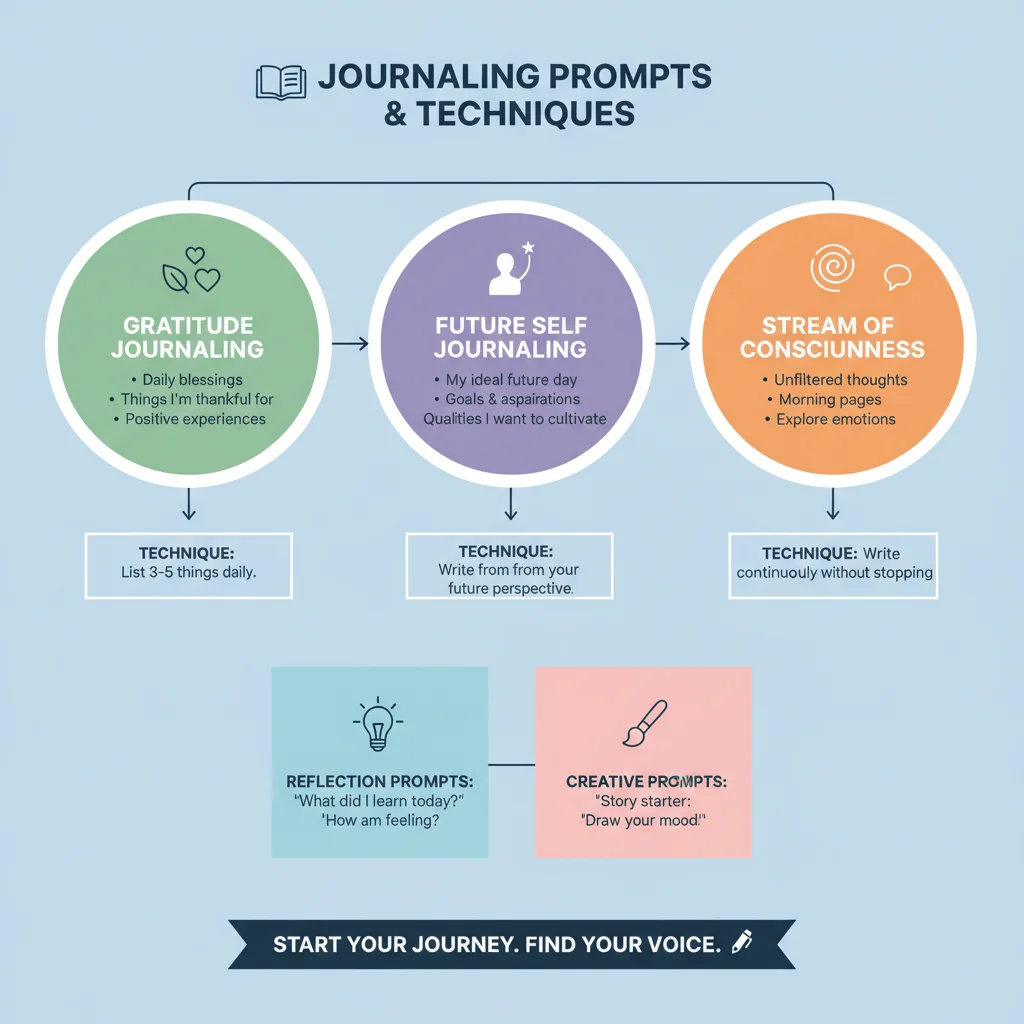
Gratitude Journaling
This technique focuses on cultivating an attitude of gratitude. Regularly listing things you’re thankful for shifts your perspective towards positivity, improves mood, and enhances overall well-being. It helps you appreciate the small joys in life and recognize the abundance around you.
Future Self Journaling
Imagine your ideal self in 2026 or beyond. What are they doing? How do they feel? What have they accomplished? Write from the perspective of your future self, describing your life as if your aspirations have already come true. This powerful visualization technique helps clarify your goals and motivates you to take action towards becoming that person.
Shadow Work Journaling
Inspired by Carl Jung’s concept of the ‘shadow self,’ this involves exploring the parts of yourself that you deny, repress, or deem unacceptable. By acknowledging and integrating these shadow aspects, you can achieve greater wholeness and authenticity. This often involves writing about fears, insecurities, past mistakes, and challenging emotions in a non-judgmental way.
Stream of Consciousness Writing
Also known as ‘free writing,’ this involves writing continuously for a set period (e.g., 10-15 minutes) without stopping, editing, or censoring your thoughts. The goal is to let your mind wander freely and capture whatever comes up. This technique can help clear mental clutter, uncover hidden insights, and spark creativity.
Bullet Journaling for Productivity and Reflection
While often associated with productivity, the Bullet Journal method (BuJo) can also be a powerful tool for personal growth. It combines to-do lists, calendars, and traditional journaling into one organized system. By tracking tasks, events, and reflections in a structured way, you can gain a clear overview of your progress, identify patterns, and ensure your actions align with your goals.
Dialogue Journaling
This technique involves writing a dialogue between different parts of yourself (e.g., your rational self and your emotional self), or even with a challenging situation, a person, or a concept. This can help you gain perspective, resolve internal conflicts, and understand complex issues more deeply.

Overcoming Common Journaling Challenges
While the concept of journaling personal growth is simple, maintaining a consistent practice can sometimes present challenges. Here are some common hurdles and how to overcome them:
"I Don’t Know What to Write About"
This is a frequent complaint. The solution? Don’t overthink it! Start with simple observations about your day, your current mood, or use the prompts mentioned earlier. If all else fails, simply write "I don’t know what to write about" repeatedly until something else emerges. The act of writing itself often unlocks thoughts.
"I Don’t Have Enough Time"
Even five minutes a day can make a difference. Break down your journaling time into smaller, manageable chunks. Instead of aiming for a long session, commit to a quick brain dump in the morning or a brief reflection before bed. Remember, consistency trumps duration.
"My Journaling Feels Repetitive"
If you find yourself writing about the same things repeatedly, it might be a sign that you’re stuck on a particular issue. Try changing your journaling technique (e.g., switch from free writing to gratitude journaling), use different prompts, or focus on a specific area of your life you want to improve. Sometimes, a shift in perspective is all that’s needed.
"I’m Afraid Someone Will Read It"
This fear can inhibit honest expression. If you’re using a physical journal, keep it in a private, secure place. For digital journals, utilize password protection and encryption features. Remind yourself that this space is sacred and solely for your eyes.
"I Don’t See Immediate Results"
Personal growth is a journey, not a destination. The benefits of journaling accumulate over time. Be patient and consistent. Periodically review past entries to observe your progress, identify patterns, and celebrate how far you’ve come. The long-term impact of journaling personal growth is truly transformative.
Integrating Journaling into Your 2026 Personal Growth Plan
To truly maximize the impact of journaling, integrate it strategically into your broader personal growth plan for 2026. Here’s how:
Set Clear Intentions
Before you even pick up your pen, consider what you hope to achieve through journaling. Do you want to reduce stress? Improve relationships? Achieve a specific career goal? Having clear intentions will guide your writing and make your practice more purposeful.
Connect Journaling to Your Goals
Use your journal to regularly check in on your 2026 goals. Write about your progress, challenges, and insights related to each goal. Brainstorm strategies, celebrate small wins, and adjust your plans as needed. Your journal becomes a living document of your ambition and effort.
Review and Reflect Periodically
Schedule dedicated time – perhaps weekly, monthly, or quarterly – to review your journal entries. Look for themes, recurring patterns, and significant shifts in your thinking or emotional state. This meta-reflection is where much of the deeper learning and growth occurs. Ask yourself: What have I learned? How have I changed? What insights can I apply going forward?
Combine with Other Growth Practices
Journaling synergizes beautifully with other personal growth practices. Use it to reflect on your meditation experiences, process insights from therapy, or plan your mindfulness exercises. It can also be a space to document your learning from books, podcasts, or courses, helping you integrate new knowledge more effectively.
The Future of Journaling: Digital Tools and Community
While traditional pen-and-paper journaling remains popular, the digital landscape offers exciting new avenues for journaling personal growth. AI-powered journaling apps, for example, can offer personalized prompts, track mood patterns, and even provide insights based on your entries (while maintaining privacy). These tools can make journaling more accessible and engaging for a new generation.
Furthermore, the rise of online communities and guided journaling programs provides opportunities for shared experiences and accountability. While journaling is often a solitary act, discussing insights with others (without sharing private entries) can further enrich the growth process. These communities can offer inspiration, support, and diverse perspectives, helping individuals feel less alone on their personal development journeys.
Embracing Journaling for a Transformed 2026
As we navigate the complexities of modern life, the practice of journaling personal growth offers a beacon of clarity and a powerful catalyst for change. It is a testament to the idea that the most profound transformations often begin with simple, consistent acts of self-reflection. By dedicating a small portion of your day to this practice, you are investing in your emotional intelligence, mental resilience, and overall well-being.
In 2026 and beyond, let your journal be your trusted confidant, your personal coach, and your creative sanctuary. Allow it to guide you through challenges, celebrate your triumphs, and illuminate the path toward becoming the best version of yourself. The journey of personal growth is continuous, and with journaling as your steadfast companion, you are well-equipped to embrace every step with intention, insight, and unwavering purpose.
Start today. Pick up that pen, open that app, and begin the profound conversation with yourself. The insights, clarity, and growth you unlock will undoubtedly shape a more fulfilling and empowered future. Your journey of journaling personal growth awaits.